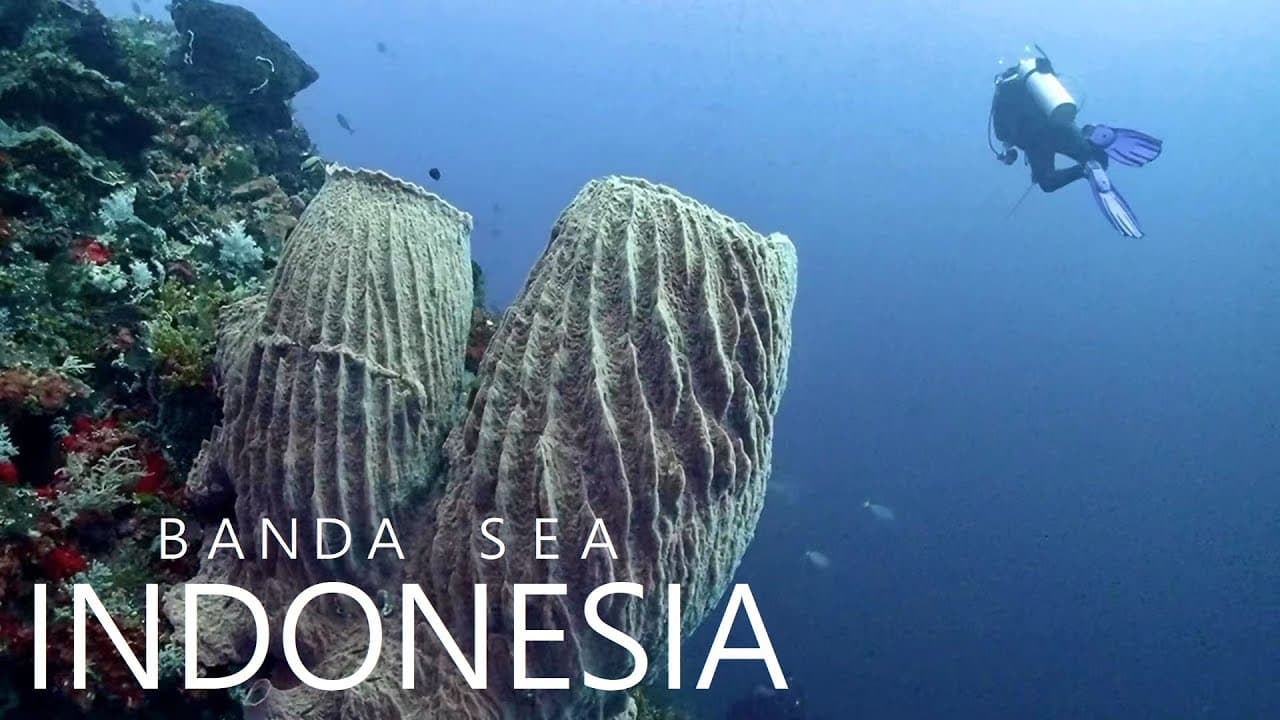
The Banda Sea sits in the geographic center of the Coral Triangle — the most biodiverse marine region on the planet — yet it remains one of the least-dived bodies of water in Indonesia. While Raja Ampat and Komodo draw tens of thousands of divers annually, the Banda Sea's remote position between Sulawesi and Papua means that reaching its headline sites — Manuk Island's sea snake aggregations, the Forgotten Islands' untouched walls, Banda Api's volcanic reef systems — requires a deliberate choice about how you travel. That choice is the banda sea liveaboard vs resort question, and the answer is less obvious than it is for most Indonesian destinations.
The Banda Sea is not a single atoll or a compact dive zone. It spans roughly 1,000 kilometers east to west, from the Banda Islands (Banda Neira, Banda Api, Hatta Island) in the center to the Forgotten Islands (Nusa Laut, Suanggi, Terbang) in the southeast, with Manuk Island's sea snake and hammerhead site sitting another 200 kilometers further into open ocean. No resort reaches all of these. Most liveaboards do not either — but they reach far more of them than any fixed-base option.
This article breaks down what each approach actually delivers: which sites are accessible only by liveaboard, what resort diving looks like in the Banda Islands proper, what you pay in 2026 pricing, and which option matches which diver profile.
Why the Banda Sea Is Different from Other Indonesian Destinations
Three things make the Banda Sea liveaboard vs resort question different here than it is in Raja Ampat, Komodo, or the Similan Islands.
Geography. The dive sites are spread across an enormous open-ocean basin. Banda Neira to Manuk Island is roughly 200 kilometers of open water. Banda Neira to the Forgotten Islands is another 150 kilometers southeast. A resort in Banda Neira has a day-boat radius of maybe 30 to 50 kilometers — which covers Banda Api, Hatta Island, and Karang Hatta, but nothing beyond that.
Remoteness. Getting to Banda Neira requires a flight from Ambon (45 minutes) or a ferry (6 to 12 hours). There are no direct international flights. The infrastructure is limited: a handful of guesthouses, one or two dive operations, no luxury resorts in the Maldivian or Raja Ampat sense. The "resort" option in the Banda Sea is fundamentally different from what that word means in the Maldives or the Great Barrier Reef.
Marine life distribution. The Banda Sea's signature encounters — scalloped hammerhead schools at Manuk, sea snake aggregations numbering in the thousands, pristine coral walls in the Forgotten Islands — are geographically isolated from each other. You cannot day-dive Manuk from Banda Neira. You cannot reach Suanggi from a Banda guesthouse. These sites exist only on multi-day passages that only liveaboards attempt.
What Each Option Actually Delivers
Liveaboard Diving: Range and Volume
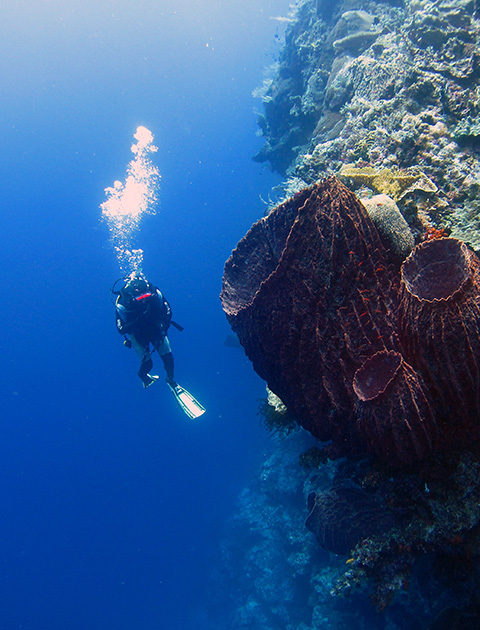
A standard Banda Sea liveaboard itinerary runs 10 to 14 nights — longer than typical Komodo liveaboard or Red Sea liveaboard trips — because the distances between sites demand transit days. Vessels typically operate three to four dives per day when on-site, totaling 22 to 30 dives across a full itinerary (LiveAboard.com, 2026; Meridian Adventure Dive, 2025).
Common Banda Sea liveaboard routes fall into three broad categories:
-
Ambon → Banda → Forgotten Islands (or reverse): The classic Banda Sea itinerary. Covers Banda Neira's house reefs and macro sites, Banda Api's volcanic walls, Hatta Island's drop-offs, then moves southeast to Nusa Laut, Suanggi, and Terbang in the Forgotten Islands. Typically 10 to 12 nights. Operates primarily October through December and March through May, when the Banda Sea is calmest (DiveZone, 2025).
-
Banda Sea → Manuk → Alor (or reverse): Extends the Banda itinerary to include Manuk Island's sea snake aggregations and hammerhead dives, then continues to Alor for muck diving and critter encounters. 12 to 14 nights. This is the itinerary that delivers the Banda Sea's most iconic marine life. Manuk's conditions are weather-dependent; operators schedule it only during calm-weather windows (Rascal Voyages, 2025).
-
Raja Ampat → Banda Sea (or reverse): Long-haul repositioning trips, typically 14 to 18 nights, that combine Raja Ampat's northern sites with a Banda Sea crossing. These operate seasonally as vessels move between the Raja Ampat and Banda Sea seasons. Premium pricing but extraordinary site diversity (Dunia Baru, 2025; Alexa Cruises, 2025).
Key operators running Banda Sea itineraries include Meridian Adventure Dive (Wisesa and Resolute vessels), Rascal Voyages (Rascal and Doris vessels), Dunia Baru, Alexa Cruises, Damai I and II, and Katharina. Vessel capacity ranges from 6 to 18 guests, with most Banda-specific boats carrying 10 to 14 (LiveAboard.com, 2026).
What liveaboards reach that nothing else does:
-
Manuk Island: Indonesia's most reliable scalloped hammerhead site and home to an estimated thousands of banded sea kraits. No resort, guesthouse, or day-boat operation reaches Manuk — it sits in open ocean roughly 200 kilometers southeast of Banda Neira (Meridian Adventure Dive, 2025).
-
Suanggi and Terbang (Forgotten Islands): Untouched coral walls with visibility regularly exceeding 40 meters, encounters with large pelagics including thresher sharks, oceanic manta rays, and schools of barracuda and giant trevally. The Forgotten Islands have no permanent dive infrastructure; liveaboards are the only way in (DiveZone, 2025).
-
Nusa Laut: Pristine reef systems with strong currents that attract hammerheads and large schools of fish. Occasionally reachable by extended day-boat from Banda Neira in perfect conditions, but unreliable and exhausting — most operators classify it as liveaboard-only (Rascal Voyages, 2025).
Resort Diving: The Banda Neira Base
The "resort" option in the Banda Sea is not a resort in the way that word functions in the Maldives or even in Raja Ampat. Banda Neira has a small number of guesthouses and dive lodges — notably the Nutmeg Plantation (Rumah Tuan Kebun), Banda Neira Dive & Stay, and a handful of locally-run homestays — that offer accommodation plus guided day-boat diving. There are no overwater villas, no international hotel brands, and no luxury spa resorts (Booking.com, 2026; DiveTheWorld, 2025).
What resort-based diving from Banda Neira actually delivers:
-
Banda Api: The volcanic island directly across the harbor from Banda Neira, reachable in 10 minutes by boat. Offers dramatic volcanic walls, black-sand slopes, and healthy coral growth on the sheltered sides. Depth range: 5 to 40 meters. Currents: mild to moderate.
-
Hatta Island (Pulau Hatta): Roughly 45 minutes by speedboat from Banda Neira. Known for pristine hard coral gardens, reef sharks, and occasional manta ray passes on the outer walls. Depth range: 5 to 30 meters. Currents: mild to moderate on the sheltered side, moderate to strong on exposed points.
-
Karang Hatta (Hatta Reef): An outer reef system with wall diving and strong currents that attract larger pelagics. Reachable by day-boat in approximately one hour from Banda Neira, conditions permitting. Depth range: 10 to 40 meters. Currents: moderate to strong.
-
Banda Neira house reefs and muck sites: Black-sand slopes with excellent macro diving — mandarin fish at dusk, pygmy seahorses, nudibranchs, and frogfish. Diveable from shore or by short boat ride.
The dive radius from Banda Neira covers roughly 50 kilometers, which includes the sites above but explicitly excludes Manuk Island, the Forgotten Islands, and Nusa Laut (in practical terms). A day-boat excursion to Nusa Laut has been attempted by some operators in calm conditions, but it involves a three-hour each-way crossing that consumes the day and is weather-dependent (DiveTheWorld, 2025).
What resort-based diving delivers that liveaboards cannot:
-
Cultural immersion. Banda Neira is the historic center of the global spice trade — the island where nutmeg once grew nowhere else on Earth. The Dutch colonial fort (Fort Belgia), the nutmeg plantations, and the local community are a significant part of the experience. Liveaboard guests typically get a half-day ashore; resort guests live in it.
-
Flexibility. Choose when to dive, when to skip, when to explore the island. No 6:30 a.m. briefings. No schedule.
-
Cost. Banda Neira guesthouses run USD 30 to 80 per night including meals, with dive packages at roughly USD 35 to 50 per dive. A 7-day resort-based trip costs a fraction of a liveaboard itinerary.
The Numbers: Banda Sea Dive Trip Cost in 2026

Pricing is where the banda sea liveaboard vs resort calculation diverges sharply from the Maldives model. In the Maldives, resorts are expensive and liveaboards offer better value. In the Banda Sea, both options are relatively affordable by global standards — but they deliver fundamentally different experiences.
10-12 Night Liveaboard Cost (per diver, USD)
| Tier | Base fare | Gear + Nitrox | Tipping | Domestic transport | Total est. |
|---|---|---|---|---|---|
| Budget | 2,500–3,500 | 200–350 | 150–250 | 200–400 | 3,050–4,500 |
| Mid-range | 3,500–5,500 | 200–350 | 250–400 | 200–400 | 4,150–6,650 |
| Luxury | 6,000–9,000+ | Often included | 400–600 | 200–400 | 6,600–10,000+ |
Sources: LiveAboard.com (2026), Rascal Voyages published rates (2025), Meridian Adventure Dive (2025), Dunia Baru (2025).
Budget liveaboards like Damai I and II publish Banda Sea rates starting around USD 250 to 300 per person per night for standard cabins. Mid-range operators including Katharina and Meridian Adventure's Wisesa run USD 350 to 500 per night. Luxury vessels like Rascal, Dunia Baru, and Alexa quote USD 500 to 750-plus per night (LiveAboard.com, 2026; Rascal Voyages, 2025). Domestic flights to Ambon and onward to Banda Neira (if the itinerary embarks there) add USD 200 to 400 round-trip from Jakarta or Bali.
7-Night Resort-Based Trip Cost (per diver, USD)
| Tier | Accommodation (7 nights) | Diving (10–14 dives) | Domestic transport | Total est. |
|---|---|---|---|---|
| Budget guesthouse | 210–560 | 350–500 | 200–400 | 760–1,460 |
| Mid-range lodge | 560–1,050 | 500–700 | 200–400 | 1,260–2,150 |
| Boutique (if available) | 1,050–1,800 | 700–1,000 | 200–400 | 1,950–3,200 |
Sources: Booking.com (2026), DiveTheWorld (2025), Banda Neira Dive & Stay published rates (2025).
Budget guesthouses on Banda Neira — the Nutmeg Plantation, local homestays — run USD 30 to 80 per night including meals. Dive packages at USD 35 to 50 per dive add up quickly, but the total is still roughly one-third to one-half of a mid-range liveaboard (Booking.com, 2026; DiveTheWorld, 2025).
The cost gap is real, but it reflects a gap in what you see. A USD 4,500 liveaboard delivers Manuk Island, the Forgotten Islands, and 25-plus dives across sites that do not exist on any resort's menu. A USD 1,500 resort trip delivers excellent diving within 50 kilometers of Banda Neira — and a cultural experience no liveaboard matches.
Marine Life Probability: Where Each Option Wins
The Banda Sea's marine life is distributed across a wide geographic area, and the banda sea liveaboard vs resort answer changes dramatically depending on what you came to see.
Scalloped Hammerheads
Manuk Island is the Banda Sea's premier hammerhead site, with schools of 20 to 50-plus scalloped hammerheads regularly encountered on early-morning deep dives (30 to 40 meters) along the island's outer walls (Meridian Adventure Dive, 2025). The Forgotten Islands — particularly Suanggi and Nusa Laut — also produce hammerhead encounters, though less reliably.
Access: liveaboard only. No resort or guesthouse reaches Manuk. Period.
Sea Snakes
Manuk Island hosts one of the largest known aggregations of banded sea kraits (Laticauda colubrina) in Indonesia. Divers encounter them resting in coral crevices, swimming at the surface, and coiled on the island's rocky shores. Despite being venomous, they are docile toward divers and a signature Banda Sea experience (Rascal Voyages, 2025; Meridian Adventure Dive, 2025).
Access: liveaboard only.
Mandarin Fish
Banda Neira's harbor-side rubble slopes host reliable mandarin fish (Synchiropus splendidus) mating displays at dusk. This is one of the few signature Banda Sea experiences accessible from shore — and it is a resort-side win (DiveTheWorld, 2025).
Access: resort (shore dive from Banda Neira).
Pristine Coral Walls
The Forgotten Islands — Suanggi, Terbang, Nusa Laut — offer some of the most untouched hard coral walls in Indonesia. Visibility regularly exceeds 40 meters. These reefs see virtually no diver traffic; some sites may have been dived fewer than 100 times in history (DiveZone, 2025).
Access: liveaboard only, with the partial exception of Nusa Laut in calm conditions.
Volcanic Reef Systems
Banda Api's underwater volcanic landscape — lava flows, black-sand slopes, hydrothermal vents, and dramatic topography — is unique in the Indonesian dive context. Healthy coral growth on the sheltered flanks, with reef sharks, napoleon wrasse, and large schools of fusiliers.
Access: resort (10-minute boat from Banda Neira) and liveaboard.
The Comparison Matrix
| Criterion | Liveaboard | Resort (Banda Neira) |
|---|---|---|
| Dives per day | 3–4 (incl. night) | 2–3 (day boat + shore) |
| Total dives in 10–12 nights | 22–30 | 10–14 (in 7 nights) |
| Sites accessible | Banda, Forgotten Islands, Manuk | Banda Api, Hatta, Karang Hatta |
| Manuk Island (hammerheads, sea snakes) | Yes | No |
| Forgotten Islands (Suanggi, Terbang) | Yes | No |
| Nusa Laut | Yes | Rarely, conditions-dependent |
| Mandarin fish (Banda Neira shore) | Half-day visit | Evening dive, repeatable |
| Cultural immersion (spice trade history) | Half-day stop | Full experience |
| Per-dive total cost (mid-range) | USD 170–270 | USD 35–50 |
| 10–12 night total (mid-range) | USD 4,150–6,650 | USD 1,260–2,150 (7 nights) |
| Recommended certification | AOW + 50 dives minimum | Open Water acceptable |
| Non-diver-friendly | Poor | Moderate |
| Seasickness factor | Real on open-sea crossings | Minimal in harbor |
| Booking flexibility | Fixed schedule once underway | Choose dives daily |
| Visibility (best sites) | 30–50 m (Forgotten Islands) | 15–30 m (Banda Api, Hatta) |
Sources: LiveAboard.com (2026), Meridian Adventure Dive (2025), Rascal Voyages (2025), DiveZone (2025), DiveTheWorld (2025).
Decision Framework: Which Option Fits Which Diver
We use this framework when recommending Banda Sea trips. The banda sea liveaboard vs resort answer changes meaningfully by diver profile.
Choose a liveaboard if:
- You are AOW-certified with 50-plus logged dives and comfortable with moderate-to-strong currents and open-ocean crossings.
- Your priority is the Banda Sea's signature marine life: Manuk's hammerheads and sea snakes, the Forgotten Islands' pristine walls, Nusa Laut's pelagics.
- You want 22-plus dives across sites that span hundreds of kilometers.
- You are comfortable on a boat for 10 to 14 days, including open-sea passages.
- Budget is USD 4,000 to 7,000 per diver for a full Banda Sea itinerary.
- You are traveling with a dive-focused partner or group.
Choose a resort-based trip (Banda Neira) if:
- You hold Open Water certification or have limited recent diving and want a gentler experience.
- Your interest in the Banda Sea includes its history — the spice trade, Fort Belgia, nutmeg plantations — as much as its diving.
- You want flexibility: shore dives at dusk for mandarin fish, day boats to Hatta and Banda Api, and island exploration between dives.
- Budget is under USD 2,000 per diver for a 7-night trip.
- You travel with a non-diving partner or companion who wants more than a cabin and dive briefings.
- You are already combining the Banda Islands with another Indonesian destination (Raja Ampat, Komodo) and want a shorter Banda segment.
Choose a split-stay (resort + liveaboard) if:
- You have 14-plus nights and want both cultural immersion and remote-site access.
- Budget is USD 5,000-plus per diver.
- You want to spend 3 to 4 nights on Banda Neira absorbing the island's history and diving its house reefs, then board a liveaboard for a 7 to 10-night passage through the Forgotten Islands and Manuk.
The Honest Caveats
Liveaboard downsides that matter. The Banda Sea is not a gentle body of water. Open-sea crossings between Banda Neira, Manuk, and the Forgotten Islands involve 6 to 12 hours of open-ocean transit. The northeast monsoon (December through February) brings rough conditions that close most Banda Sea liveaboard operations entirely; the transition months (September, October, March, May) offer the calmest seas but still produce occasional rough passages (DiveZone, 2025; Rascal Voyages, 2025). Seasickness is a real factor. Cabins are compact — this is not a luxury cruise. And the remoteness means that if something goes wrong (equipment failure, medical issue), evacuation to a hospital involves a multi-hour boat ride to the nearest airstrip.
Resort downsides that matter. The Banda Islands' infrastructure is limited. Accommodation is basic by international standards — clean and functional, but not comfortable in the way that Raja Ampat eco-resorts or Komodo lodges have become. There are no ATMs on Banda Neira; bring cash. Internet is unreliable. The dive operation is small — typically one boat, one guide, limited equipment rental. If you lose a fin or need a specific regulator fitting, there is no dive shop to replace it. The diving within the day-boat radius is genuinely excellent, but the radius is limited. You will not see Manuk's sea snakes or the Forgotten Islands' walls from Banda Neira.
For both options, the Banda Sea's seasonality is the constraint that overrides everything else. The main operating window is October through December and March through May. January and February are monsoon-closed. June through August brings variable conditions — some operators run trips, others do not. September and the shoulder months are the sweet spot for calm seas and good visibility, but weather is less predictable (Meridian Adventure Dive, 2025; DiveZone, 2025).
The MantaraDive Recommendation
After running the comparison across 2026 pricing, route data, and site accessibility, we recommend three concrete paths.
For serious divers targeting the Banda Sea's signature marine life, choose a liveaboard. Specifically, a 12 to 14-night Banda Sea itinerary that includes Manuk Island, the Forgotten Islands (Suanggi, Nusa Laut, Terbang), and the Banda Islands. Operators like Meridian Adventure Dive, Rascal Voyages, and Damai run the most consistent Banda Sea schedules. Mid-range total: USD 4,000 to 6,500 per diver. This is the only way to see Manuk's sea snakes and hammerheads and the Forgotten Islands' pristine walls.
For divers who want the Banda Sea experience at a lower budget, or who value culture and flexibility, choose Banda Neira as a resort base. A 5 to 7-night stay at the Nutmeg Plantation or Banda Neira Dive & Stay, with day boats to Banda Api, Hatta, and Karang Hatta, delivers outstanding diving within a limited radius — plus the spice-trade history that makes the Banda Islands unique among Indonesian dive destinations. Total: USD 800 to 2,000 per diver.
For 14-plus-night trips at a USD 5,000-plus budget, do both. Three to four nights on Banda Neira for cultural immersion and mandarin fish, then a 10 to 12-night liveaboard through the Forgotten Islands and Manuk. This is the definitive Banda Sea trip — and one that very few divers ever take.
The single biggest mistake we see: divers booking a Banda Neira guesthouse and expecting to reach Manuk or the Forgotten Islands by day boat. The geography does not cooperate. If Manuk's sea snakes or Suanggi's walls are your reason for coming, you need a liveaboard. If Banda Api's volcanic diving and the island's history are enough, the resort option delivers that at a fraction of the cost.
If your shortlist also includes Raja Ampat or Komodo, the Banda Sea is often combined with one or both as part of a longer Indonesia itinerary — and a liveaboard repositioning trip (Raja Ampat → Banda Sea, or Banda Sea → Komodo) is the most efficient way to cover that distance while diving the entire way.
Talk to a Specialist
Choosing the right banda sea liveaboard vs resort path is season-and-route specific — Manuk in the wrong month, a Banda Neira stay during the monsoon, or a liveaboard itinerary that skips the Forgotten Islands all turn a rare trip into an expensive miss. MantaraDive advisors cross-reference real-time vessel availability, Banda Sea seasonal windows, and site accessibility with your trip dates, certification level, and travel-style preferences. Send us your dates, budget, and priorities and we will return a custom shortlist of liveaboards, resort options, or both within 24 hours, with the trade-offs spelled out.
Sources and Methodology
This article draws on data cross-referenced from the following independent sources: LiveAboard.com (2026 vessel listings, Banda Sea itinerary pricing, route descriptions), Meridian Adventure Dive (Banda Sea liveaboard operations, Manuk Island hammerhead and sea snake data, seasonal windows), Rascal Voyages (Banda Sea and Forgotten Islands itineraries, 2025 pricing), DiveZone (Banda Sea dive site reviews, seasonal cautions, vessel comparisons), DiveTheWorld (Banda Neira resort and guesthouse listings, dive pricing), Dunia Baru and Alexa Cruises (repositioning trip structures and pricing), Booking.com (2026 Banda Neira accommodation rates), PADI (certification requirements for Banda Sea current diving), and Bluewater Dive Travel (Indonesia liveaboard vs resort pricing structure). All prices are USD and reflect rates published in early 2026; actual costs vary by operator, season, cabin class, and booking lead time. Marine life encounters reflect historical patterns and operator-reported sighting rates, not guarantees. The Banda Sea's operating window is seasonal; verify conditions with your operator before booking.
Related MantaraDive planning links
- Raja Ampat vs Komodo Diving: Which Indonesia Trip Actually Delivers?
- Komodo Liveaboard Prices: What It Actually Costs (and What's Worth It)
- Is Raja Ampat Worth It? The Honest Math for 2026
- Best Muck Diving in Asia: A Ranking
- Wakatobi vs Raja Ampat vs Alor: Which Remote Indonesian Reef Wins?
- Red Sea Liveaboard Itinerary: North vs South for European Divers
- Galapagos Liveaboard: Is It Worth It?
- Great Barrier Reef Liveaboard Guide