
Komodo liveaboard prices are hard to compare because the cheapest number is rarely the number you pay. One operator quotes a cabin and meals but excludes park fees. Another includes tanks, weights, full-board meals, and a guide but charges separately for rental gear, nitrox, airport transfers, fuel surcharges, or government fees. A third sells the same route as a luxury phinisi experience, where the boat is part of the trip rather than just the way you reach the dive sites.
For a 2026 Komodo dive trip, a realistic diver budget starts around USD 850 to 1,200 for a short budget liveaboard once park fees and local extras are included. A stronger mid-range plan is usually USD 1,400 to 2,700 for four to seven nights. Premium and luxury boats can climb from USD 3,000 to 7,000+ per person, especially for longer itineraries, master cabins, boutique phinisi vessels, or Indonesia-wide repositioning routes that include Komodo.
That range sounds wide because Komodo is not one standardized product. A 3-night shared-cabin dive boat from Labuan Bajo and an 8-night luxury yacht are both called liveaboards, but they solve different problems. This guide breaks down what the money actually buys, where cheap Komodo liveaboard offers become risky, and which upgrades are worth paying for if you care more about diving than deck photos.
The Short Answer
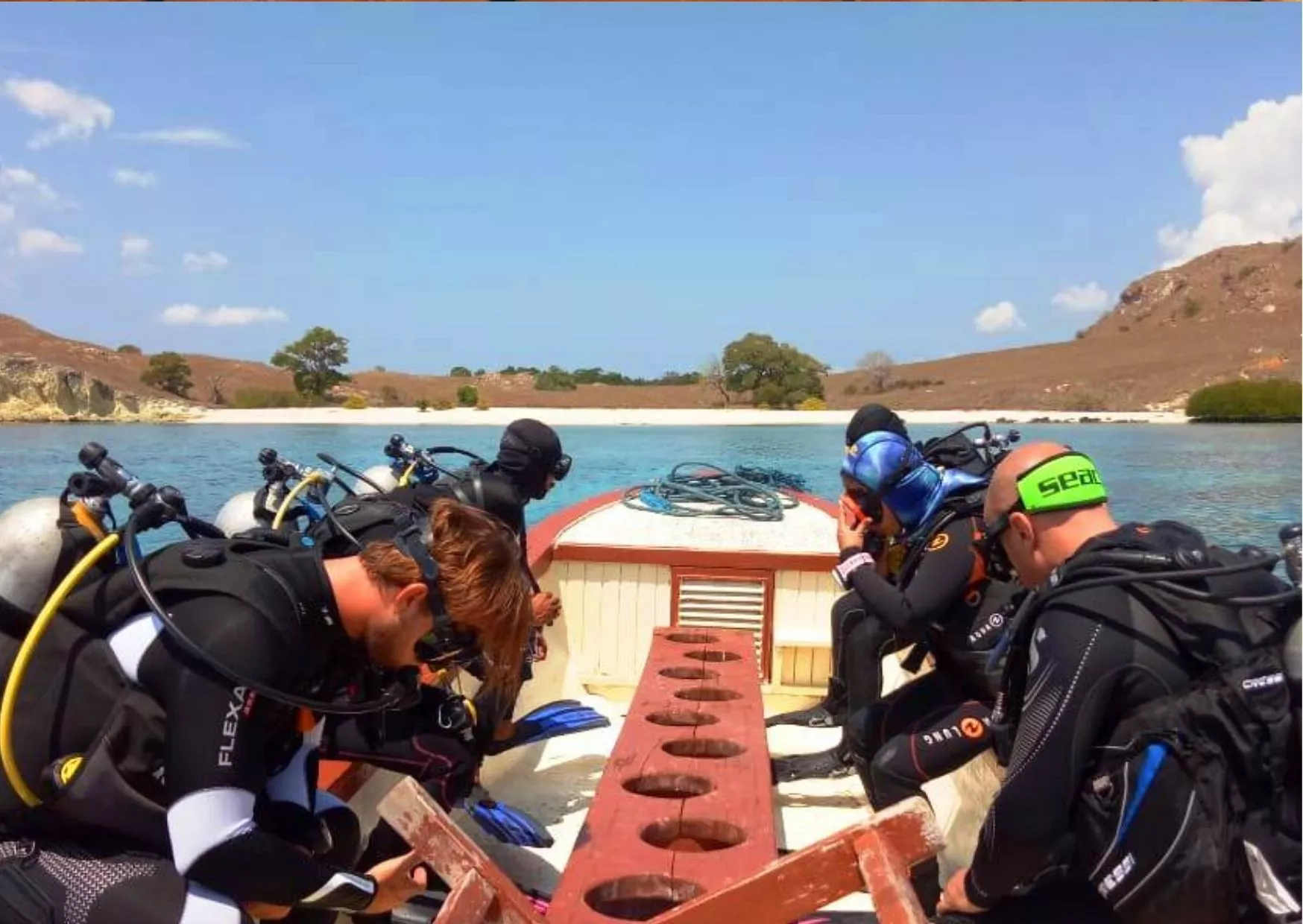
For most certified divers, the best Komodo liveaboard budget is not the cheapest boat. It is the cheapest boat that still gives you four things: a safe dive operation, enough nights to reach north and central Komodo, transparent park fees, and a guide who can manage current.
Use these 2026 planning ranges:
| Trip style | Realistic per-person budget | Typical fit |
|---|---|---|
| Budget 3D/2N or 4D/3N shared cabin | USD 850-1,500 | Price-sensitive divers already in Labuan Bajo |
| Mid-range 4-6 nights | USD 1,400-2,700 | Best value for most divers |
| Better mid-range or boutique 6-8 nights | USD 2,500-4,500 | Photographers, experienced divers, comfort-focused couples |
| Luxury phinisi or yacht | USD 4,500-7,000+ | High-comfort trips, premium cabins, private service |
| Private charter | Highly variable | Families, groups, custom routes |
If your budget is tight, spend on diving quality and safety first, then trip length, then cabin comfort. Do not spend first on a nicer cabin and then accept weak guiding, vague fee inclusions, or an itinerary too short to reach the sites that made you want Komodo.
Why Komodo Costs More Than a Normal Dive Trip
Komodo diving cost starts with geography. Labuan Bajo is the gateway, but the best sites are spread through a national park with strong tidal flow, exposed anchorages, and long transit legs. A good boat is not just a floating hotel. It is the platform that lets you dive Batu Bolong at the right tide, reach Castle Rock or Crystal Rock before other groups, and change plan when current or weather makes a site inappropriate.
PADI Travel describes Komodo as a liveaboard-heavy destination with challenging and sometimes unexpected currents, and recommends it for experienced divers. That matters for price. You are paying for crew judgment, tender drivers, guides who know local water movement, and enough schedule flexibility to avoid forcing a bad dive just because the brochure promised it.
The second reason is seasonality. Komodo is diveable year-round, but most liveaboards concentrate around the April to November dry season, with many boats busiest from April through August. The south can be cooler, rougher, and plankton-rich. The north can be warmer and clearer, but still current-driven. Peak months compress demand into a limited number of cabins.
The third reason is Indonesia's liveaboard style. Many Komodo boats are wooden phinisi vessels, and even modest ones require a crew larger than many Caribbean or Red Sea boats. Fuel, provisioning, maintenance, permits, port logistics, and local guide costs all sit inside the price, whether the sales page itemizes them clearly or not.
What Is Usually Included
Most legitimate Komodo dive liveaboards include the basics:
- Cabin accommodation
- Full-board meals and snacks
- Drinking water, tea, and coffee
- Dive guide or dive master
- Tanks and weights
- Tender transfers to dive sites
- Land visits such as Padar, Komodo, or Rinca when listed
- Airport or hotel pickup in Labuan Bajo on some trips
That is the easy part. The price difference comes from what is not included.
Common extras include national park and government fees, rental gear, dive computer rental, nitrox, alcohol, soft drinks, crew gratuities, travel insurance, dive insurance, domestic flights, hotel nights before and after the boat, private transfers, marine park ticket changes, and single supplements.
The phrase to ask is not "what is included?" It is: "What will I still have to pay in cash or card after I board?" A good operator can answer that with line items.
Park Fees Are Not a Footnote
Komodo National Park fees are the first place headline pricing becomes misleading. Some operators include them. Some list them as required extras. Some local budget boats exclude them from the package and expect you to pay separately.
Current operator examples show required government or national park fees commonly around USD 120 for 4D/3N, USD 150 for 5D/4N, USD 180 for 6D/5N, and USD 210-240 for 7D/6N to 8D/7N. Komodo Dragon Liveaboards' 2026 schedule lists government fees around EUR 30 per person per day, with several five-night diving cruises showing EUR 180 per person in government fees.
Those numbers can change, and Komodo fee rules have been politically sensitive for years. In 2026, the park authority also announced a visitor quota trial requiring reservations through SiOra before entering the park, with a stated daily quota of 1,000 visitors and timed-entry sessions for Padar Selatan during the trial. For divers, the practical point is simple: fees and access rules are real operational constraints, not small print.
Before paying a deposit, ask:
- Are all national park, conservation, diving, ranger, and harbor fees included?
- If not, what is the exact amount per person for my itinerary length?
- Are fees paid to the operator in advance or in Labuan Bajo?
- What happens if the government changes the fee before departure?
- Is the operator handling any required park reservation?
A cheap Komodo liveaboard that excludes USD 150 to 250 of mandatory fees may not be cheap at all.
A Realistic Price Ladder
The low end is local and compact. Maika Komodo Tour and Diving's 2026 4D/3N examples list shared-cabin diving packages around IDR 9.5 million to 15 million per person, depending on whether the package includes 8 or 12 dives and which boat or cabin type is available. At recent exchange rates, that roughly lands in the USD 575 to 900 range before excluded park tickets, insurance, personal expenses, and tips. Add fees and buffer, and the real diver total is usually closer to USD 800 to 1,150 before flights and hotels.
The lower mid-range starts around four or five nights. Komodo Dragon Liveaboards' 2026 schedule lists five-night Komodo diving cruises on Putri Naga at EUR 1,150 per person plus EUR 180 government fees on multiple dates. That is roughly a EUR 1,330 boat-and-fee package before personal extras. Komodo Resort's liveaboard booking examples show discounted 4D/3N to 8D/7N trips from about USD 1,134 to 2,268 on selected departures, with national park fees listed separately by trip length.
The mid-to-upper range is where the boat becomes more comfortable, the cabins improve, and the route often gets longer. PADI Travel's Komodo listings show examples such as Ilike from USD 3,114 per trip, Gaia Love from USD 4,480, Scubaspa ZEN Indonesia from USD 4,950, and Dewi Nusantara from USD 6,900. Those examples are not the floor of the market. They are useful because they show how quickly Komodo pricing rises once you move into larger, more polished, or better-known liveaboards.
For planning, treat the price ladder like this:
| Level | What you are likely buying | Watch for |
|---|---|---|
| Under USD 1,000 | Short trip, shared cabin, local boat, limited route | Excluded fees, fewer dives, basic safety setup |
| USD 1,000-2,000 | Short to medium itinerary with better dive value | Park fees, cabin location, group size |
| USD 2,000-3,500 | Strong mid-range boat or longer itinerary | Whether nitrox and gear are extra |
| USD 3,500-5,500 | Premium boat, better cabins, more comfort | Single supplement and route depth |
| USD 5,500+ | Luxury vessel, long trip, master cabin, boutique service | Paying for comfort more than extra dive quality |
What Changes the Price
Duration is the cleanest variable. A 3D/2N trip may be cheaper, but it often compresses the route into central sites and land highlights. A 5- or 6-night trip gives the crew more room to work with tides and weather. A 7- or 8-night itinerary can add southern sites, more night dives, and less rushed sequencing.
Cabin class is the second variable. Shared lower-deck bunks are cheaper because they are smaller, closer to engine noise, and less private. Main-deck doubles, sea-view cabins, and master suites cost more because liveaboard inventory is tiny. Two cabins can be on the same boat, eat the same food, dive the same sites, and differ by hundreds or thousands of dollars.
Season matters. July, August, and popular holiday weeks can sell early. Shoulder months can offer better value if you are flexible and comfortable with variable conditions. Komodo's dive calendar is not as simple as "best month equals most expensive month," but demand still pushes the popular cabins up.
Group size matters too. Smaller groups can mean better guide attention and less crowding on tenders, but the cost per diver is higher. Larger budget boats can be good value if the dive operation is disciplined, but they can also feel chaotic at current-sensitive sites.
Finally, reputation matters. A boat with reliable compressors, oxygen, emergency procedures, experienced tender drivers, and guides who will cancel or move a dive when current is wrong is worth more than a cheaper boat that treats every site as guaranteed.
What Is Worth Paying For
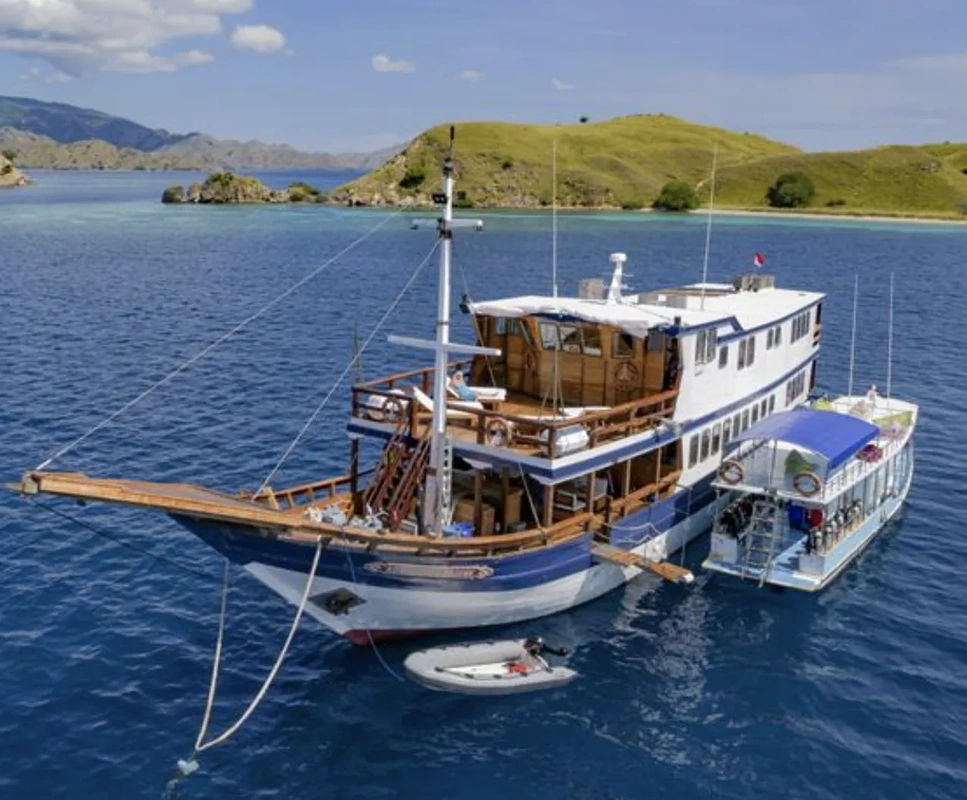
Pay for more nights before fancier cabins. In Komodo, time improves the dive plan. Four days can be fun, but five to seven nights usually creates a better chance of reaching north, central, and selected southern sites without forcing bad timing.
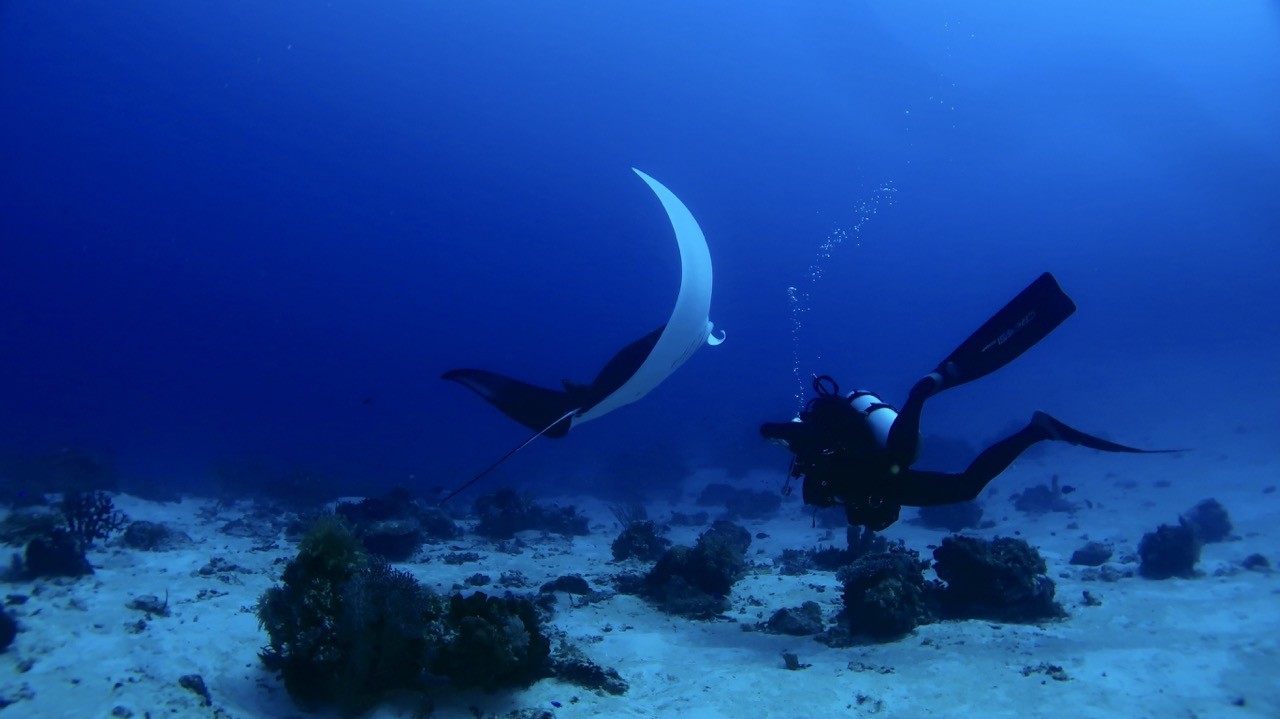
Pay for excellent guiding. Batu Bolong, Castle Rock, Crystal Rock, the Cauldron, Mawan, and Manta Point are not generic reef dives. Conditions can change quickly. A guide who reads current well is a real upgrade, not a luxury flourish.
Pay for nitrox if you are doing repetitive diving and are certified to use it. Komodo profiles can involve multiple dives a day, and nitrox can make the week more comfortable when used within proper depth limits. If you are not certified, do the course before the trip rather than using vacation brain to rush it onboard.
Pay for rental gear only if it is good. Included rental gear on a budget boat can be a great deal or a weak point. Ask for BCD, regulator, wetsuit thickness, computer availability, and SMB policy. If the answers are vague, bring your own core gear or choose another operator.
Pay for a cabin you can sleep in if you are prone to seasickness, heat, or noise sensitivity. Sleep affects dive safety. A lower-deck bunk near machinery may be acceptable for a backpacker snorkel trip and miserable for four dives a day.
What Is Not Always Worth Paying For
A bigger boat is not automatically a better dive boat. Some luxury vessels are excellent; others are hotel-first products where diving is one part of a broader leisure experience. If your priority is serious diving, judge by guide ratios, dive deck layout, tender operations, oxygen, compressor setup, and itinerary flexibility before judging the dining room.
A master cabin is rarely the best value for a diver unless comfort is the point of the trip. You will spend most daylight hours diving, eating, charging cameras, and sleeping. A clean, quiet, air-conditioned cabin with a functional bathroom is usually enough.
A very short "cheap liveaboard" is not always better than day diving. If the boat only gives you a small set of central sites and excludes major fees, compare it against a good Labuan Bajo day-boat operator. For some divers, three strong day trips plus a hotel beat a cramped two-night boat.
Unlimited alcohol packages are not a diver upgrade. Komodo is current-heavy, repetitive diving. Keep the after-dive lifestyle secondary.
Cheap Komodo Liveaboard: When It Works and When It Does Not
A cheap Komodo liveaboard can work if you are an experienced, low-maintenance diver, you can tolerate a shared cabin, you already have your own gear, and the operator is transparent about fees. It is also easier if you are already in Labuan Bajo and can inspect the dive center or ask recent divers in person.
It is the wrong place to save money if you are a nervous diver, a new Advanced diver with little current experience, a photographer with expensive kit, or someone who expects quiet cabins and hotel-level service. Komodo rewards competence. Saving USD 300 is not helpful if the boat is overcrowded, the guide ratio is poor, or the crew pushes a site in conditions that do not fit the group.
For budget divers, the best compromise is often a shorter mid-range boat rather than the absolute cheapest longer boat. Four well-run days with clear inclusions can beat six messy days with surprise fees and weak procedures.
The Full Trip Budget Beyond the Boat
Your Komodo dive trip price should include more than the liveaboard invoice.
Budget for domestic flights to Labuan Bajo, usually via Bali or Jakarta. Add at least one hotel night before the boat if your international and domestic connections are tight. Add one night after the boat if your flight schedule or no-fly time requires it. Add meals ashore, port transfers if not included, tips, laundry, SIM card or roaming, and a buffer for baggage fees on domestic flights.
Dive insurance is not optional in a destination like this. Komodo has remote sites, strong current, and repetitive profiles. Travel insurance should also cover missed connections, evacuation, medical treatment, and liveaboard cancellation terms.
For a comfortable total budget excluding long-haul international flights:
| Traveller type | Total trip budget to plan |
|---|---|
| Tight budget diver | USD 1,300-2,000 |
| Sensible mid-range diver | USD 2,200-4,000 |
| Comfort-focused diver | USD 4,000-6,500 |
| Luxury diver | USD 6,500+ |
Those totals assume one diver, shared occupancy where relevant, domestic travel inside Indonesia, pre/post hotel nights, fees, tips, and a realistic buffer. Long-haul flights can move the number substantially.
Liveaboard vs Day Diving From Labuan Bajo
Day diving from Labuan Bajo can be cheaper and more flexible. KomodoDiving's current planning guide lists example day-boat pricing around IDR 2.95 million for a faster speedboat day, with park fees as a separate line item. Three day trips can deliver excellent diving, especially around central and northern sites, while letting you sleep in a hotel and choose rest days.
A liveaboard wins when you want early starts, night dives, less daily transit from town, and access to a wider route. It also wins for photographers and serious divers because the boat can position for tides and repeat a productive area.
If your Komodo liveaboard budget is forcing you into a boat you do not trust, day diving is not a downgrade. It may be the smarter trip.
Booking Checklist
Before you pay, get written answers to these questions:
- What is the exact number of scheduled dives?
- Are night dives included?
- What park, government, ranger, diving, and harbor fees are included or excluded?
- What is the guide-to-diver ratio?
- Is oxygen onboard and where is the nearest recompression plan?
- Are tanks, weights, SMBs, computers, and rental gear included?
- What wetsuit thickness is recommended for the planned route?
- Is nitrox available and what does it cost?
- What are the cancellation and weather policies?
- Is the route fixed, or can the cruise director change it for conditions?
If the operator cannot answer these clearly, treat that as part of the price.
MantaraDive Recommendation
For most divers, the sweet spot is a 5- to 7-night mid-range Komodo liveaboard with transparent mandatory fees, strong guide ratios, good safety procedures, and enough itinerary flexibility to work with current. Expect the complete boat-and-fee portion to land around USD 1,500 to 3,000 for many sensible choices, then add flights, hotels, tips, insurance, and personal spending.
Choose the cheap option only if the dive operation still looks professional after you ask detailed questions. Choose the premium option when the boat, guide team, cabin comfort, and route all improve together. Do not pay luxury pricing just because the photos are beautiful.
Komodo is worth paying for, but the thing worth buying is not a generic "liveaboard experience." It is time in the park, good current judgment, a safe dive platform, and enough comfort to stay rested through a demanding week of diving.
Sources
Research and price checks for this article used current 2026 examples and destination guidance from PADI Travel's Komodo liveaboard guide, Komodo Resort liveaboard listings, Maika Komodo Tour and Diving 4D/3N pricing, Komodo Dragon Liveaboards 2026 schedule PDF, KomodoDiving cost guidance, the 2026 Komodo National Park quota announcement from Balai Taman Nasional Komodo, historical Komodo park fee references hosted by Indonesia Travel, and current operator fee pages from Komodo Travel, Sailing Trip Komodo, and Komodo Adventure Dive Travel. Image metadata came from Unsplash pages by Megaswara Rizqy, Johnny Africa, and Kevin Charit. Prices, fees, and route examples were checked in May 2026 and can change by cabin, date, exchange rate, boat, and government regulation.
Related MantaraDive planning links
- Solo Diving in the Philippines: Which Resorts and Liveaboards Welcome Solo Travelers?
- Red Sea Liveaboard Itinerary: North vs South for European Divers
- Lembeh Strait for Macro Photographers: Complete 2026 Guide
- 5 Essential Beginner Tips for Your First Tropical Dive Trip
- Best Dive Sites in Bali: 3 That Matter for a 7-Day Trip
- Raja Ampat vs Komodo Diving: Which Indonesian Liveaboard Earns Your Money in 2026?
- Is Raja Ampat Worth It? An Honest Cost-Benefit Breakdown for 2026
- Maldives Diving Under $3,000: A Realistic Budget Guide for 2026