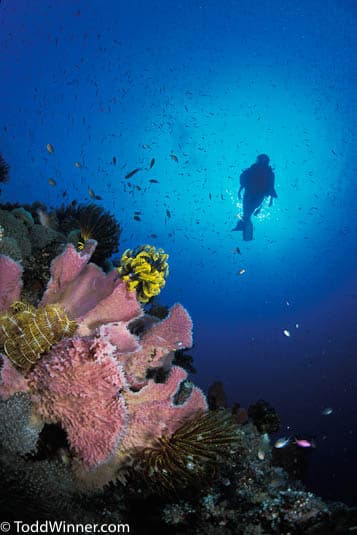
Triton Bay sits on the southern coast of West Papua, tucked inside a 6,000-square-kilometer marine protected area that very few divers have ever visited. In 2006, Conservation International ichthyologist Dr. Gerald Allen surveyed these waters and set a world record: 330 fish species counted on a single dive site. The reefs were dense with soft corals, black coral forests, and gorgonian fans draped across volcanic boulders — a landscape that looked nothing like the hard-coral reefs of Raja Ampat, 600 kilometers to the north. Seventeen years later, Triton Bay still sees a fraction of the traffic that Raja Ampat does. New dive sites are still being discovered on recent expeditions. And the fundamental question every Triton Bay-bound diver faces is the same one that applies to every remote Indonesian frontier: do you go by liveaboard, or do you stay at the one resort?
The Triton Bay liveaboard vs resort decision is not straightforward. Unlike Raja Ampat, where dozens of resorts and liveaboards compete for your booking, Triton Bay has exactly one resort — Triton Bay Divers, on Aiduma Island — and a limited number of liveaboard itineraries that include Triton Bay as part of a broader West Papua route. The choice changes what you see, how much you dive, what you pay, and how you experience one of the most biodiverse marine environments on Earth.
This article answers the question with current 2026 pricing, operator data, and honest comparisons drawn from published itineraries, dive community reports, and direct operator information.
Why This Comparison Matters in 2026
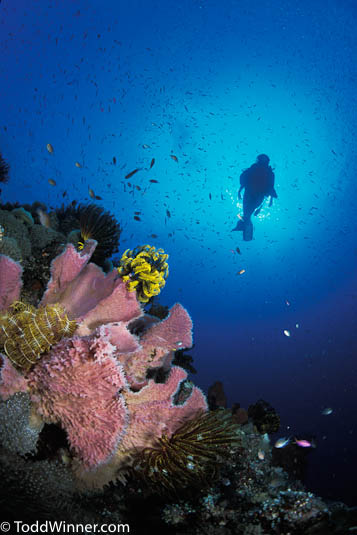
Triton Bay is part of the Bird's Head Seascape — the globally significant marine corridor in West Papua that encompasses Raja Ampat, Cenderawasih Bay, and Kaimana. The Coral Triangle context gives it one of the highest documented marine biodiversity densities anywhere on Earth. What makes Triton Bay distinct from its better-known neighbors is the soft coral: dense Dendronephthya gardens in pinks, oranges, and purples across boulders and walls, black coral forests in deeper sections, and gorgonian fans growing in profusion. Where Raja Ampat is known for hard coral cover and fish diversity, Triton Bay is defined by soft coral density that rivals Fiji — and some marine biologists argue surpasses it (Coralbound, 2025; Calico Jack Charters, 2026).
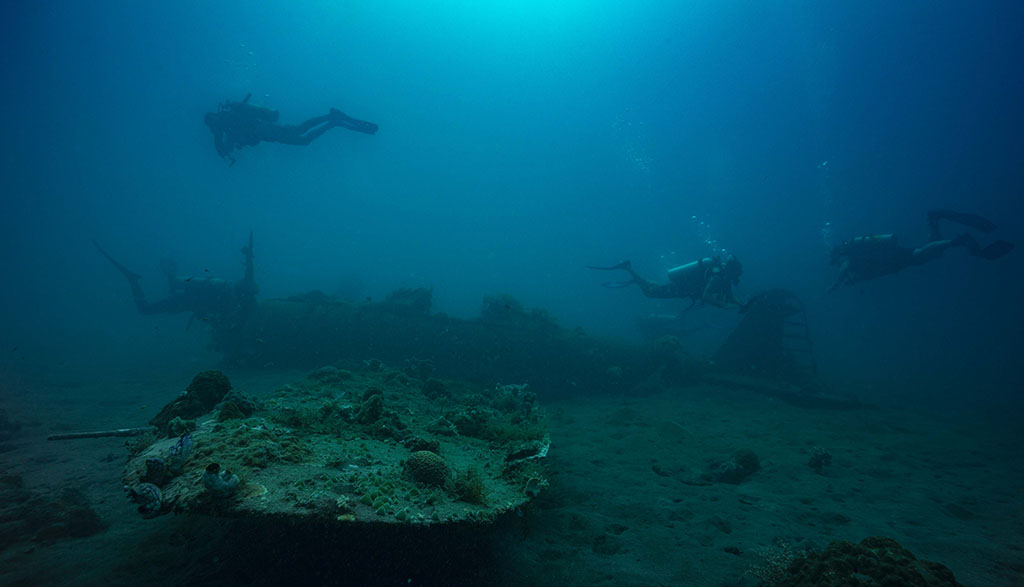
The nutrient-rich water that feeds these gardens is the same water that reduces in-bay visibility to 10–15 meters. This is the central trade-off of Triton Bay diving: extraordinary reef health and fish biomass in exchange for lower visibility than most Indonesian liveaboard destinations. The outer reefs and Bomberai Peninsula, where visibility opens to 25 meters or more, offer a completely different diving character on the same itinerary — so the question of liveaboard vs resort is also a question of how much of that range you want to access.
What Each Option Actually Delivers
Liveaboard Diving: Range and Itinerary Flexibility
Triton Bay liveaboards do not operate as standalone Triton Bay trips. The standard itinerary boards in Sorong (SOQ) — the Raja Ampat gateway — and works south through Misool (Raja Ampat's most biodiverse southern area) along the Bomberai Peninsula to reach Triton Bay. Some operators run the route in reverse from Kaimana to Sorong. A small number run Banda Sea crossings from Ambon. The typical trip is 10 to 14 nights, combining Misool's karst lagoons and manta cleaning stations with Triton Bay's soft coral gardens and whale shark encounters at the bagans (Coralbound, 2025; ZuBlu, 2026).
Vessel costs on Triton Bay itineraries run approximately USD 400 to 600-plus per day depending on category, with total trip costs ranging from USD 3,200 to 10,000-plus for 8-to-14-day itineraries before flights and additional fees (Coralbound, 2025). Most operators deliver three to four dives per day including night dives. The dive count over a 10-to-12-night itinerary lands between 28 and 40 dives — far more than a resort stay can deliver.
Key liveaboard operators running Triton Bay itineraries include:
- MV Ambai — 16-guest phinisi, rated 5/5 on Coralbound, with regular Triton Bay departures. From approximately USD 436 per day (Coralbound, 2026; PADI Travel).
- Dewi Nusantara — 18-guest luxury phinisi, rated 5/5, from approximately USD 634–705 per day (Coralbound, 2026).
- Blue Manta — 22-guest vessel, from approximately USD 393 per day (Coralbound, 2026).
- Calico Jack — 10-guest boutique phinisi, rated 5/5, from approximately USD 352–391 per day (Coralbound, 2026; Calico Jack Charters).
- Gaia Love — 22-guest vessel, rated 5/5, from approximately USD 554 per day (Coralbound, 2026).
- King Neptune — 22-guest vessel, from approximately USD 323–359 per day (Coralbound, 2026).
- Neptune One — 16-guest vessel, rated 5/5, from approximately USD 303–379 per day (Coralbound, 2026).
Most Triton Bay liveaboards run in conjunction with the Raja Ampat season, October through April. Operator frequency to Triton Bay is lower than any other destination in the Bird's Head Seascape — some operators run just one or two Triton Bay itineraries per year (Coralbound, 2025). Booking 6 to 12 months ahead is standard.
Resort Diving: Triton Bay Divers
Triton Bay Divers is the first and only resort in Triton Bay. It sits on a secluded beach on Aiduma Island, approximately 90 minutes by speedboat from the town of Kaimana. The resort offers eight rooms — four Deluxe seaview, two Standard seaview, and two Garden rooms — each with private bathroom, hot water shower, and ceiling fan. There is no air conditioning; electricity runs from 6:00 a.m. to 11:00 p.m. The resort is eco-friendly, built with local materials, and operated as a partnership with the local community (Triton Bay Divers; Bluewater Dive Travel, 2026).
2026 pricing (per person, per night, USD, double occupancy):
| Room type | Price (USD/pp/pn) |
|---|---|
| Seaview Deluxe | from $174 |
| Seaview Standard | from $157 |
| Garden Deluxe | from $164 |
Source: Bluewater Dive Travel (2026). Full board with three meals, afternoon snack, unlimited coffee/tea/water, and three boat dives per day.
The standard 7-night dive package runs approximately EUR 2,794 per person (twin share), including 15 boat dives over five diving days, full board accommodation, and airport transfers from Kaimana on Saturdays (Manado Safaris, 2026). Marine park fees are approximately IDR 600,000 per person (roughly USD 37) and are not included. Non-scheduled Wednesday transfers cost EUR 300 per boat trip (Bluewater Dive Travel, 2026).
The resort offers three boat dives per day to sites within a short boat ride of Aiduma Island. More than 30 known dive sites are accessible from the resort, with the house reef hosting the endemic P. Nursalim Flasher Wrasse. Night diving on the house reef is available (Triton Bay Divers; Manado Safaris, 2026).
The resort is closed from June through mid-September due to the east monsoon.
The Numbers: Triton Bay Dive Trip Cost in 2026
7-Night Liveaboard Cost (per diver, USD)
Most Triton Bay liveaboard itineraries run 10 to 14 nights. For a fair comparison, we model a 10-night itinerary (the shortest common option) and a 12-night itinerary.
| Component | Budget (10 nights) | Mid-range (12 nights) | Luxury (12 nights) |
|---|---|---|---|
| Vessel fare | 3,200–4,000 | 4,500–6,000 | 7,500–10,000+ |
| Domestic flights (Sorong/Kaimana rt) | 200–400 | 200–400 | 200–400 |
| Pre/post accommodation (2 nights) | 100–200 | 150–300 | 200–400 |
| Marine park fees | 50–100 | 50–100 | 50–100 |
| Crew gratuity (~10%) | 320–400 | 450–600 | 750–1,000+ |
| Gear rental (if needed) | 200–300 | 200–300 | 0 (often included) |
| Total estimate | 4,070–5,400 | 5,550–7,700 | 8,700–11,900+ |
Sources: Coralbound (2025–2026 vessel pricing), operator published rates. Domestic flight estimates based on Jakarta–Sorong–Kaimana routing.
Headline liveaboard fares almost never include international flights to Indonesia, domestic connections, marine park fees, crew gratuity, or gear rental. Add USD 800 to 2,000 on top of the vessel fare for a realistic total.
7-Night Resort Cost (per diver, USD)
| Component | Cost |
|---|---|
| 7-night package (TBD, twin share) | ~3,100 (EUR 2,794) |
| International flights to Jakarta/Bali | 800–2,000 |
| Domestic flights to Kaimana (rt) | 200–400 |
| Marine park fees (IDR 600,000) | ~37 |
| Pre/post Kaimana accommodation | 50–150 |
| Total estimate | 4,187–5,687 |
Sources: Manado Safaris (2026 pricing), Bluewater Dive Travel (2026 room rates). International flight ranges from SE Asia, Europe, and North America.
The resort total runs roughly in the same range as a budget-to-mid-range liveaboard — but the liveaboard delivers Misool plus Triton Bay over 10 to 12 nights with 28 to 40 dives, while the resort delivers Triton Bay only over 7 nights with 15 boat dives. Per-dive cost on the liveaboard lands between USD 145 and 280 for a mid-range trip, while the resort runs USD 280 to 380 per dive once flights and park fees are included.
Marine Life: Where Each Option Wins
The Endemic Walking Shark
The Triton Bay epaulette shark (Hemiscyllium henryi) is endemic to Kaimana coastal waters — described scientifically only in 2008 and found nowhere else on Earth (Coralbound, 2025). It uses its pectoral fins to walk across coral heads rather than swimming, is most active after dark, and is typically found sheltering under table corals during the day. Night dives are the best opportunity, but daytime sightings are common at the right sites. The resort, with its house reef and flexible night-diving schedule, is well-positioned for walking shark encounters. Liveaboards also offer night dives on Triton Bay sites, but the resort's proximity to known walking shark habitat gives it a practical edge for repeat encounters.
Whale Sharks at the Bagans
Whale sharks gather at traditional fishing platforms called bagans in East Kaimana and Namatota, drawn by baitfish attracted by the platforms' lights. Groups of three to four individuals feeding simultaneously at the surface are regularly reported. Dolphins are frequent companions at the bagan sites. Encounters are most reliable October through April and are most productive around new moon phases, when baitfish activity peaks (Coralbound, 2025; Bluewater Dive Travel, 2026). Both liveaboards and the resort arrange bagan visits, but liveaboard operators with experienced West Papua crews may time visits to lunar and tidal cycles more precisely. The resort schedules bagan excursions as conditions allow.
Soft Coral Gardens
Triton Bay's defining underwater character. Dense Dendronephthya in pinks, oranges, and purples across boulders and walls. Black coral forests and gorgonian fans in deeper sections. The soft coral density rivals anywhere in Indonesia. Sites like Little Komodo, Saruenus, and Christmas Rock deliver extraordinary soft coral coverage at recreational depths (Calico Jack Charters, 2026). Both liveaboard and resort divers access these sites — the resort is minutes from many of the best ones.
Macro Life
Pygmy seahorses on gorgonian fans, ghost pipefish, frogfish in multiple color morphs, bobtail squid, candy crabs, and high-variety nudibranch species. The endemic Triton Bay flasher wrasse (Paracheilinus sp.) is a highlight for fish photographers and is found on the resort's house reef (Triton Bay Divers; Manado Safaris, 2026). Night dives add bobbit worms, mandarin fish, and crustaceans. The resort's flexible night-diving schedule and house reef access make it particularly strong for macro enthusiasts.
Pelagics and Schooling Fish
Large groupers, Napoleon wrasse, giant trevally, schools of chevron barracuda, eagle rays, and jacks at current-swept points and seamounts. Bryde's whales and dugongs have been documented in the broader Kaimana region. The Bomberai Peninsula outer reefs — accessible primarily by liveaboard — offer pelagic-exposed walls with strong fish life and better visibility than the inner bay sites (Coralbound, 2025). This is where the liveaboard's range advantage becomes most apparent.
The Comparison Matrix
| Criterion | Liveaboard | Resort |
|---|---|---|
| Dives per day | 3–4 (incl. night) | 3 boat dives |
| Total dives in 7 nights | N/A (trips are 10–14 nights) | 15 |
| Total dives in 10–12 nights | 28–40 | N/A (7-night max stay) |
| Misool + Triton Bay combined | Yes (standard itinerary) | No (Triton Bay only) |
| Bomberai Peninsula outer reefs | Yes | Limited |
| Walking shark encounters | Night dives on itinerary | House reef + night dives |
| Whale shark bagan visits | Yes (operator-arranged) | Yes (resort-arranged) |
| House reef access | No | Yes (endemic flasher wrasse) |
| Non-diver-friendly | Poor | Limited but possible |
| Flexibility to skip a dive | Fixed schedule | Choose dives daily |
| Per-dive total cost (mid-range) | USD 145–280 | USD 280–380 |
| 7-night total (mid-range) | N/A | USD 4,200–5,700 |
| 10–12 night total (mid-range) | USD 5,550–7,700 | N/A |
| Booking lead time | 6–12 months | 3–6 months |
| Seasickness factor | Real, especially on crossings | Zero |
| Electricity / AC | Vessel-dependent | Fan only, limited hours |
| Medical evacuation proximity | Remote | Remote |
Sources: Coralbound (2025–2026), Bluewater Dive Travel (2026), Triton Bay Divers, Manado Safaris (2026), Calico Jack Charters (2026).
Decision Framework: Which Option Fits Which Diver
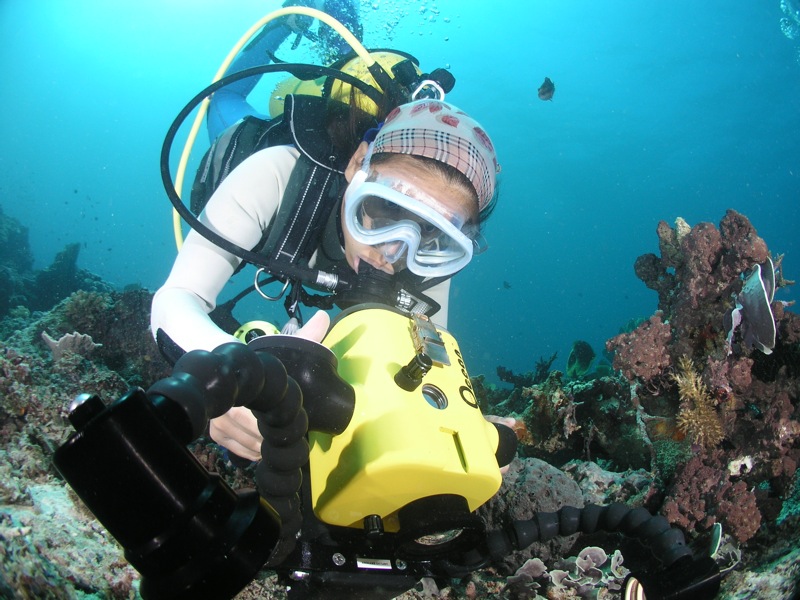
Choose a liveaboard if:
- You want to combine Misool (Raja Ampat's best southern diving) with Triton Bay in a single trip. This is the standard itinerary and is widely considered the most comprehensive single trip in the Bird's Head Seascape.
- Your priority is dive volume — 28 to 40 dives over 10 to 12 nights, including night dives, with access to the Bomberai Peninsula outer reefs that the resort cannot reach.
- You are comfortable with 10-plus nights at sea, early morning briefings, and the compact cabin life of a phinisi vessel.
- You want to see the full range of Triton Bay's diving character — inner bay soft coral gardens, outer reef pelagics, and whale shark bagan visits — without geographic constraints.
- Your budget is USD 5,500 to 10,000-plus per diver for the full itinerary, and you value the expedition feel of reaching a frontier destination by boat.
Choose the resort if:
- Your primary interest is Triton Bay itself — the soft coral gardens, walking sharks, endemic flasher wrasse, and whale shark encounters — without the commitment of a 10-plus-night liveaboard itinerary.
- You are a macro photographer or critter hunter who benefits from flexible night-diving schedules and house reef access. Triton Bay Divers' house reef hosts the endemic flasher wrasse, and the resort's guides know the walking shark sites intimately.
- You want a fixed base with a beach, a bungalow, and the ability to choose your dive schedule day by day. The resort's 30-person staff delivers personalized service that a 16-to-22-guest liveaboard cannot match.
- Your total trip budget is USD 4,000 to 5,700 per diver and you want to spend it entirely on Triton Bay diving rather than a broader multi-destination itinerary.
- You travel with a non-diving partner who prefers a beach bungalow to a cabin on a boat. The resort is basic but comfortable; the above-water experience — jungle-covered islands, the Kiti-Kiti Waterfall on the Bomberai Peninsula, village visits — is genuinely rewarding.
Choose a split-stay if:
- You have 14-plus nights and want both experiences. Three to four nights at the resort before or after a liveaboard lets you explore the house reef and walking shark sites at a relaxed pace, then board the boat for the Misool-to-Triton Bay expedition. Budget USD 8,000-plus per diver.
The Honest Caveats
Visibility is lower than most Indonesian destinations. In-bay visibility runs 10 to 15 meters — a direct consequence of the nutrient-rich water that produces the extraordinary fish biomass and soft coral density. Most divers find it an acceptable trade. The outer reefs and Bomberai Peninsula offer 25 meters or more on the same itinerary (Coralbound, 2025). If crystal-clear water is a non-negotiable for you, Triton Bay may frustrate.
Whale shark encounters are reliable but not guaranteed. Guides time visits to tidal and lunar cycles, and operators know which bagans are most active. But no operator guarantees a whale shark sighting on any specific day. Plan around new moon phases and discuss timing with your operator before booking.
Triton Bay is genuinely remote. Medical resources in Kaimana are limited; the nearest hospital with meaningful capacity is in Sorong or Ambon. Dive insurance with emergency evacuation coverage is mandatory. Travel insurance is strongly recommended — deposits are typically non-refundable and trips cost USD 3,200 to 10,000-plus (Coralbound, 2025; Triton Bay Divers).
The resort is basic. No air conditioning, limited electricity hours, no phone signal, and limited internet. If you need reliable connectivity or climate control, the resort will test you. This is the nature of a remote eco-resort in West Papua — and for many divers, it is part of the appeal.
Liveaboard itineraries vary significantly. Not all liveaboards spend equal time in Triton Bay. Some operators allocate two to three days of a 12-night itinerary to Triton Bay; others spend more. Confirm your operator's Triton Bay allocation before booking. Getting the embarkation and disembarkation ports wrong on a remote West Papua expedition is expensive to fix (Coralbound, 2025).
Raja Ampat marine park permits may be required. If your liveaboard itinerary includes Misool (most do), you will need a Raja Ampat marine park tag — approximately IDR 1,000,000 for international visitors. This is separate from the Kaimana marine park fee.
The MantaraDive Recommendation
After running the 2026 numbers and the diver-profile matrix, our position is direct: most divers should choose the liveaboard.
The standard Sorong-to-Kaimana itinerary that combines Misool with Triton Bay is the most comprehensive single trip available in the Bird's Head Seascape. You get the best of Raja Ampat's southern diving — Misool's karst lagoons, manta cleaning stations, and no-take reserve — combined with Triton Bay's walking sharks, soft coral gardens, and whale shark encounters. Mid-range total: USD 5,500 to 7,700 for 10 to 12 nights and 28 to 40 dives. That is the strongest Triton Bay experience available and the only way to see both destinations in a single trip.
The resort is the right call for specific profiles: dedicated macro photographers who want maximum night-dive flexibility and house reef access, divers who want a Triton Bay-only experience without the Misool component, and anyone who prefers a fixed base with beach life over 10-plus nights on a boat. Triton Bay Divers is a well-run, community-partnered operation with excellent guides and access to 30-plus dive sites. If you book it, go for at least seven nights — the first and last days are largely consumed by transfers.
For 14-plus-night trips at a USD 8,000-plus budget, do both. Start at the resort for three to four nights of Triton Bay-focused diving with night dives on the house reef, then board a liveaboard for the Misool-to-Triton Bay expedition. This gives you the depth of the resort experience plus the range of the liveaboard.
The single biggest mistake we see: divers booking the resort for three or four nights and spending two of those days in transit. The Kaimana transfer logistics — fly to Sorong or Makassar, connect to Kaimana, 90-minute speedboat to Aiduma Island — consume a full day in each direction. Short stays do not work here. Commit to a week or take the liveaboard.
If your shortlist also includes Raja Ampat, our analysis on Raja Ampat vs Komodo diving walks the same cost-vs-experience math for the Coral Triangle — useful when divers are deciding between a West Papua trip and an eastern Indonesia one.
Talk to a Specialist
Choosing the right Triton Bay liveaboard vs resort path is itinerary-and-season specific — the difference between a liveaboard that spends three days in Triton Bay and one that spends five, the resort allocation during peak whale shark season versus shoulder months, and the Misool component that most liveaboard itineraries include all change the value proposition materially. MantaraDive advisors cross-reference real-time vessel availability, resort pricing, and seasonal probability data with your trip dates, certification level, and travel-style preferences. Send us your dates, budget, and priorities and we will return a custom shortlist of two to three options within 24 hours, with the trade-offs spelled out.
Sources and Methodology
This article draws on data cross-referenced from the following independent sources: Coralbound (2025–2026 Triton Bay liveaboard guide, vessel pricing, itinerary descriptions, marine life data, and seasonal patterns), Bluewater Dive Travel (2026 Triton Bay Divers room pricing and resort details), Triton Bay Divers (official website — resort specifications, dive site information, and operational details), Manado Safaris (2026 Triton Bay Divers package pricing at EUR 2,794 for 7 nights, transfer logistics), Calico Jack Charters (2026 Triton Bay diving guide with dive site descriptions and vessel information), ZuBlu (2026 liveaboard listings for Triton Bay with 21 active vessels), PADI Travel (Ambai Triton Bay–Raja Ampat itinerary details), TripAdvisor (Triton Bay Divers reviews, ranked #1 specialty lodging in Kaimana), ScubaBoard (community trip reports and resort reviews), and Conservation International (Dr. Gerald Allen's 2006 survey data, Kaimana MPA establishment in 2008, and Bird's Head Seascape biodiversity context). The walking shark (Hemiscyllium henryi) was formally described in 2008 by Allen and colleagues. All USD figures reflect rates published in early-to-mid 2026; actual costs vary by operator, season, cabin class, departure date, and booking lead time. Megafauna probabilities reflect historical patterns and operator-reported sighting rates, not guarantees.
Related MantaraDive planning links
- Is Raja Ampat Worth It? An Honest Cost-Benefit Breakdown for 2026
- Raja Ampat vs Komodo Diving: Which Indonesian Liveaboard Earns Your Money in 2026?
- Wakatobi vs Raja Ampat vs Alor: Which Remote Indonesian Reef Wins for Marine Life?
- Komodo Liveaboard Prices: What It Actually Costs (and What's Worth It)
- Maldives Liveaboard vs Resort: Which Actually Gives You Better Diving in 2026?
- Best Solo-Friendly Liveaboards in the Maldives, Indonesia, and Philippines
- Red Sea Liveaboard Itinerary: North vs South for European Divers
- Great Barrier Reef for Long-Haul Travelers: Is the Premium Coral Sea Liveaboard Worth It?