
Two destinations. One archipelago. A decision that will shape your next dive trip and your budget for months to come. If you are planning an Indonesia liveaboard in 2026, the Raja Ampat vs Komodo diving debate is unavoidable—and the answer depends on what you value most underwater.
Raja Ampat sits at the apex of global marine biodiversity, a remote cluster of 1,500-plus islands in West Papua where scientists have catalogued more than 1,000 fish species and over 500 coral species (LiveAboard.com, 2026). Komodo, by contrast, is a UNESCO World Heritage Site defined by raw current energy, pelagic hunting grounds, and manta ray aggregations that can number in the dozens on a single dive (DiveIn.com, 2025). Both deliver exceptional diving. Both command significant budgets. But they are not interchangeable.
We built this comparison using current liveaboard pricing data, verified seasonal conditions, and dive site specifics drawn from multiple independent sources. Whether you are deciding between your first Indonesia liveaboard or choosing where to return, this article breaks down the numbers, the marine life, and the logistics so you can invest confidently.
Why This Comparison Matters Now
Heading into 2026, the Raja Ampat vs Komodo diving question has grown more complex. The Indonesia liveaboard market has shifted meaningfully. Komodo National Park has begun enforcing a strict daily visitor cap of 1,000 people across its core zones starting April 2026 (LiveAboard.com, 2026). That quota system means booking earlier matters more than ever, particularly for peak-season departures. Meanwhile, Raja Ampat continues to operate without hard visitor caps, though its USD 100 marine park entry fee—mandatory for all visitors—remains one of the highest conservation levies in the dive world (LiveAboard.com, 2026).
Liveaboard fleets serving both destinations have also upgraded: dedicated camera stations, onboard Nitrox generators, and high-speed satellite internet are increasingly standard rather than premium add-ons. The gap between mid-range and luxury vessels is narrowing, which changes the value equation for budget-conscious divers.
Raja Ampat: Biodiversity at the Top of the World
The Case for Raja Ampat
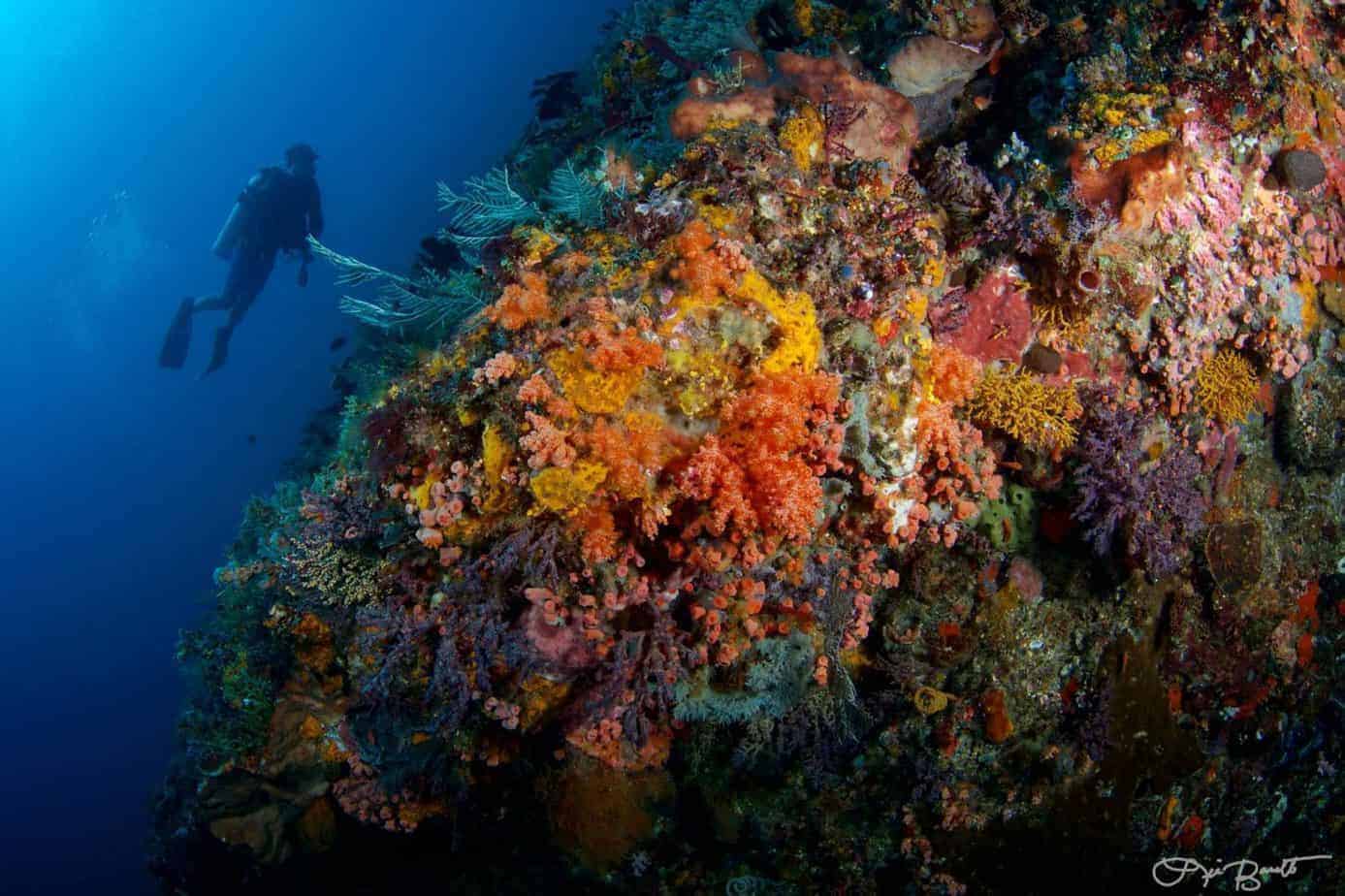
Raja Ampat's claim rests on a single, hard-to-argue fact: it is the most biodiverse marine environment on Earth. In 2002, marine surveys declared it the world's richest place for marine life, and subsequent research has only reinforced that designation (LiveAboard.com, 2026). Gerald R. Allen recorded 374 species in a single dive at Cape Kri in 2012—a world record that still stands (DiveIn.com, 2025).
The archipelago's four main islands—Misool, Salawati, Batanta, and Waigeo—plus hundreds of smaller islets create a mosaic of reef systems, walls, pinnacles, and channels. Seventy-five percent of all known coral species are found here (DiveIn.com, 2025).
Top Dive Sites in Raja Ampat
Cape Kri (Dampier Strait). The world-record dive site. Multiple converging currents converge on a reef system off northeast Kri Island, funneling grey reef sharks, blacktip and whitetip reef sharks, wobbegongs, and massive schools of barracuda and trevally. Reef hooks are mandatory. Currents can be ferocious—this is intermediate-to-advanced diving (DiveIn.com, 2025; DiveZone.net).
Blue Magic. A submerged pinnacle between Mioskun and Cape Kri, invisible from the surface and rising from roughly 30 meters to 7 meters. It functions as a manta ray cleaning station where mantas pass within arm's reach. Gorgonian sea fans, blacktip and whitetip reef sharks, and schooling barracuda round out the site. Bring a reef hook and watch the blue water for passing pelagics (DiveIn.com, 2025).
Melissa's Garden. An expansive coral garden that is arguably the single best representation of Raja Ampat's reef health. Wobbegong sharks sleep under ledges. Clownfish shelter in anemones. Manta rays visit from May through October. Currents are generally mild compared to Cape Kri and Blue Magic, making it accessible to a wider range of divers (DiveIn.com, 2025).
Manta Ridge. A cleaning station at roughly 20 meters depth, most active from November to April. Hook onto the reef and watch mantas glide past. Currents are strong—this is an intermediate-to-experienced site (DiveIn.com, 2025).
Misool Island (Boo Windows and Shadow Reef). Far south in the archipelago, Misool offers the "kaleidoscope" diving that Raja Ampat is famous for—rainbow soft corals, swim-throughs at Boo Windows, and oceanic plus reef mantas at Shadow Reef's cleaning station. Macro enthusiasts find pygmy seahorses, ghost pipefish, and nudibranchs in abundance (LiveAboard.com, 2026; DiveIn.com, 2025).
Raja Ampat Practical Data
| Factor | Detail |
|---|---|
| Water temperature | 26–30°C year-round |
| Visibility | 25–30 meters |
| Best season | October to April (year-round diving possible) |
| Marine park fee | USD 100 (mandatory) |
| Liveaboard price range | USD 821–14,041 per trip |
| Liveaboard count | 60 vessels available |
| Guest rating | 9.2/10 (373 verified reviews) |
| Access | Fly to Sorong from Jakarta; liveaboard or resort transfer |
Sources: LiveAboard.com (2026), DiveIn.com (2025), DiveZone.net
The Honest Caveat: Raja Ampat Is Not for Everyone
Raja Ampat's remoteness is both its greatest asset and its biggest barrier. Getting there requires at least two flights—typically Jakarta to Sorong, then a boat transfer. There are no direct international flights. The diving demands solid buoyancy skills and comfort in currents; experienced divers with 75-plus logged dives and Advanced Open Water certification are the recommended minimum (DiveZone.net). Down currents at sites like Mike's Point and Manta Ridge are real hazards, not theoretical risks. One experienced diver reported that at Mike's Point, "only 3 of 10 made it to the surface" during a strong down-current event (DiveZone.net, diver review).
If you are a newer diver or uncomfortable with drift diving, Raja Ampat's best sites will test you beyond what is enjoyable. The resort and homestay options in the central islands offer gentler diving, but the headline liveaboard sites are current-heavy.
Komodo: Current, Power, and Pelagics
The Case for Komodo
Komodo diving is defined by energy. The park sits at a bottleneck between the Indian and Pacific Oceans, and that geographic position creates powerful currents that fuel one of the planet's most dynamic marine ecosystems. Where Raja Ampat wins on biodiversity volume, Komodo wins on raw intensity—grey reef sharks hunting in packs, giant trevallies charging through bait balls, and manta ray aggregations that can number 20 to 50 animals at a single site (DiveIn.com, 2025; LiveAboard.com, 2026).
Komodo is also significantly easier to reach than Raja Ampat. Labuan Bajo on Flores is the gateway, served by direct flights from Bali (roughly one hour). That accessibility, combined with a lower entry price point, makes Komodo the more practical choice for many dive travelers.
Top Dive Sites in Komodo
Castle Rock (North Komodo). A current-swept seamount rising from 35 meters to just below the surface. Start deep and work shallower: grey reef sharks, schooling barracuda, jackfish, and mackerel dominate the deeper sections; batfish and fusiliers hold the shallows. Strong currents demand advanced buoyancy and comfort with negative entries (DiveIn.com, 2025; DiveZone.net).
Batu Bolong (Central Komodo). A tiny rock above the surface that hides one of the world's most celebrated dive sites below. The pinnacle drops steeply on all sides, with a staggering density of hard and soft corals, green turtles, trevallies, rays, sharks, sweetlips, and Napoleon wrasse. Divers typically start on the current-protected side and zig-zag across the reef. Advanced skill level required (DiveIn.com, 2025).
The Cauldron / Shotgun (North Komodo). Komodo's signature drift dive. The topography funnels divers through a channel between two islands—sloping reef drops to a sandy bottom below 20 meters, then a rubble plateau plunges 15 to 23 meters before the current shoots you through the channel like "a cannonball," as one reviewer described it. Garden eels and pygmy seahorses on the plateau; sharks, mantas, and giant trevallies in the channel (LiveAboard.com, 2026; DiveIn.com, 2025).
Manta Point / Karang Makassar (Central Komodo). A shallow drift dive at 2 to 15 meters over cleaning stations. Manta ray sightings peak from December through February, though mantas are present year-round. This is the most accessible manta experience in Komodo—warm water, manageable depth, and a high probability of encounters (LiveAboard.com, 2026).
Manta Alley (South Komodo). The deep south's crown jewel. Aggregations of 20 to 50 mantas feed on plankton and use cleaning stations on a sandy slope at the southern tip of Komodo Island. Accessible only by liveaboard. Water temperature drops to 21–24°C due to cold upwellings, and visibility falls to 10–15 meters. This is a different world from the warm, clear north (LiveAboard.com, 2026; DiveIn.com, 2025).
Cannibal Rock (South Komodo). A macro hotspot in Horseshoe Bay. Pygmy seahorses, frogfish, rare nudibranchs including Melibe colemani, sea apples, and blue-ringed octopus. The south route rewards divers who look small (LiveAboard.com, 2026).
Komodo Practical Data
| Factor | Detail |
|---|---|
| Water temperature (North) | 27–29°C |
| Water temperature (South) | 21–24°C |
| Visibility (North) | 30+ meters |
| Visibility (South) | 10–15 meters |
| Best season (North) | April–October (dry) |
| Best season (South) | October–April (NW monsoon) |
| Liveaboard price range | USD 501–14,041 per trip |
| Liveaboard count | 59 vessels available |
| Guest rating | 9.3/10 (324 verified reviews) |
| Access | Fly Bali to Labuan Bajo (~1 hour) |
| 2026 visitor cap | 1,000 daily visitors (core zones, April 2026) |
Sources: LiveAboard.com (2026), DiveIn.com (2025), DiveZone.net
The Honest Caveat: Komodo's Currents Are Not a Metaphor
Komodo's currents are among the strongest in recreational diving. Current speeds can reach 8 knots at sites like Castle Rock and The Cauldron (DiveZone.net). The north-south temperature swing—from 29°C in the north to 21°C in the south—means divers need exposure suits for both ends of the spectrum on a single liveaboard trip. The south route's lower visibility and rougher crossings are not for everyone.
The new 1,000-person daily cap at Komodo National Park, effective April 2026, is a positive development for reef health but creates a booking pressure that did not exist before. Peak-season departures (July through September) will fill faster, and operators are already reporting increased advance reservations (LiveAboard.com, 2026).
The Decision Framework: Raja Ampat vs Komodo
The following matrix maps your priorities to the destination that best serves them.
| Priority | Choose Raja Ampat | Choose Komodo |
|---|---|---|
| Marine biodiversity | Highest coral and fish species counts on Earth | Strong but lower total species count |
| Pelagic encounters | Good (reef sharks, mantas, occasional whale sharks) | Excellent (grey reef sharks, mantas in massive aggregations) |
| Macro / muck diving | Excellent (pygmy seahorses, ghost pipefish, nudibranchs) | Excellent (frogfish, rhinopias, Melibe colemani) |
| Current intensity | Moderate to strong (some sites very strong) | Strong to extreme (8 knots possible) |
| Water temperature | Consistently warm (26–30°C) | Variable (21–29°C, north vs south) |
| Visibility | Consistent 25–30 meters | 30+ meters north; 10–15 meters south |
| Accessibility | Remote (multiple flights to Sorong) | Easy (1-hour flight from Bali) |
| Budget (7-day liveaboard) | USD 2,500–5,000 mid-range | USD 1,800–4,000 mid-range |
| Conservation fee | USD 100 marine park fee | Included in park entry |
| Crowd levels | Lower overall visitor volume | Higher; new 1,000/day cap helps |
| Diving experience needed | AOW + 75 dives recommended | AOW minimum; some sites beginner-friendly |
| Best for photographers | Wide-angle reef scenes, macro | Action shots, manta aggregations |
The Bottom-Line Decision Guide
Choose Raja Ampat if: You prioritize coral biodiversity above all else, you want consistently warm water, you are comfortable with currents, and your budget can absorb the higher travel cost and marine park fee. Raja Ampat is the destination for divers who want to see the richest reef system on the planet and are willing to invest the time and money to get there.
Choose Komodo if: You want adrenaline-pumping drift dives, manta ray aggregations in large numbers, easier logistics from Bali, and a lower overall price point. Komodo is the destination for divers who thrive on current energy and want the flexibility of a north-or-south route depending on the season.
Choose both if: Your budget allows a two-destination itinerary. Several operators now offer combined Raja Ampat–Komodo itineraries that take advantage of seasonal windows, though these typically run 10 to 14 days and start at the upper end of the USD 5,000–15,000 range (Rainforest Cruises, 2026).
Liveaboard Pricing: What Your Budget Buys in 2026
Both destinations offer a wide price spectrum, but the economics differ meaningfully at the entry and mid-range tiers.
| Tier | Raja Ampat (7 nights) | Komodo (7 nights) |
|---|---|---|
| Budget | USD 800–1,500 | USD 500–1,200 |
| Mid-range | USD 2,500–5,000 | USD 1,800–4,000 |
| Luxury | USD 5,000–14,000 | USD 5,000–14,000 |
Source: LiveAboard.com (2026)
Komodo's lower entry price reflects its easier logistics—shorter transfers from Bali mean lower fuel and provisioning costs for operators. Raja Ampat's higher baseline is driven by the Sorong access requirement and longer sailing distances between the remote southern sites (Misool) and the central Dampier Strait.
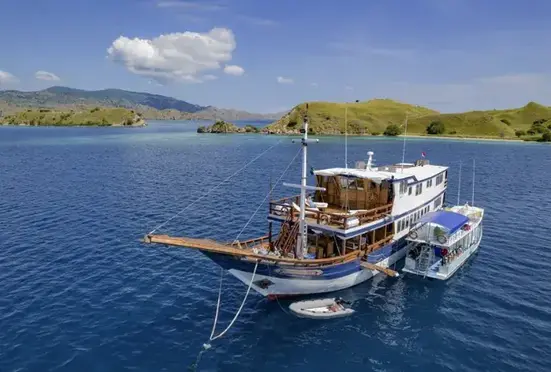
At the luxury tier, pricing converges. Both destinations feature traditional Indonesian Phinisi sailing vessels with full-service crews, onboard Nitrox, camera rooms, and satellite connectivity. The Arenui, KLM Sea Safari VI, and Alila Purnama operate across both regions.
Hidden Costs to Factor
Beyond the liveaboard fare, budget for:
- International flights to Indonesia (not included in any liveaboard pricing)
- Domestic flights: Jakarta–Sorong (Raja Ampat) or Bali–Labuan Bajo (Komodo)
- Marine park fees: USD 100 for Raja Ampat; approximately IDR 250,000/day (~USD 15) for international divers in Komodo, plus an IDR 25,000/day diving surcharge (Ocean Earth Travels, 2026)
- Dive equipment rental if not bringing your own (USD 25–35/day in Komodo; varies in Raja Ampat; LiveAboard.com, 2026)
- Nitrox surcharges on some vessels
- Gratuities for crew (typically 10–15% of trip cost)
Season Strategy: When to Go
When comparing Raja Ampat vs Komodo diving, one of the most significant differences is how seasons affect the diving.
Raja Ampat offers year-round diving with relatively consistent conditions. The October-to-April window is the most popular, with calmer seas and less rain. Manta Ridge peaks November through April, while Melissa's Garden sees mantas May through October. Water temperature stays in the 26–30°C band regardless of month (LiveAboard.com, 2026; DiveIn.com, 2025).
Komodo splits into two distinct experiences by season. The north route (April through October) delivers the iconic drift dives at Castle Rock, Crystal Rock, and The Cauldron—warm water, 30-plus meter visibility, and peak shark activity. The south route (October through April) brings the plankton blooms that attract massive manta aggregations at Manta Alley, but water temperatures drop to 21–24°C and visibility falls to 10–15 meters (LiveAboard.com, 2026).
| Month | Best Destination | Why |
|---|---|---|
| January–March | Raja Ampat | Peak manta season at Manta Ridge; calm seas |
| April–May | Komodo (North) | Shoulder season, fewer crowds, warming water |
| June–August | Komodo (North) | Peak conditions, strongest pelagic action |
| September–October | Either | Transition month; Komodo south opens; Raja Ampat season begins |
| November–December | Raja Ampat | Manta Ridge peak; excellent all-round conditions |
The MantaraDive Recommendation
After weighing the data, we recommend Komodo for first-time Indonesia liveaboard divers and Raja Ampat for experienced divers seeking the ultimate reef biodiversity experience.
Komodo's combination of easier logistics, lower price point, and extraordinary pelagic encounters makes it the smarter first investment. The one-hour flight from Bali eliminates the multi-leg journey to Sorong, the liveaboard pricing starts roughly 30 percent lower at the budget and mid-range tiers, and sites like Castle Rock, Batu Bolong, and Manta Alley deliver a calibre of diving that justifies the trip on their own.
For divers who have already done Komodo—or who specifically want to witness the most biodiverse marine ecosystem on Earth—we recommend Raja Ampat without reservation. Cape Kri, Blue Magic, Melissa's Garden, and the Misool sites offer something no other destination replicates: a reef system so dense with life that a single dive can yield 374 fish species. The USD 100 marine park fee funds the conservation effort that keeps it that way, and we consider it money well spent.
If your budget and schedule allow only one Indonesia liveaboard in 2026, start with Komodo. If you are planning a second trip within 18 months, save Raja Ampat for when you can do it properly—the remoteness and investment deserve a full itinerary, not a rushed week.
If you are still weighing Indonesia against the Indian Ocean, our companion analysis on the Maldives liveaboard vs resort decision covers the parallel calculation for divers chasing reef mantas, whale sharks, and channel diving in a different ocean.
Talk to a Specialist
Choosing between Raja Ampat and Komodo is only the first decision. Route selection, vessel class, seasonal timing, and dive site sequencing all affect whether your liveaboard delivers a good trip or an exceptional one. MantaraDive advisors provide real-time availability data, operator-specific recommendations, and custom itinerary planning based on your certification level, budget, and marine life priorities. We work with operators across both destinations and can match you to the vessel and route that fits—not just the one that happens to have space.
Sources and Methodology
This article draws on data from the following independent sources, cross-referenced for accuracy: LiveAboard.com (2026 pricing, vessel counts, guest ratings, and seasonal data for both Raja Ampat and Komodo), DiveIn.com (2025 dive site guides authored by Yvonne Press and Rebecca Strauss, covering site-specific marine life, conditions, and practical tips), and DiveZone.net (diver reviews, liveaboard pricing benchmarks, and safety advisories). Where specific figures could not be independently verified from multiple sources, we have marked them with [verify] inline. All pricing is in US dollars and reflects published rates as of early 2026; actual costs vary by operator, season, and booking lead time. Marine life sighting probabilities are based on historical patterns and operator reports, not guarantees.
Related MantaraDive planning links
- Solo Diving in the Philippines: Which Resorts and Liveaboards Welcome Solo Travelers?
- Komodo Liveaboard Prices: What It Actually Costs (and What's Worth It)
- Red Sea Liveaboard Itinerary: North vs South for European Divers
- Lembeh Strait for Macro Photographers: Complete 2026 Guide
- 5 Essential Beginner Tips for Your First Tropical Dive Trip
- Best Dive Sites in Bali: 3 That Matter for a 7-Day Trip
- Is Raja Ampat Worth It? An Honest Cost-Benefit Breakdown for 2026
- Philippines, Maldives, or Raja Ampat: How to Pick Your Next Liveaboard