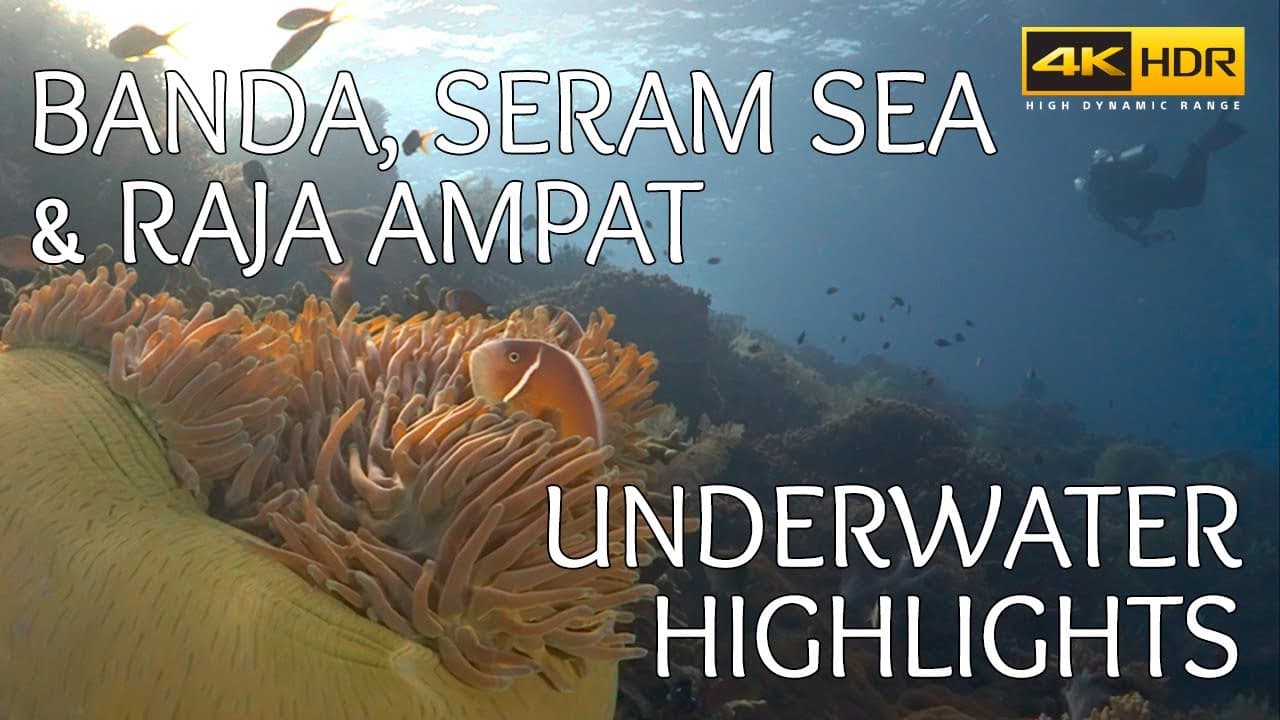
Indonesia holds more marine biodiversity than any other country on Earth. Within its 17,000 islands, three destinations stand apart as the most remote, most biodiverse, and most demanding to reach: Wakatobi in Southeast Sulawesi, Raja Ampat in West Papua, and Alor in East Nusa Tenggara. Each sits in a different oceanographic corridor. Each delivers fundamentally different diving. And each commands a budget that makes choosing between them a decision worth getting right.
This comparison breaks down what each destination actually offers underwater, how much it costs to get there and stay, what conditions to expect, and which one fits which kind of diver. We built it using current operator data, conservation research, and verified diver reports from 2025 and 2026.
The Three Destinations at a Glance
Before diving into the details, here is the high-level picture.
| Factor | Wakatobi | Raja Ampat | Alor |
|---|---|---|---|
| Region | Southeast Sulawesi | West Papua | East Nusa Tenggara |
| Coral species recorded | ~940 | ~537 | ~400+ |
| Fish species recorded | ~900+ | ~1,000+ | ~600+ |
| Primary draw | Pristine wall diving, house reef macro | Peak biodiversity, current-driven pelagics | Untouched reefs, rare critters, extreme remoteness |
| Nearest major airport | Kendari (Wakatobi charter) | Sorong | Kupang |
| Typical access | Wakatobi Resort charter flight + boat | Fly to Sorong, then liveaboard or resort boat | Fly to Kupang, then 8–12 hour overland + boat |
| Liveaboard options | Limited (resort-centric) | 60+ vessels | Very few (emerging market) |
| Resort options | Wakatobi Resort (one dominant property) | Homestays, boutique resorts, liveaboards | Small eco-lodges, limited infrastructure |
| Marine park fee | Included in resort packages | USD 100 (mandatory) | None formal |
| 7-day trip budget (mid-range) | USD 3,500–5,500 | USD 2,500–5,000 | USD 2,000–4,000 |
Sources: Wakatobi.com (2026), LiveAboard.com (2026), DiveIn.com (2025), Coral Triangle Initiative reports
Raja Ampat: The Biodiversity Benchmark
Why It Leads on Species Counts
Raja Ampat is not a close call. It is the most biodiverse marine environment documented by science. The 2002 Conservation International survey that put it on the map has been reinforced by two decades of follow-up research. Gerald R. Allen's 2012 record of 374 fish species in a single dive at Cape Kri still stands (DiveIn.com, 2025). Seventy-five percent of all known coral species have been recorded here (DiveIn.com, 2025).
The archipelago's position at the apex of the Coral Triangle — where the Pacific and Indian Oceans meet — creates a nutrient convergence that fuels reef growth at a scale found nowhere else. Misool in the south, the Dampier Strait in the center, and Wayag in the north each offer distinct reef profiles: soft coral walls, current-swept pinnacles, manta cleaning stations, and sheltered macro gardens.
What Diving Raja Ampat Actually Looks Like
The signature Raja Ampat experience is a current dive on a pinnacle or reef edge where grey reef sharks, blacktip reef sharks, wobbegongs, giant trevallies, and massive schools of jacks and barracuda converge. Cape Kri, Blue Magic, and Manta Ridge in the Dampier Strait are the headline sites. Melissa's Garden offers a gentler coral garden experience. Misool's Boo Windows and Shadow Reef deliver the soft coral "kaleidoscope" that photographers travel across the world to shoot.
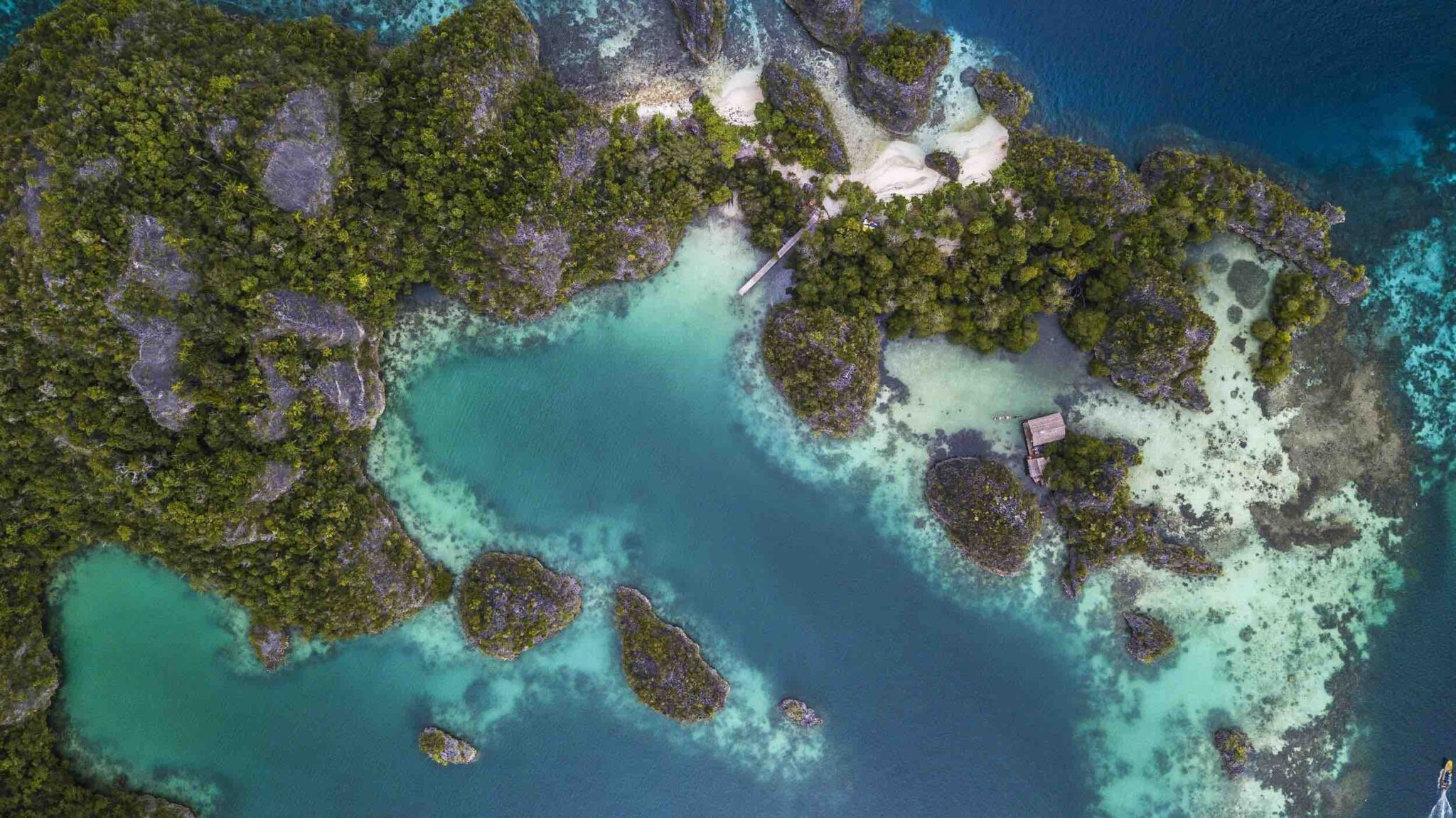
Water temperature holds steady at 26–30°C year-round. Visibility sits at 25–30 meters. The best conditions run October through April, though diving is possible year-round. The marine park entry fee is USD 100, mandatory for all visitors (LiveAboard.com, 2026).
Raja Ampat's Real Barrier
Remoteness and cost. Getting to Sorong requires at least two flights from most international origins — typically Jakarta or Makassar as a hub. There are no direct international flights. The liveaboard market is mature (60+ vessels), but mid-range pricing starts around USD 2,500 for a 7-day trip and can exceed USD 14,000 for luxury vessels. Resort-based diving in the central islands is more affordable but limits access to the headline sites, which are spread across a vast area best covered by liveaboard.
Diving demands are real. Cape Kri and Blue Magic require solid buoyancy and comfort in strong currents. Experienced divers with 75-plus logged dives and Advanced Open Water certification are the recommended minimum (DiveZone.net). Down currents are a documented hazard at several sites.
Raja Ampat Practical Data
| Factor | Detail |
|---|---|
| Water temperature | 26–30°C year-round |
| Visibility | 25–30 meters |
| Best season | October to April (year-round diving) |
| Marine park fee | USD 100 |
| Liveaboard price range | USD 821–14,041 per trip |
| Liveaboard count | 60+ vessels |
| Guest rating | 9.2/10 (373 verified reviews) |
| Access | Fly to Sorong; liveaboard or resort transfer |
Sources: LiveAboard.com (2026), DiveIn.com (2025), DiveZone.net
Wakatobi: The Polished Remote Experience
What Wakatobi Does Differently
Wakatobi occupies a different niche than Raja Ampat. Where Raja Ampat is a wild, current-driven frontier, Wakatobi is a curated, resort-centric experience built around one dominant property: Wakatobi Resort (formerly Wakatobi Dive Resort). The resort sits on a private island in the Tukang Besi archipelago and controls access to a house reef that is frequently cited as one of the best shore dives in the world.
The reef system here is part of the Wakatobi National Park, which protects roughly 1.39 million hectares of coral reef, mangrove, and open ocean. The park's isolation from major population centers has kept it remarkably healthy. Coral coverage at well-maintained sites exceeds 80% in places — a figure that most of Southeast Asia cannot match (Wakatobi.com, 2026).
What Diving Wakatobi Looks Like
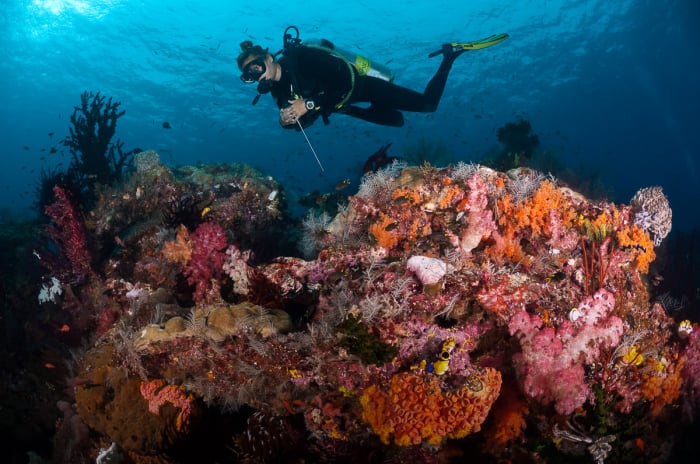
The house reef is the centerpiece. It drops from a shallow reef flat to over 300 meters within a short swim from the resort jetty. The wall is encrusted with gorgonian fans, barrel sponges, and dense soft coral. Pygmy seahorses, ghost pipefish, blue-ringed octopus, and a staggering diversity of nudibranchs live on the wall. Night dives on the house reef are a highlight — mandarin fish, bobtail squid, and decorator crabs are reliable finds.
Boat dives access sites like Roma, Table Coral City, and Cornucopia — expansive coral gardens and wall systems with strong fish density. Currents exist but are generally moderate compared to Raja Ampat's headline sites. The diving is comfortable for intermediate-level divers, though advanced sites exist.
Wakatobi's Real Limitation
It is a single-resort destination. There is no liveaboard market to speak of. If you want variety in operators, itineraries, or social scene, Wakatobi is not it. The resort is excellent at what it does — polished service, well-maintained equipment, professional guides — but you are committing to one property and one house reef system for the duration of your trip.
Access is also a consideration. Wakatobi Resort operates a charter flight from Bali to the resort's private airstrip, which is included in package pricing. Independent access requires flying to Kendari and arranging boat transfers, which is logistically more complex.
Cost is the other factor. Wakatobi Resort packages start around USD 3,500 for a 7-day stay and can exceed USD 6,000 depending on room type and season. The all-inclusive model (accommodation, diving, meals, transfers) simplifies budgeting but limits flexibility.
Wakatobi Practical Data
| Factor | Detail |
|---|---|
| Water temperature | 26–29°C year-round |
| Visibility | 20–40 meters (variable by site and current) |
| Best season | October to May (SE monsoon brings best visibility) |
| Marine park fee | Included in resort package |
| 7-day package range | USD 3,500–6,500 |
| Liveaboard count | Minimal (resort-centric model) |
| House reef depth | 5–300+ meters |
| Access | Charter flight from Bali (resort-arranged) |
Sources: Wakatobi.com (2026), DiveIn.com (2025)
Alor: The Last Frontier
Why Alor Exists in a Different Category
Alor is the least-known of the three, and that is precisely its appeal. Part of the East Nusa Tenggara province, the Alor archipelago sits in the Ombai-Wetar strait — a deep-water channel between Alor and Timor that funnels nutrient-rich currents from the Indian Ocean into the Banda Sea. This geographic position creates diving conditions that are simultaneously nutrient-rich and genuinely wild.
Alor does not have the polished infrastructure of Wakatobi or the mature liveaboard market of Raja Ampat. What it has is reef health that rivals both, a macro diving scene that may surpass them, and a level of isolation that means you will share dive sites with almost no one.
What Diving Alor Looks Like
The signature Alor experience is a wall dive on a reef that has seen almost no human impact. Hard coral coverage at prime sites approaches 90% — a figure that stunned researchers from the Coral Triangle Initiative who surveyed the area. The walls are draped in soft corals, sea fans, and barrel sponges. Schools of bumphead parrotfish, Napoleon wrasse, and reef sharks are common.
Macro diving is where Alor quietly excels. The black sand slopes around Pura Island and the Pantar Strait produce rhinopias (weedy scorpionfish), blue-ringed octopus, wonderpus, hairy frogfish, and an array of nudibranchs that rival Lembeh Strait — without the crowds or the muck-diving-only profile. Alor's macro sites sit beneath pristine coral walls, so you get critter hunting and reef diving in the same dive.
Currents are strong and unpredictable. The Ombai-Wetar strait generates tidal flows that can exceed 4 knots at surface level and create down currents at reef edges. This is advanced diving with no margin for poor buoyancy or inexperience.
Alor's Real Barrier
Access is genuinely difficult. The standard route is: fly to Kupang (Timor), then take an 8–12 hour overland drive to Kalabahi (Alor's main town), then arrange boat transfers to dive sites. Some operators offer direct small-aircraft flights from Kupang to Alor, but these are weather-dependent and infrequent.
Infrastructure is minimal. Small eco-lodges like Alor Dive Resort and a handful of homestays provide accommodation, but there is no luxury option. Equipment rental is limited — bring your own gear. Nitrox availability is not guaranteed. Medical facilities are basic; hyperbaric chambers are in Kupang, not on Alor.
Liveaboard access is emerging but very limited. A few operators include Alor in Banda Sea itineraries, but dedicated Alor liveaboards are not yet a market.
Alor Practical Data
| Factor | Detail |
|---|---|
| Water temperature | 24–28°C (variable; cold upwellings possible) |
| Visibility | 15–30 meters (nutrient-rich water can reduce vis) |
| Best season | April to November (dry season) |
| Marine park fee | None formal |
| 7-day trip budget | USD 2,000–4,000 (eco-lodge + boat dives) |
| Liveaboard count | Very few (Banda Sea itineraries include Alor) |
| Access | Fly to Kupang, 8–12 hour overland + boat |
| Hyperbaric chamber | Kupang (nearest) |
Sources: DiveIn.com (2025), Coral Triangle Initiative, Alor Dive Resort (2026)
The Marine Life Showdown
This is the question the headline promises: which destination delivers the most marine life?
Species Richness
Raja Ampat wins on documented species counts. Over 1,000 fish species and 537 coral species have been recorded. Wakatobi's 900+ fish species and ~940 coral species (including undocumented soft coral taxa) put it close, though the survey effort is less comprehensive. Alor's biodiversity is less well-documented but preliminary surveys suggest 600+ fish species and 400+ coral species — figures that would place it among the richest reefs in the Lesser Sunda region.
The honest answer: Raja Ampat has the strongest scientific evidence for peak biodiversity. Wakatobi may rival it in certain coral and macro taxa but has less survey coverage. Alor is the least studied but almost certainly under-documented — the reefs look like they belong in a 20-year-old documentary.
Pelagic Encounters
Raja Ampat leads on shark encounters — grey reef sharks, blacktip reef sharks, whitetip reef sharks, and wobbegongs are reliable at current-swept sites. Manta ray encounters are strong at Manta Ridge and Blue Magic (November to April peak). Whale sharks are occasional visitors.
Wakatobi has reef sharks and occasional manta rays at outer reef sites, but pelagic encounters are not the primary draw. The diving is reef- and macro-focused.
Alor offers bumphead parrotfish schools, Napoleon wrasse, reef sharks, and occasional manta rays. The strong currents attract pelagic life, but encounters are less predictable than at Raja Ampat's established cleaning stations.
Macro and Critter Diving
This is where Alor and Wakatobi compete with each other — and arguably surpass Raja Ampat. Alor's black sand slopes produce rhinopias, wonderpus, blue-ringed octopus, and hairy frogfish with a reliability that matches Lembeh Strait. Wakatobi's house reef and wall macro life (pygmy seahorses, ghost pipefish, mandarin fish, decorator crabs) is equally strong and far more accessible.
Raja Ampat has excellent macro — pygmy seahorses in Misool, nudibranchs throughout — but the headline sites are current-driven pelagic dives where macro is secondary.
Reef Health
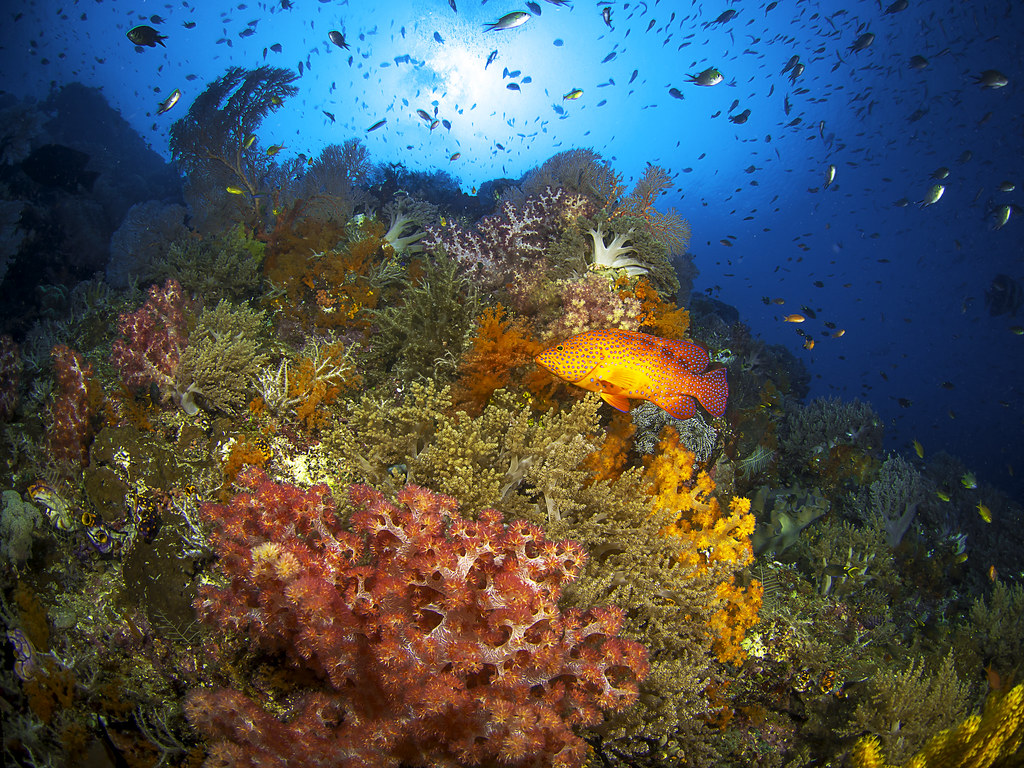
All three destinations have exceptional reef health compared to global averages. Wakatobi's house reef has coral coverage exceeding 80% at maintained sites. Raja Ampat's reef systems are consistently rated among the healthiest in the Coral Triangle. Alor's reefs show minimal bleaching, minimal algae overgrowth, and hard coral coverage approaching 90% at surveyed sites.
The difference is pressure. Raja Ampat receives the most visitors (though still low by global standards). Wakatobi is a single-resort site with controlled access. Alor sees almost no diving traffic.
Decision Framework: Which Destination Fits You
| Your Priority | Choose This | Why |
|---|---|---|
| Maximum documented species count | Raja Ampat | Strongest scientific evidence; 1,000+ fish species, 537 coral species |
| Best house reef in the world | Wakatobi | Resort house reef drops to 300m+; macro and wall diving from shore |
| Untouched reefs, zero crowds | Alor | Minimal visitor pressure; reefs appear pristine |
| Best macro / critter diving | Alor or Wakatobi | Rhinopias, wonderpus, pygmy seahorses; both rival Lembeh |
| Best pelagic / shark diving | Raja Ampat | Grey reef sharks, manta aggregations, current-driven encounters |
| Polished, all-inclusive experience | Wakatobi | Single-resort model with charter flight, meals, diving bundled |
| Liveaboard variety | Raja Ampat | 60+ vessels; established market with wide price range |
| Budget-conscious remote diving | Alor | Lowest per-day cost; trade-off is difficult access |
| Comfortable for intermediate divers | Wakatobi | Moderate currents; accessible sites; professional guides |
| Advanced divers seeking intensity | Raja Ampat or Alor | Strong currents; demanding profiles; real down-current risk |
The Bottom Line
Choose Raja Ampat if you want the richest marine environment on the planet and you are willing to invest in getting there. The liveaboard market gives you flexibility, the biodiversity is unmatched, and the diving — while demanding — delivers encounters that no other destination can guarantee at this scale. Budget USD 3,500–5,000 for a 7-day mid-range liveaboard.
Choose Wakatobi if you want remote, pristine diving without the logistical complexity of reaching West Papua. The resort model eliminates planning friction. The house reef alone justifies the trip. The macro diving is world-class. You trade variety and liveaboard flexibility for polish and comfort. Budget USD 3,500–6,500 for a 7-day package.
Choose Alor if you are a seasoned diver who wants to see reefs that almost no one else has seen, and you are willing to accept difficult access, minimal infrastructure, and limited safety nets in exchange for that experience. Alor is not for everyone. But for divers who have done Raja Ampat and Wakatobi and want the next level of remoteness, it delivers something the other two cannot: the feeling of being the first person on the reef. Budget USD 2,000–4,000 for a 7-day trip.
The Coral Triangle has no wrong answer. But it has three very different right ones.
Planning a remote Indonesia dive trip? See our Raja Ampat vs Komodo comparison for a different angle on Indonesian diving, or our best muck diving in Asia ranking if macro is your priority.