
The Maldives has a reputation problem. Not with divers — divers know exactly what the 1,190-island archipelago delivers: whale sharks at South Ari, manta feeding frenzies at Hanifaru Bay, nurse shark night dives at Alimatha, tiger sharks at Fuvahmulah. The reputation problem is financial. Ask anyone who has not been, and they will quote you $5,000 to $10,000 per person for a week. Ask someone who has been on a budget, and the number is dramatically different.
This guide breaks down a realistic Maldives diving budget for 2026: what it actually costs, where the money goes, and what you trade away by choosing the affordable route. We priced out two distinct approaches — a budget liveaboard safari and a local-island dive-center base — against current 2025/2026 operator rates, government taxes, and transfer costs. The goal: a credible sub-$3,000 per-person plan that still puts you in the water at world-class sites.
The Two Budget Paths
Before diving into numbers, it helps to understand that budget Maldives diving is not one thing. It is two fundamentally different trips that happen to use the same atoll chain.
Path A: Budget Liveaboard. You book a lower-tier liveaboard for 7 nights, typically covering the central atolls (North Male, South Male, Ari, Vaavu). The boat is functional rather than luxurious. Diving is high-volume: three to four dives per day. The all-inclusive structure means you know your costs upfront.
Path B: Local Island Base. You stay in a guesthouse on an inhabited local island — Thulusdhoo, Dhigurah, Fulidhoo, Rasdhoo, or similar — and book dives through a nearby PADI dive center. You eat at local cafes, take public ferries, and have more schedule freedom but fewer dives per day.
Both paths can come in under $3,000 per person for a 7-night trip excluding international flights. Here is how.
Path A: The Budget Liveaboard Breakdown
What the Boats Cost
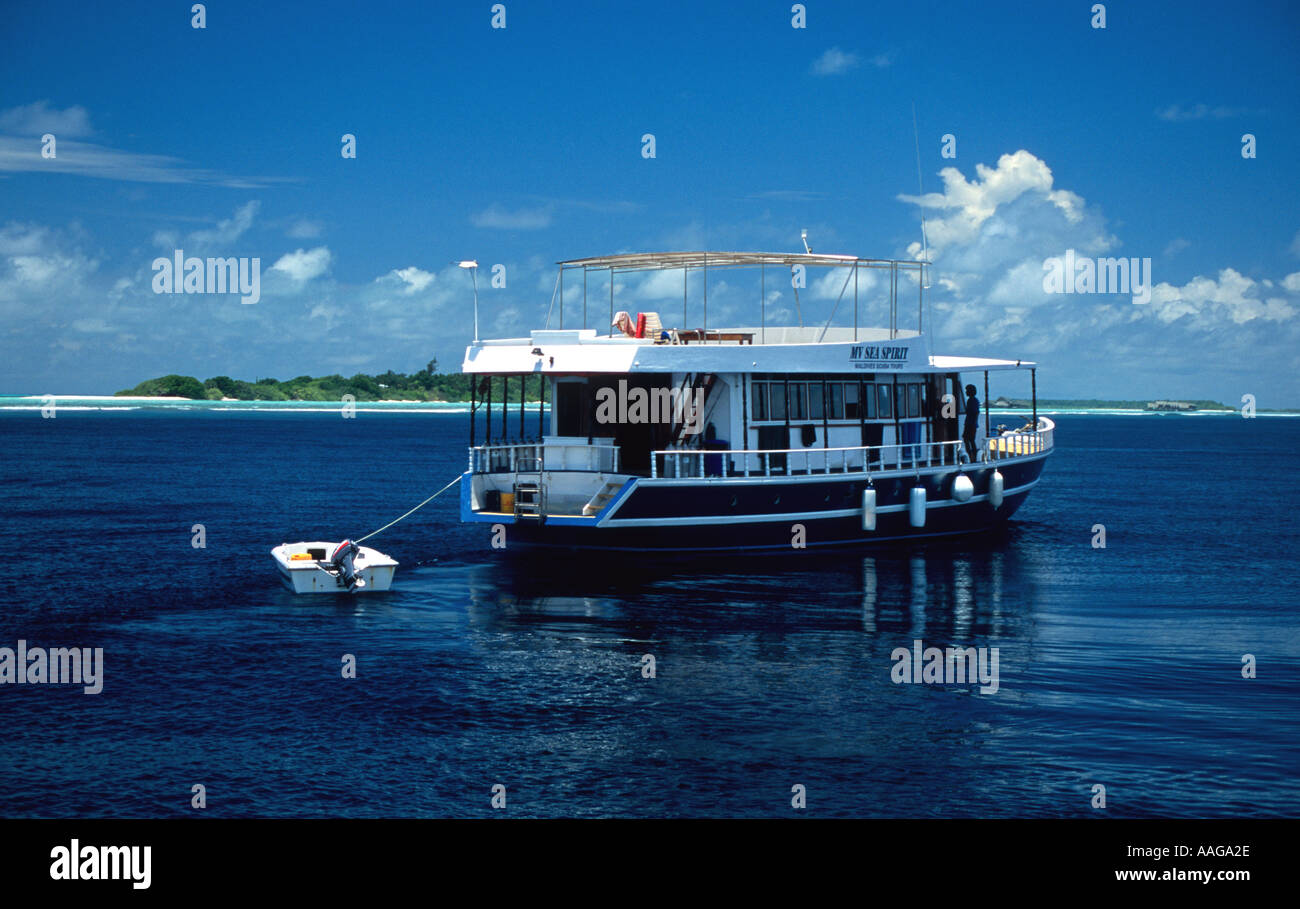
The cheapest 7-night liveaboards in the Maldives start well under $1,500 per person. Current pricing from DiveZone's 2026 listings shows the following range (Source: DiveZone, 2026):
| Liveaboard | Price (7 Nights) | Rating |
|---|---|---|
| MV Eagle Ray | US$1,281 | Budget |
| MV Stingray | US$1,379 | Budget |
| MY Sharifa | US$1,441 | Budget |
| MV Amba | US$1,625 | Budget-Mid |
| MV Sachika | US$1,768 | Mid-Range |
| MY Sheena | US$1,841 | Mid-Range |
Maldives Magazine's 2025 cost breakdown confirms the range, placing budget boats like MV Amba and Princess Sara in the $1,300 to $1,800 bracket for 7 nights (Source: Maldives Magazine, 2025). These are real cabins on real boats — air-conditioned, with hot showers and decent meals. They are simply not the polished teak-and-champagne vessels you see on luxury operator brochures.
The Hidden Costs Nobody Mentions
The ticket price is not the final price. Several mandatory or near-mandatory add-ons apply:
- Green Tax: US$12 per person per night, collected separately by the Maldivian government. On a 7-night liveaboard, that is $84 per person (Source: MIRA, 2025).
- Gear Rental: If you do not bring your own, expect around $30 to $40 per day for a full kit. Over 7 days of heavy diving, that can add $210 to $280 (Source: Maldives Magazine, 2025; Pelagic Divers Fuvahmulah, 2025).
- Nitrox Fills: Some budget boats include Nitrox; most charge extra. Budget $50 to $100 for the week if you use enriched air.
- Marine Park Fees: Certain routes pass through protected areas. Hanifaru Bay carries a ~$20 fee (Source: Maldives Magazine, 2025).
- Airport Transfers: Most liveaboards depart from Male and include the pickup. Confirm this before booking — some do not, and a speedboat from the airport to the boat can run $30 to $50 (Source: IM Maldives, 2025).
Budget Liveaboard: The Full Math
Here is a realistic per-person total for a 7-night budget liveaboard with own gear:
| Line Item | Cost |
|---|---|
| Liveaboard berth (MV Eagle Ray or similar) | $1,281 |
| Green Tax (7 nights × $12) | $84 |
| Nitrox supplement | $70 |
| Tips for crew (standard 10-15%) | $130 |
| Airport speedboat transfer | $40 |
| Total (excl. flights) | ~$1,605 |
Add international flights — budget carriers via the Gulf or Southeast Asia run $500 to $700 per person round-trip from major hubs during shoulder season (Source: Maldives Magazine, 2026) — and the total lands around $2,100 to $2,300 per person. With gear rental, add another $200 to $280.
That is comfortably under $3,000.
Where You Dive on a Budget Liveaboard
Budget liveaboards overwhelmingly run the "Best of Maldives" central atoll route. This is not a consolation prize — it includes some of the most productive dive sites in the Indian Ocean:
- Maaya Thila (North Ari Atoll): A submerged pinnacle with white-tip reef sharks, eagle rays, and dense schools of fusilier. Drift dives along the thila's walls are among the most photographed in the Maldives.
- Fish Head (North Ari Atoll): A marine protected site since 1995 (Source: Naseer, FAO, 2002), known for large schools of humpback wrasse, grey reef sharks, and Napoleon wrasse.
- Fotteyo Kandu (Vaavu Atoll): Widely considered the Maldives' premier channel dive. Soft corals line the overhangs, and grey reef sharks patrol the channel mouth. Current-dependent but spectacular.
- Manta Point / Lankan (North Male Atoll): Reef manta cleaning station active from May through November. Sightings are highly probable during southwest monsoon months.
- Alimatha Jetty (Vaavu Atoll): The famous nurse shark night dive. Dozens of nurse sharks, stingrays, and moray eels congregate under the resort jetty lights. A liveaboard staple.
These are not second-tier sites. They are the same locations that $5,000-plus liveaboards visit. The difference is the boat, not the reef.
Path B: The Local Island Dive Breakdown
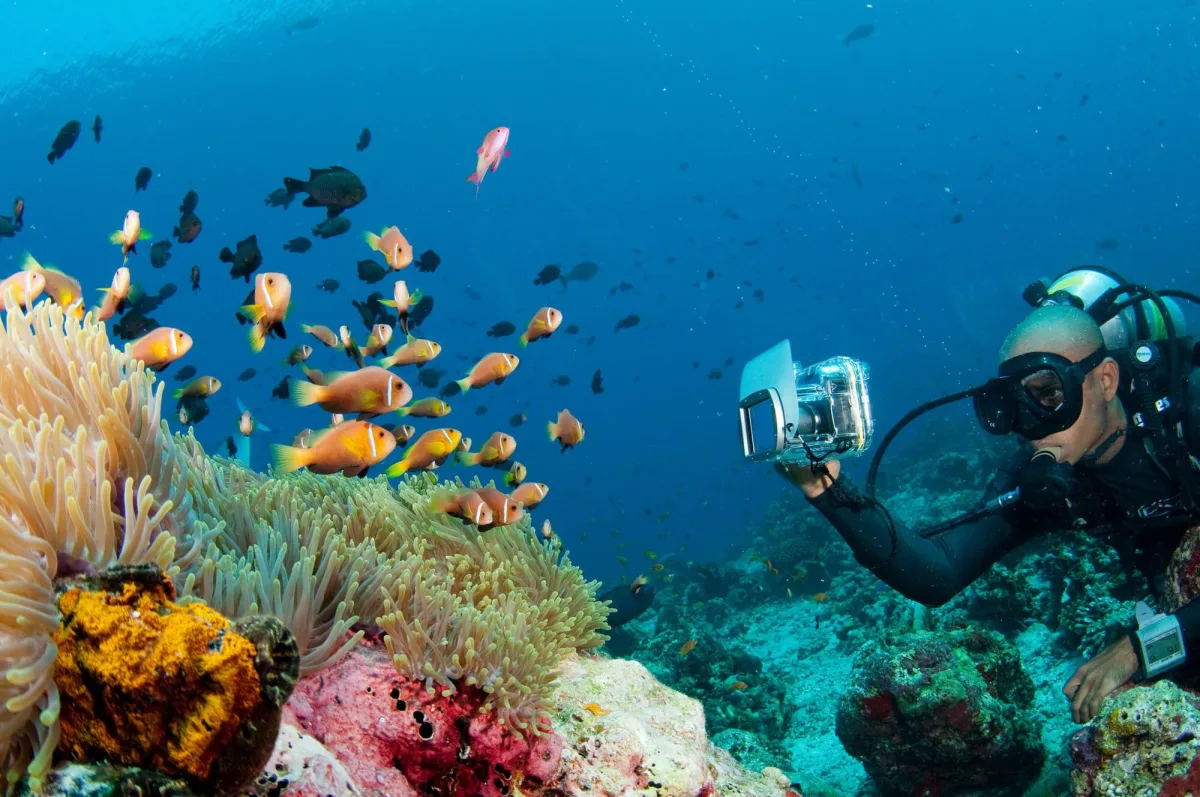
For divers who prefer flexibility over volume — or who want to bring a non-diving partner without doubling the cost — a local island base is the stronger option.
How Local Island Tourism Works
Since 2009, the Maldivian government has permitted tourist accommodation on inhabited local islands (Source: SIGS/USAID, 2024). Guesthouses range from basic to boutique. The islands are Muslim, which means no alcohol and a modest dress code outside resort zones. In exchange, nightly rates are a fraction of resort pricing, and on-island meals cost what Maldivians actually pay.
Dive Site Access from Local Islands
Budget-friendly local islands sit within striking distance of the Maldives' best dive sites:
- Thulusdhoo and Dhiffushi (North Male Atoll): Under 1 hour by speedboat from Male. Access to Colosseum, Girifushi Thila, Banana Reef, and the Maldives Victory wreck. Manta Point at Lankan is reachable by day trip. Guesthouses here start at $40 to $100 per night (Source: Maldives Magazine, 2026).
- Dhigurah (South Ari Atoll): Year-round whale shark encounters — South Ari is one of only two confirmed year-round whale shark aggregation sites globally. Kuda Rah Thila and Reethi Thila are within easy boat range. Access via 20-minute domestic flight to Maamigili plus 15-minute speedboat, or a 2-hour direct speedboat from Male (Source: ZuBlu, 2025).
- Fulidhoo (Vaavu Atoll): A 700-meter island with 200 residents (Source: ZuBlu, 2025) and one PADI 5-Star dive center. Fotteyo Kandu — the same site liveaboards visit — is reachable by day boat. The Alimatha nurse shark night dive runs twice a week. Fulidhoo Dive offers a 6-night stay-and-dive package from $889 per person including 12 guided boat dives, half-board accommodation, and all taxes (Source: Fulidhoo Dive, 2025).
- Rasdhoo (North Ari Atoll): Famous for early-morning hammerhead dives at Rasdhoo Madivaru. Accessible by speedboat from Male in under 2 hours, twice daily (Source: ZuBlu, 2025).
The Per-Dive Cost
Single boat dives from local island dive centers run $50 to $60 per dive with equipment (Source: ZuBlu, 2025). Multi-dive packages bring the per-dive cost down:
- 10-dive package: $335 to $380 (Source: Maldives Magazine, 2025)
- Per-dive rate at Pelagic Divers Fuvahmulah: $62 to $82, dropping to $62 at the 21+ dive tier (Source: Pelagic Divers Fuvahmulah, Bluewater Dive Travel)
For comparison, resort-affiliated dive centers charge $85 to $90 per dive (Source: Crossroads/Hard Rock Diving, 2025 Price List). The local island savings are substantial.
Local Island: The Full Math
Here is a realistic 7-night local-island budget for one person, based on Fulidhoo as the base:
| Line Item | Cost |
|---|---|
| Fulidhoo Dive 6-night stay-and-dive package | $889 |
| Extra night at guesthouse | $70 |
| Green Tax (7 nights × $12) | $84 |
| Public ferry, Male–Fulidhoo return | $7 |
| Gear rental (if needed, 12 dives × ~$5/piece) | $60 |
| Alimatha night dive supplement | $40 |
| Lunches and incidentals (7 days) | $100 |
| Total (excl. flights) | ~$1,250 |
Add international flights at $500 to $700, and the total comes to $1,750 to $1,950 per person. Even with generous spending on excursions, meals, and extras, you are comfortably below $3,000 — with room for a few dolphin cruises or a sunset fishing trip.
The trade-off: you get 12 to 15 dives in a week rather than 20-plus on a liveaboard. But each dive is at the same sites, with the same marine life, at a lower cost per dive.
Decision Framework: Which Path Fits You?
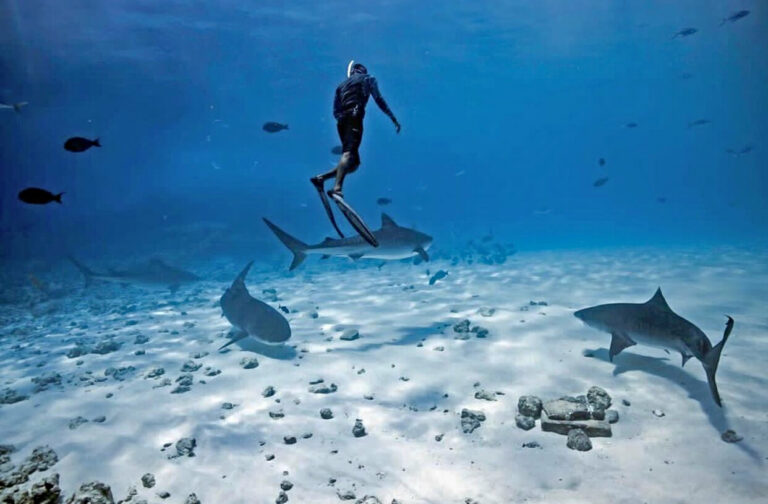
The choice between a budget liveaboard and a local island base comes down to five factors:
| Factor | Budget Liveaboard Wins | Local Island Wins |
|---|---|---|
| Dive count | 18-22 dives/week | 10-15 dives/week |
| Pelagic access | Reaches remote atolls | Limited to nearby sites |
| Cost certainty | All-inclusive pricing | Pay-as-you-go flexibility |
| Non-diver companions | Not ideal | Easy — they explore the island |
| Cultural immersion | Minimal (boat only) | Full — local cafes, community, mosques |
Choose the liveaboard if: You are a dedicated diver who wants maximum bottom time and the best chance at pelagic encounters across multiple atolls. You do not need comfort-level luxury. You are fine eating three set meals a day and sleeping in a modest cabin.
Choose the local island if: You want schedule freedom, are traveling with a non-diving partner, want to control costs meal-by-meal, or are a newer diver not yet ready for three to four dives daily in channel currents.
The hybrid option: Some budget travelers split the trip — 3 to 4 nights on a liveaboard, then 3 nights on a local island. This works logistically but requires careful flight scheduling and typically costs slightly more than either pure option.
What You Give Up at the Budget Tier
An honest Maldives diving budget guide requires an honest caveat. The budget approach involves real trade-offs:
On a budget liveaboard, you lose:
- Space and polish. Budget boats are smaller. Cabins are compact. The sun deck may be the entire boat's top surface. Wi-Fi is unreliable or nonexistent.
- Dive site choice. Budget boats run fixed itineraries. You go where the route goes. If the weather closes a site, you skip it — there is no repositioning to an alternative atoll.
- Alcohol. Some budget liveaboards serve beer and wine; many do not. Confirm before booking.
- Nitrox as standard. Not all budget boats have Nitrox blending. If enriched air matters to your dive profile, verify availability.
On a local island, you lose:
- Dive volume. Two boat dives per day is typical. Three-dive days require coordination and extra cost.
- No alcohol. Local islands are dry. This is non-negotiable under Maldivian law for inhabited islands.
- Remote sites. You cannot day-trip to southern atolls from North Male. Fuvahmulah and Addu require domestic flights.
- Modest dress code. Bikini beaches exist on most tourist-friendly local islands, but the island itself requires covered shoulders and knees.
On both budget paths, you lose:
- Guaranteed conditions. Monsoon months (May–October) bring current, reduced visibility on some sites, and rain. The upside: 20% to 50% lower prices and peak manta and whale shark activity (Source: Maldives Magazine, 2026).
- Luxury service. Neither path includes a spa, a private plunge pool, or a sommelier. If those define your vacation, the budget tier is not your tier.
The Dive Sites That Make It Worth It
The reason budget Maldives diving works is that the ocean does not check your room category. The same grey reef sharks patrol Fotteyo Kandu whether you arrived on a $1,200 liveaboard or a $12,000 one. The same mantas circle Lankan's cleaning station regardless of your hotel star rating. Here are five sites that every budget traveler should prioritize:
- Maaya Thila (North Ari Atoll): A pinnacle rising from 30 meters to 6 meters. White-tip reef sharks circle the base. Eagle rays pass overhead. Best at dawn with current running.
- Fotteyo Kandu (Vaavu Atoll): A deep channel dive with soft coral-encrusted overhangs and grey reef sharks schooling at the drop-off. Current-dependent — advanced certification recommended.
- Rasdhoo Madivaru (North Ari Atoll): Pre-dawn departures to catch scalloped hammerheads schooling at depth. Not guaranteed, but the early wake-up is worth the gamble.
- Hanifaru Bay (Baa Atoll, UNESCO Biosphere Reserve): A manta ray and whale shark feeding aggregation site. Snorkeling only (no scuba permitted), but encountering 50-plus mantas simultaneously is a once-in-a-lifetime event. Accessible via day trip from Dharavandhoo (Source: ZuBlu, 2025).
- Alimatha Jetty (Vaavu Atoll): The definitive Maldives night dive. Nurse sharks, giant stingrays, and moray eels crowd beneath the resort jetty lights. Accessible from Fulidhoo by short boat ride.
Timing Your Trip for Maximum Value
The Maldives has two distinct seasons, and your Maldives diving budget shifts with them:
High Season (November–April): Dry northeast monsoon. Calm seas, clear visibility, peak pricing. Liveaboard berths cost 20% to 30% more. Guesthouse rates rise modestly.
Shoulder/Low Season (May–October): Southwest monsoon brings afternoon showers and stronger currents. Visibility drops on west-facing sites but remains excellent on eastern atolls. This is peak manta season at Baa (Hanifaru Bay) and peak whale shark season at South Ari. Liveaboard prices drop significantly, and guesthouses offer their lowest rates.
The budget sweet spot: May, June, September, and October. You get low-season pricing with excellent megafauna probability and only intermittent weather disruption.
Practical Budget Tips That Actually Save Money
- Bring your own gear. Rental costs add up fast: $30 to $40 per day for a full kit (Source: Maldives Magazine, 2025). Over a week of heavy diving, that is $200 to $280 you keep by packing your own BCD, regulator, and wetsuit.
- Use public ferries. The Male–Fulidhoo public ferry costs $3.50 each way and takes 3.5 hours (Source: ZuBlu, 2025). A speedboat covers the same route in 1 hour for $35 to $50. If time allows, the ferry saves $60 to $90 round-trip.
- Eat local. A grilled fish dinner with rice and salad at a local island cafe runs $6 to $8 (Source: Maldives Magazine, 2026). The same meal at a resort: $40. Over a week, eating like a local saves $200 or more.
- Book liveaboards during off-peak windows. Last-minute cabin deals regularly appear 30 to 60 days before departure, especially for May through July departures.
- Skip the seaplane. Seaplane transfers cost $400 to $700 per person round-trip (Source: IM Maldives, 2025). Choose an island accessible by speedboat or public ferry and save $400 to $1,400 per couple.
- Pre-book dive packages. Ten-dive packages run $335 to $380 — roughly $35 to $38 per dive versus $50 to $60 for walk-in single dives (Source: Maldives Magazine, 2025). That is a 25% to 40% saving.
The Final Budget Comparison
| Category | Budget Liveaboard (7N) | Local Island (7N) |
|---|---|---|
| Accommodation/Diving | $1,281–$1,768 | $959–$1,250 |
| Green Tax | $84 | $84 |
| Transfers | $40 | $7–$50 |
| Gear Rental (if needed) | $210–$280 | $60–$120 |
| Meals & Incidentals | Included | $100–$200 |
| Tips | $130 | $50–$80 |
| Subtotal (excl. flights) | $1,745–$2,542 | $1,250–$1,784 |
| International Flights (est.) | $500–$700 | $500–$700 |
| Grand Total | $2,245–$3,242 | $1,750–$2,484 |
Both paths are achievable under $3,000 for a diver with their own gear traveling during shoulder season. The local island option offers more headroom; the liveaboard option offers more dives.
Source Attribution
Prices and data in this article were gathered from the following sources during research in April 2026: DiveZone's 2026 Maldives liveaboard price listings; ZuBlu's 2025 budget diving guide by Adam Broadbent; Maldives Magazine's 2025 liveaboard cost breakdown and 2026 $3,000 budget guide; the Maldives Inland Revenue Authority (MIRA) 2025 Green Tax schedule; IM Maldives' 2025 transfer cost database; Fulidhoo Dive's 2025 published package rates; Pelagic Divers Fuvahmulah's 2025/2026 price list via Bluewater Dive Travel; Crossroads (Hard Rock) 2025 diving price list; Naseer (FAO, 2002) on Maldives coral reef protected areas and the June 1995 designation of marine protected sites including Fish Head; SIGS/USAID (2024) Desk Review of Guesthouse Regulations documenting the 2009 Guesthouse Regulation that first permitted tourism on local islands; and ZuBlu (2025) for Fulidhoo island demographics. All prices are in US dollars. Rates may vary by season, availability, and booking channel. We recommend confirming current pricing directly with operators before committing.
Last updated: April 30, 2026. Prices reflect published rates as of the research date and may change without notice.
Related MantaraDive planning links
- Solo Diving in the Philippines: Which Resorts and Liveaboards Welcome Solo Travelers?
- Komodo Liveaboard Prices: What It Actually Costs (and What's Worth It)
- Red Sea Liveaboard Itinerary: North vs South for European Divers
- Lembeh Strait for Macro Photographers: Complete 2026 Guide
- 5 Essential Beginner Tips for Your First Tropical Dive Trip
- Best Dive Sites in Bali: 3 That Matter for a 7-Day Trip
- Maldives Liveaboard vs Resort: Which Actually Gives You Better Diving in 2026?
- North Male vs South Male vs Ari Atoll: Where to Dive on Your First Maldives Trip