
Two bays. Both in the Maldives. Both with guaranteed encounters most destinations can only promise. The difference between Hanifaru Bay and Fuvahmulah is not a matter of degree—it is a matter of what kind of animal you want to be in the water with, what certification you hold, and how much isolation you can tolerate.
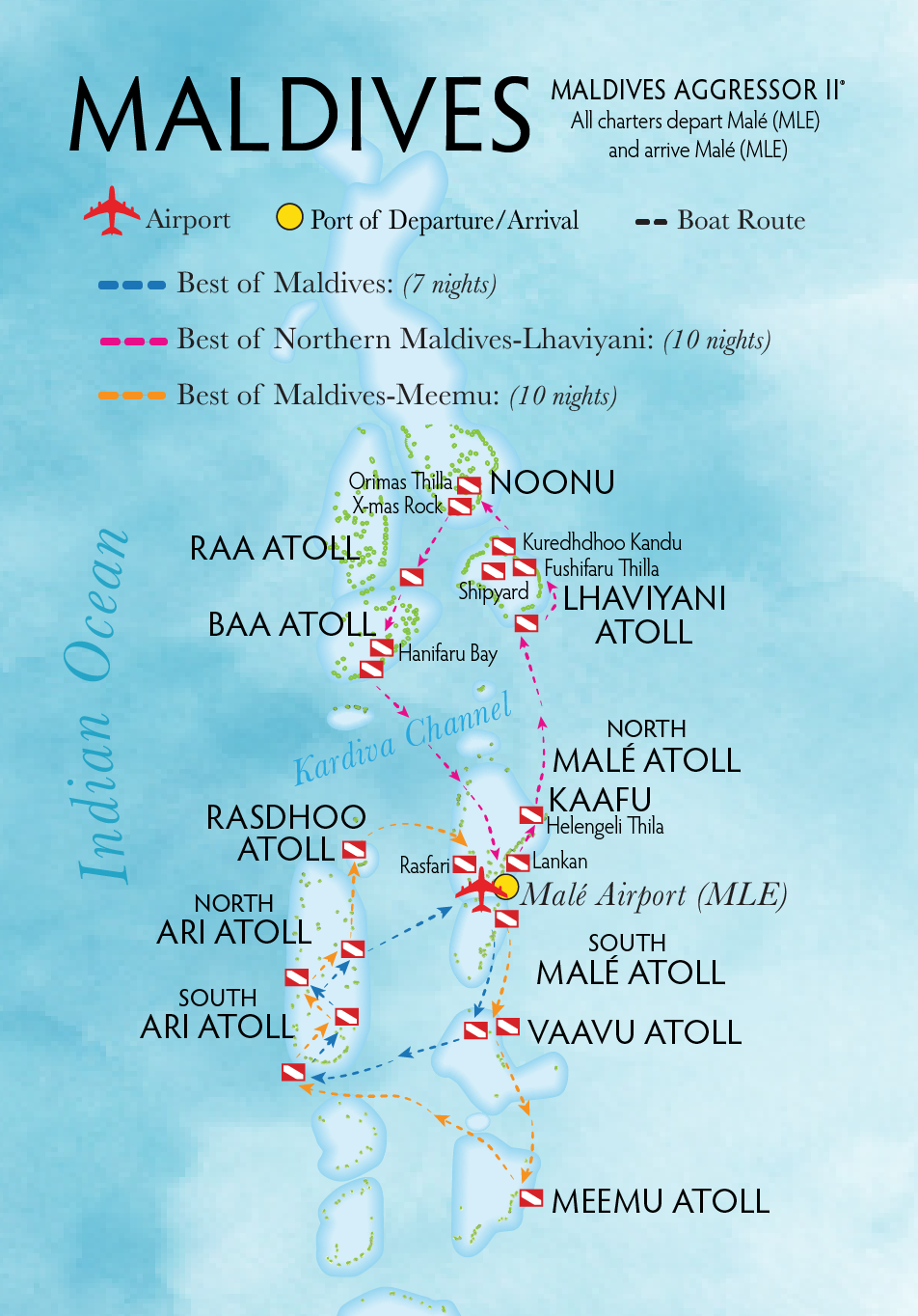
At Hanifaru Bay in Baa Atoll, a UNESCO Marine Protected Area roughly 120 km northwest of Malé, up to 200 reef manta rays funnel into a horseshoe-shaped bay between July and October to feed on the plankton soup pushed in by the southwest monsoon. Scuba regulators are banned; you observe from the surface, finning alongside the aggregation as rangers time your 45-minute window. At Fuvahmulah, a single exposed island at the southern tip of the country and a 60-minute domestic flight from Malé, more than 400 individually documented tiger sharks cruise a shallow plateau year-round, drawn by the fish market runoff 400 meters away. There, you descend to 8–10 meters with a tank and stay until your air says otherwise.
Choosing between Hanifaru Bay vs Fuvahmulah is not choosing between good and better. It is choosing between two fundamentally different experiences of the ocean.
Why This Article Matters
The Maldives sits at the top of every serious dive traveler's shortlist, but most planning resources treat it as a single destination rather than a 26-atoll archipelago with wildly divergent ecosystems and access models. We analyzed the dive site data, seasonal windows, logistics, and 2026 all-in costs for both Hanifaru Bay and Fuvahmulah to give divers, snorkelers, and underwater photographers a framework for the decision—not a travel brochure.
Hanifaru Bay — The World's Greatest Manta Aggregation
Hanifaru Bay is a small, funnel-shaped inlet on the eastern shore of Hanifaru Island in Baa Atoll. The UNESCO Biosphere Reserve designation it carries is not ceremonial: the bay's geometry, combined with the seasonal southwest monsoon, creates a plankton trap with no close rival in the Indian Ocean.
From May through November, reef manta rays (Mobula alfredi) converge here to feed. The numbers are measurable: independent surveys by the Manta Trust have recorded more than 200 individual mantas in a single feeding event at the bay's peak, with average summer sessions typically drawing 50–100 rays. Whale sharks appear opportunistically in the same window, attracted by the same plankton concentration. Manta Trust and PADI's published survey data (2024) place Hanifaru Bay as the single largest documented gathering of reef mantas globally.
What you should know before booking: Scuba diving is prohibited during active feeding events by Maldivian regulation, because divers' exhaled bubbles break the surface tension of the water and disrupt manta feeding behavior. Visits are conducted by snorkeling only, with a certified guide, in groups entering through a designated zone outside the bay and swimming in. The Hanifaru Visitor Centre on Eydhafushi Island issues $20 entry tokens (proceeds go to the Baa Atoll Conservation Fund); operators on top of that charge $60–$300 per person depending on how far their resort lies from the bay (ZuBlu, 2026; Snorkel Around the World, 2026). Sessions are capped at 45 minutes.
Season precision matters: The window is long—May to November—but the aggregation quality is not linear. July through October represents the peak, when the southwest monsoon is fullest and plankton density is highest. A May visit may find 10–20 mantas; an August visit may find 150. Trips cannot be booked for a specific date in advance because the bay visit depends on conditions the morning of departure. If you have only one shot and need the spectacle over the guarantee, plan for the August–September window.
There are no certification requirements for Hanifaru Bay. A confident snorkeler of any age can participate. This is the primary reason it draws a different audience than Fuvahmulah: families, non-divers, and underwater photographers who want above-water or wide-angle manta shots at shallow depth.
For divers who want to combine Hanifaru Bay visits with actual scuba diving, Baa Atoll has productive sites—Kihaadhuffaru, Nelivaru Haa, and Dharavandhoo Beyru among them—but none at the same tier as the Fuvahmulah pelagic experience. Our broader analysis of when to schedule a Maldives trip around both manta species and whale sharks covers the full seasonal calendar if that timing decision matters for your planning.
Fuvahmulah — The Pelagic Diver's Wild Card
Fuvahmulah sits alone in the equatorial Indian Ocean, geographically isolated from the main Maldivian chain with no lagoon and no barrier reef. It is exposed to open-ocean swells from every direction, surrounded by deep water that drops sharply off its shores—which is precisely why it attracts what it does.
The signature dive is Tiger Zoo: a horseshoe-shaped plateau at 8–10 meters depth, located one minute by boat from the harbor. Tiger sharks (Galeocerdo cuvier) gather here daily, drawn by effluent from a nearby fish market. Pelagic Divers Fuvahmulah, one of the island's main operators, has catalogued more than 400 individual tiger sharks visiting the site using photo-ID methodology. These are not transient visitors passing through on migration—they are resident animals, reliably present year-round. No other dive site in the Indian Ocean can make that claim with the same photographic database behind it.
Fuvahmulah's catalog of species extends well beyond tiger sharks. Thresher sharks use cleaning stations on scattered coral formations at 18–30 meters depth; sightings are possible year-round but peak from April through November. Hammerhead schools gather from October through December. During April and May, black oceanic mantas (Mobula birostris)—a species distinct from the reef mantas at Hanifaru—arrive in the dozens, forming manta trains in the open blue as males chase females along reef edges. Gazeera Thila, Miskiy Reef, and Thoondu dive sites offer additional pelagic and reef topography for multi-day itineraries beyond Tiger Zoo.
Experience reality check: Tiger Zoo's depth of 8–10 meters makes it physically accessible to Open Water Diver-certified divers with as few as 10–20 logged dives, and local operators confirm this is a common entry point. The more important qualifier is comfort with open-ocean conditions: Fuvahmulah's exposed position means surface swells, channel currents, and surges are the baseline, not the exception. Operators recommend—though do not always require—Advanced Open Water certification and a minimum of 50 logged dives before booking thresher and hammerhead sites at 20–30 meters depth. Water temperature runs 26–29°C from January through April (dry season) and 24–26°C the rest of the year; visibility peaks at up to 50 meters during the east-current months (ZuBlu Fuvahmulah Atoll guide, 2026; Fuvahmulah Dive School operator data, 2026).
Getting There and Staying
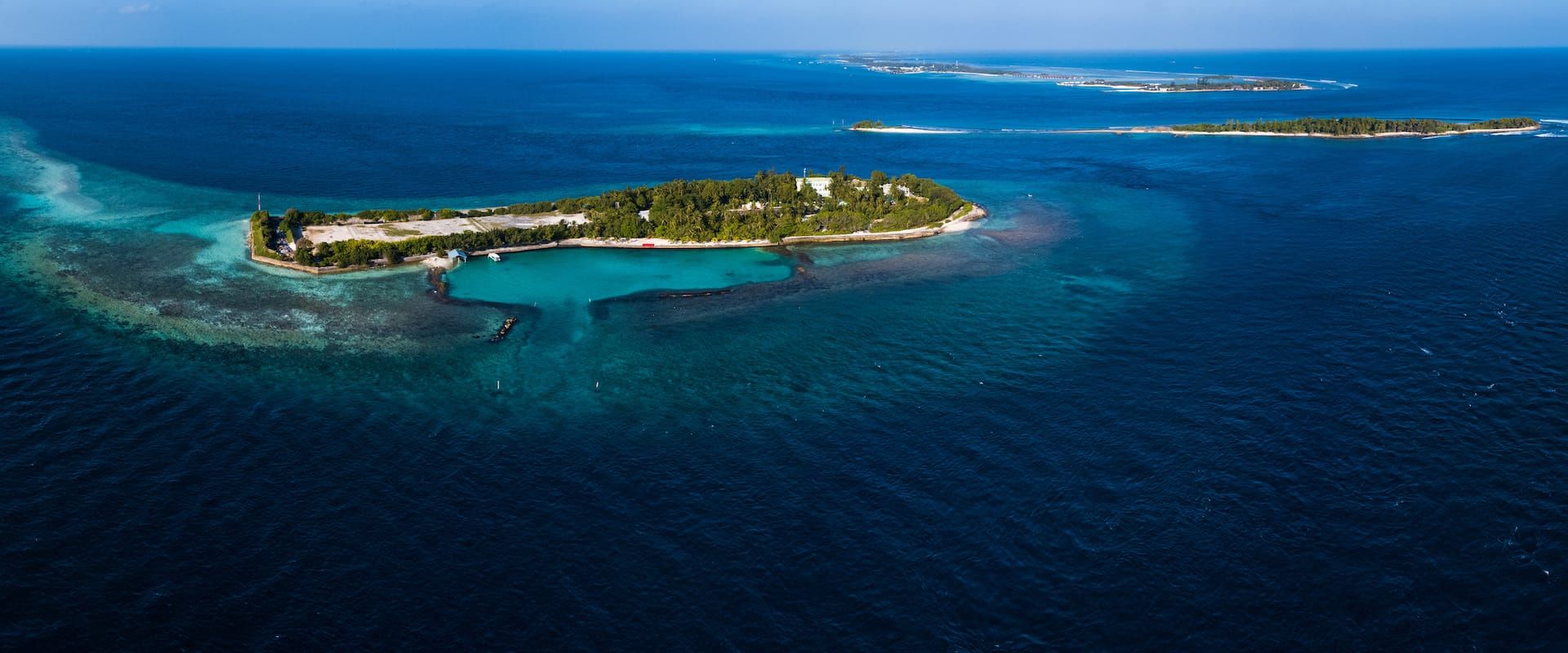
The two destinations have different access profiles. Hanifaru Bay is closer to the tourism infrastructure; Fuvahmulah is more remote but has a functioning local-island economy.
Hanifaru Bay / Baa Atoll
The nearest airport to Hanifaru Bay is Dharavandhoo, a 25-minute seaplane flight or approximately three-hour speedboat transfer from Velana International Airport in Malé. From Dharavandhoo, the bay is a 15–20-minute boat ride. Accommodation falls into two tiers:
- Luxury resort tier: Four Seasons Landaa Giraavaru, Soneva Fushi, Dusit Thani Maldives, and Finolhu Baa Atoll occupy the resort islands nearest the bay. A week at these properties typically ranges from USD 3,000–8,000 per person (room + excursions) (ZuBlu resort database, 2026; TripAdvisor Baa Atoll 2026), with Hanifaru Bay trips included or priced at $80–$150 per person on top.
- Local island tier: Dharavandhoo guesthouses ($40–$80/night, including options like Hanifaru Stay and Manta Ray Village) offer essentially the same bay access at a fraction of the cost (Dreaming of Maldives, 2026). Local dive operators run certified guide trips to Hanifaru Bay for $60–$80 per person, plus the $20 visitor token. A week-long stay on Dharavandhoo including Hanifaru Bay trips can be budgeted at $600–$1,200 per person total.
Fuvahmulah
Fuvahmulah Airport receives domestic flights from Malé (approximately 60 minutes) and speedboat connections from Gan in Addu Atoll (approximately 60 minutes). There is no luxury resort tier on the island; accommodation is local-island guesthouses and dive-center-operated rooms. All-inclusive dive packages from local operators are the dominant booking model:
- 3 nights / 4 days (2 dive days including Tiger Zoo): from $790 per person, all-inclusive (Fuvahmulah Dive School, 2026)
- 7 nights / 8 days (6 dive days): from $1,790 per person, all-inclusive
- 10 nights / 11 days (9 dive days): from $2,590 per person, all-inclusive
- Specialty packages (Hammerhead's Party Oct–Dec; Black Oceanic Manta Mar–May): from $1,990 for 18 dives, all-inclusive
"All-inclusive" on Fuvahmulah typically means round-trip domestic flights or speedboat, guesthouse accommodation, meals (half-board or full-board), and all dive tanks and weights. Nitrox is included free at most operators.
Decision Framework
| Dimension | Hanifaru Bay (Baa Atoll) | Fuvahmulah |
|---|---|---|
| Primary draw | Reef manta mass feeding (100–200+ rays) | Resident tiger shark population (400+ individuals) |
| Access level | No certification required; confident snorkeler sufficient | OW Diver + 10–20 logged dives (Tiger Zoo); AOW for deeper sites |
| Activity type | Surface snorkeling only during feeding events | Scuba diving; Tiger Zoo at 8–10m, other sites to 30m |
| Peak season | July–October | January–March (tigers); April–May (black oceanic mantas); Oct–Dec (hammerheads) |
| Secondary species | Whale sharks (May–Nov); reef fish; reef diving on other Baa sites | Thresher sharks, hammerheads, black oceanic mantas, silvertips |
| Nearest airport | Dharavandhoo (25-min seaplane from Malé) | Fuvahmulah Airport (60-min domestic flight from Malé) |
| Budget entry point | ~$600–$1,200/week (local island base) | ~$790 for 3 nights / 2 dive days all-inclusive |
| Luxury option | Full resort tier ($3,000–$8,000/week) | None; local island only |
| Session control | Trips depend on conditions; 45-min cap in bay | Structured dive schedule; Tiger Zoo daily |
| Water conditions | Typically calmer, protected lagoon-side approach | Exposed open ocean; swells and currents the baseline |
| Trip planning certainty | Bay visit cannot be pre-scheduled; weather-dependent | Tiger Zoo runs daily, year-round |
The Honest Caveats
Hanifaru Bay: The 45-minute session cap and no-diving rule are frustrating for certified divers who want prolonged underwater contact. On peak season weekends, the bay can feel crowded with snorkelers from multiple resorts arriving simultaneously. The no-scuba rule is a conservation regulation, not a negotiable policy—operators who tell you otherwise are not compliant. Additionally, the bay visit is categorically not bookable for a specific morning in advance: rangers assess conditions each day and may cancel access due to low aggregation, rough sea state, or visibility. Budget for flexibility in your itinerary. Divers comparing shoulder-season windows—particularly whether November or February makes sense for a Maldives trip—will find our Maldives diving November vs February guide a useful reference before committing to dates.
Fuvahmulah: The island has no white-sand resort beaches. Accommodation options are functional guesthouses, not spa retreats. Anyone traveling with a non-diving partner will find minimal non-diving activities beyond the island itself. Current strength at the deeper sites is significant; divers who have not logged recent open-water dives in current conditions should complete a refresher before attempting Gazeera Thila or the thresher cleaning stations. Tiger sharks at Tiger Zoo are fed—not explicitly, but the fish market proximity creates a conditioned association. The ethical debate around feeding-site shark dives is worth considering before booking.
The MantaraDive Recommendation
The comparison between Hanifaru Bay and Fuvahmulah breaks along a single axis: what you want to do in the water.
We recommend Hanifaru Bay for non-divers, snorkelers, underwater photographers shooting surface wide-angle, and dive travelers whose partners do not dive. The manta feeding aggregation is not replicated anywhere on Earth at the scale Hanifaru Bay delivers in July–October. The local island option on Dharavandhoo makes the experience genuinely budget-accessible. If you are a diver, pair it with scuba time on the rest of Baa Atoll's reefs and accept that the bay itself is a surface affair.
We recommend Fuvahmulah for certified divers with 50+ logged dives who want sustained underwater time with large pelagics in a way Hanifaru cannot offer. The tiger shark reliability at Tiger Zoo is unusually high—higher, in our assessment, than any comparable megafauna encounter in Southeast Asia or the Indian Ocean at this price point. The all-inclusive package model means the per-dive cost is low relative to the standard liveaboard in Indonesian or Philippine waters.
Divers looking to optimize a longer Maldives itinerary—especially those deciding between a liveaboard circuit and island hopping—will find our Maldives liveaboard vs resort analysis a useful complement to this piece; the logistics of combining both Baa Atoll and a southern-atoll swing in a single trip are covered there in detail. For trip budgets from $600 to $8,000, our Maldives diving budget breakdown maps the full range from local-island guesthouses to five-star resort packages.
One scenario where we would avoid Fuvahmulah: divers with fewer than 20 logged dives, or anyone not comfortable in open ocean swell. The ocean around Fuvahmulah has no patience for divers who are still working on buoyancy control. Go to Hanifaru first, add the dives, come back.
Talk to a Specialist
The decision between Hanifaru Bay and Fuvahmulah depends on your dive history, travel dates, and tolerance for remote logistics. MantaraDive advisors can review your log book, match your window to the correct seasonal peak, and identify whether a single destination or a split itinerary makes sense for your trip. We source operator packages directly and can give you current pricing rather than rack rates. Reach us at mantaradive.com to start the conversation.
Sources & Methodology
Data for this article was drawn from the following sources, cross-checked where numbers differed across sources:
- Manta Trust — reef manta survey data, Hanifaru Bay aggregation counts, photo-ID methodology (mantatrust.org)
- PADI Blue Star program — Baa Atoll marine protected area status and conservation documentation (padi.com)
- Fuvahmulah Dive School — 2026 all-inclusive package pricing (fuvahmulahdive.com)
- Pelagic Divers Fuvahmulah — tiger shark photo-ID catalog; Tiger Zoo site specifications (pelagicdiversfuvahmulah.com)
- Extreme Dive Fuvahmulah — dive site profiles, depth and current data (extremedivefuvahmulah.com)
- ZuBlu Diving — Hanifaru Bay conservation regulations, seasonal guides, Fuvahmulah atoll overview (zubludiving.com)
- Baa Atoll Conservation Fund / Hanifaru Visitor Centre — $20 entry token pricing and proceeds use
- Dreaming of Maldives — Baa Atoll resort proximity and access logistics (dreamingofmaldives.com)
- SSI Dive Blog — Fuvahmulah experience requirements and current conditions (divessi.com)
- Bluewater Dive Travel — Fuvahmulah operator reviews and pricing ranges (bluewaterdivetravel.com)
- liveaboard.com — Fuvahmulah liveaboard pricing range ($1,665–$5,950 per trip)
- Spirit Liveaboards — Maldives seasonal calendar by atoll (spiritliveaboards.com)
All pricing in USD; exchange rates as of April 2026. Package prices verified directly against operator websites. Seasonal encounter probabilities based on published operator trip reports and Manta Trust data, not guaranteed.
Practical Planning FAQ
Is a Hanifaru Bay or Fuvahmulah choice suitable for newer divers?
It can be, but only if the operator matches the itinerary to certification level rather than selling the most dramatic version of the destination. For Maldives, ask for the first two dives to stay conservative: easy entries, clear ascent procedures, a guide who keeps the group small, and a hard plan for what happens if current, visibility, or surface chop changes during the day. Newer divers should treat the first day as a checkout day, not a bucket-list race.
Which specific dive sites or route stops should I ask about?
Use named sites to test whether an operator is giving you real advice. For this trip, ask about Hanifaru Bay, Dharavandhoo house reefs, Tiger Zoo, Fuvahmulah thresher cleaning stations, and South Ari whale shark routes. If the salesperson cannot explain which of those are seasonal, current-sensitive, beginner-friendly, or camera-friendly, keep shopping. Strong operators will tell you which sites they would skip for your dates as clearly as which sites they hope to include.
What gear or training makes the biggest difference?
The practical kit is simple: SMB, negative-entry comfort, reef-safe snorkel kit for Hanifaru, and a conservative camera setup for tiger shark dives. The training priority is buoyancy first, current awareness second, and camera handling last. If you cannot hold position without sculling or touching the reef, leave the big camera rig behind until the second half of the trip. A good guide would rather manage a calm diver with modest gear than a distracted diver with expensive equipment.
What budget range should I plan around?
A realistic planning range is USD 600-1,200 for a local-island Hanifaru week, USD 1,790-3,000 for a Fuvahmulah dive week, and much more for resort add-ons. The hidden costs are usually transfers, marine-park fees, Nitrox, equipment rental, crew tips, private guide surcharges, and lost-dive buffers for weather. If the trip is built around a rare animal encounter, add at least one spare day so a cancelled morning does not become the whole story.
What should I read next before booking?
Cross-check this guide against planning link 1, planning link 2, planning link 3, planning link 4, planning link 5. Those pages cover adjacent seasons, route trade-offs, beginner fit, and cost assumptions, which helps prevent a single article from carrying the whole booking decision.
Related MantaraDive planning links
- Solo Diving in the Philippines: Which Resorts and Liveaboards Welcome Solo Travelers?
- Komodo Liveaboard Prices: What It Actually Costs (and What's Worth It)
- Red Sea Liveaboard Itinerary: North vs South for European Divers
- Lembeh Strait for Macro Photographers: Complete 2026 Guide
- 5 Essential Beginner Tips for Your First Tropical Dive Trip
- Best Dive Sites in Bali: 3 That Matter for a 7-Day Trip
- Maldives Diving for Beginners: Is It Too Advanced for New Divers?
- Maldives Diving Under $3,000: A Realistic Budget Guide for 2026