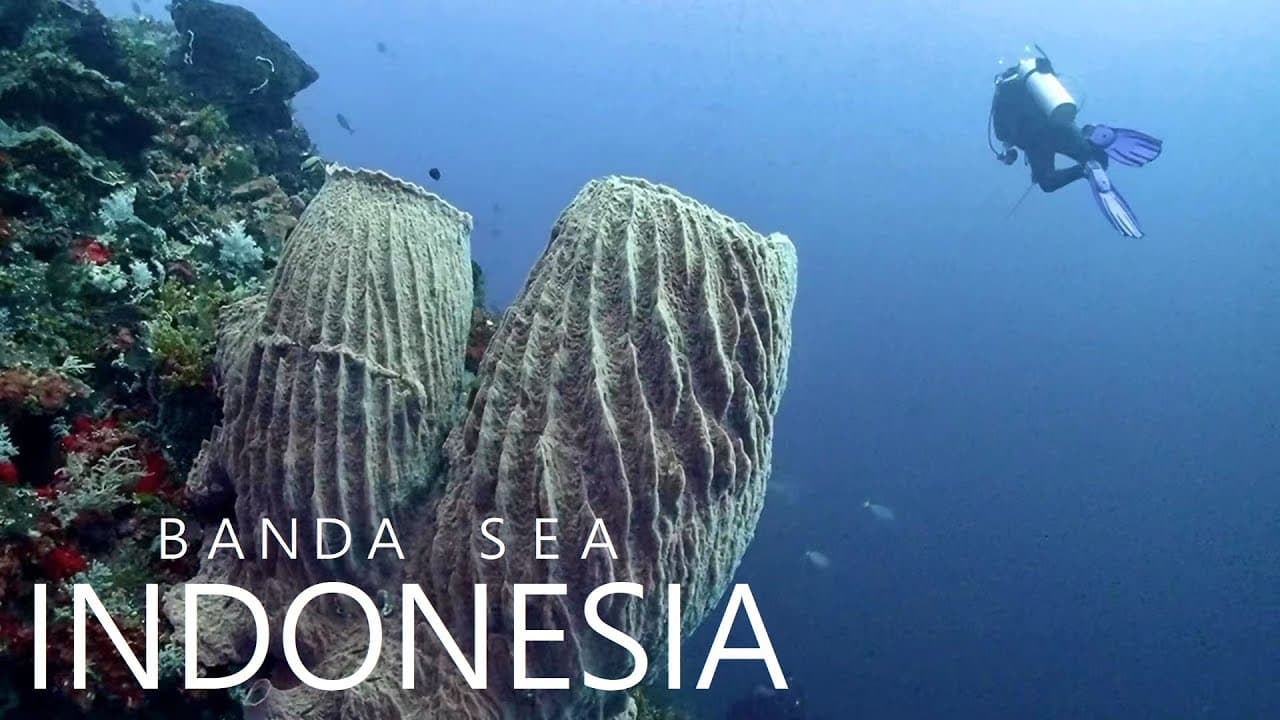
Most Indonesian dive trip planning runs a familiar circuit: Raja Ampat for reefs, Komodo for current and mantas, Lembeh for muck. The Banda Sea sits outside that circuit — not because the diving is lesser, but because reaching it requires a liveaboard, a tolerance for open-ocean crossings, and a willingness to dive places that do not appear on most operator brochures. The Banda Sea dive sites map covers an arc of volcanic islands, seamounts, and deep walls stretching from Ambon southeast through the Banda Islands to the Forgotten Islands, with some of the healthiest hard coral and most reliable hammerhead encounters in Indonesia.
This guide maps every major Banda Sea dive site, explains what each area actually delivers versus what operators promise, and gives you the honest conditions — visibility ranges, temperature drops, current strength, and minimum experience requirements — so you can decide whether a Banda Sea trip belongs on your 2026 calendar or whether a different Indonesian destination solves your problem better.
Why the Banda Sea Is Worth the Effort
The Banda Sea earns its "forgotten" label honestly. The region lies between Ambon and Saumlaki in central Maluku, across vast stretches of open ocean with very few inhabited islands. Many of the best sites — Manuk, Serua, Nila, Nil Desperandum — are reachable only by liveaboard, often requiring overnight crossings of 8-14 hours. Infrastructure on the inhabited islands ranges from minimal to nonexistent by Bali standards. Even Banda Neira, the region's historical hub, is described by operators as a "virtually inaccessible outpost" by Indonesian tourism norms.
The trade-off is genuine. Sparse population means minimal fishing pressure and limited development. The reefs around Banda Islands, Nusa Laut, and the offshore seamounts are consistently described by dive operators as "untouched" — language that gets misused in dive marketing but applies here with unusual accuracy. Hard coral coverage is dense and diverse, fish biomass is high, and the pelagic encounters (hammerhead schools, reef sharks, mobula rays, Napoleon wrasse) happen at sites that see a fraction of the traffic of Komodo or Raja Ampat.
The Banda Sea Dive Sites Map: Area by Area
Ambon — The Muck Diving Gateway
Every Banda Sea trip starts or ends in Ambon, and most operators build in 1-2 days here. The reason is Ambon Bay, which ranks among the world's best muck diving destinations alongside Lembeh Strait. The dive sites sit on volcanic sand and rubble in the harbor — conditions that look unpromising on the surface but host an extraordinary density of rare macro life.
Key sites:
- Laha / Twilight Zone — The flagship Ambon muck site. Rhinopias (weedy scorpionfish), flamboyant cuttlefish, ornate ghost pipefish, robust ghost pipefish, frogfish in multiple species, and the psychedelic frogfish — a creature endemic to Ambon that you will not reliably find anywhere else. Muck diving here rivals Lembeh for critter diversity.
- Pintu Kota — A dramatic coral-covered arch on Ambon's outer coast, with soft corals, sponges, and schooling reef fish. This is the scenic counterpoint to the muck sites.
- Hukurila — Caves, canyons, and swim-throughs with colorful soft corals. Good wide-angle diving when you need a break from muck.
Conditions: Ambon Bay visibility is reduced (10-15m typical) — normal and expected for muck sites. Outer sites run 20-30m. Water temperature 27-29°C. Currents mild in the bay, moderate on outer sites.
Banda Neira — Walls, Lava Fields, and Mandarin Fish
The Banda Islands sit roughly 130 nautical miles southeast of Ambon, and Banda Neira is the historical and logistical center. The diving here is fundamentally different from Ambon: steep volcanic walls, coral gardens, and a unique geological site that doubles as one of Indonesia's best mandarin fish locations.
Key sites:
- Lava Flow — A reef that regrew spectacularly after a 1988 lava field. Staghorn, plate, and table corals now cover the volcanic substrate in dense formations. At dusk, the jetty area hosts reliable mandarin fish mating displays — one of the few places in Indonesia where you can plan a mandarin dive with confidence rather than luck.
- Banda Neira Harbor muck sites — Frogfish, nudibranchs, and small critters on rubble and sand. Less famous than Ambon's muck but still productive.
- The walls — Drop-offs around the Banda Islands plunge into deep water with hard coral coverage, large gorgonian fans, and enormous barrel sponges. Napoleon wrasse populations here are among the largest recorded in Indonesia.
Conditions: Visibility 30m common, reaching 50m+ on good days. Can drop to 10-15m in August-September when cold upwellings bring plankton (and pelagics). Water 26-28°C overall, warming to 28-29°C in October-November. Moderate currents on most wall sites; stronger in channels.
Non-diving bonus: The Banda Islands are the historic Spice Islands — Fort Belgica, nutmeg plantations, and Dutch colonial architecture. If you have surface intervals, the history here is worth exploring.
Manuk Island — Sea Snakes and Pelagics
Manuk is an active volcano rising from the Banda Sea floor, roughly 70 nautical miles south of Banda Neira. The island is uninhabited except by thousands of frigatebirds and boobies, and the diving is defined by two things: extraordinary numbers of sea snakes and a constant parade of pelagic life.
Key sites:
- Manuk walls and ridges — Black sand slopes, volcanic ridges, and steep walls with geothermal vents. Banded sea kraits and other sea snakes concentrate near the vents in numbers that operators describe as "hundreds." The snakes are curious but not aggressive — they approach divers and circle before moving on.
- Manuk blue-water pelagic dives — Sharks, mackerel, tuna, barracuda, and fusiliers in open water. The volcanic structure creates upwellings that concentrate food, and the pelagics follow.
Conditions: Variable currents — mild to strong depending on moon phase and tide. Visibility 25-40m. Water temperature 25-28°C. Blue-water ascents are common here; an SMB and comfort with drifting are essential.
Nusa Laut — Mini Raja Ampat
Nusa Laut sits off the southwestern tip of Seram, usually visited as a day from Ambon or as part of a Banda itinerary heading northwest. Operators consistently compare it to Raja Ampat — a comparison that gets thrown around carelessly in dive marketing but has unusual substance here.
Key sites:
- Nusa Laut fringing reefs — Extremely healthy hard coral formations with big schools of reef fish, ghost pipefish, frogfish, and ribbon eels. Wide-angle and macro coexist on the same dive.
- Blue-water encounters — Hammerheads and occasionally whales pass through the deep water off the reef edge.
Conditions: Calmer than the offshore seamounts. Good for intermediate divers. Visibility 20-30m. Moderate currents.
The Offshore Seamounts — Hammerhead Territory
The seamounts — Serua, Nila, Nil Desperandum, and others scattered across the Banda Sea — are the primary reason experienced divers book Banda liveaboards. These are remote volcanic formations rising from deep ocean floor, accessible only by multi-day boat crossings, and they hold the region's most reliable hammerhead shark aggregations.
Key sites:
- Serua — A submerged seamount where schooling hammerheads gather in significant numbers, particularly September-November. Dive profiles typically involve descending to 25-35m on the seamount rim and waiting in blue water for the school to pass.
- Nila — Another seamount with hammerhead encounters, plus reef sharks, mobula rays, and schooling jacks.
- Nil Desperandum — The name means "don't despair" — appropriate for a site where hammerheads are the main attraction but patience is required. Strong currents bring nutrient-rich water and the pelagics that follow it.
Conditions: These are open-ocean sites. Currents are strong and variable. Depth profiles run 25-40m. Blue-water ascents are standard. Visibility 25-50m but drops when upwelling brings plankton (which is when the hammerheads show up). Water 25-27°C with thermoclines that can drop below 24°C. This is advanced diving — most operators require Advanced Open Water certification with 50+ logged dives.
Banda Sea Dive Sites at a Glance
| Area | Type | Depth Range | Visibility | Current | Experience Level | Key Draw |
|---|---|---|---|---|---|---|
| Ambon Bay | Muck | 5-25m | 10-15m | Mild | Intermediate | Psychedelic frogfish, rhinopias, flamboyant cuttlefish |
| Ambon Outer | Walls, caves | 10-40m | 20-30m | Moderate | Intermediate | Pintu Kota arch, Hukurila caves |
| Banda Neira | Walls, lava fields | 5-40m | 10-50m | Moderate | Intermediate-Advanced | Lava Flow coral, mandarin fish, Napoleon wrasse |
| Manuk Island | Volcanic walls, pelagics | 10-40m | 25-40m | Moderate-Strong | Advanced | Sea snakes, sharks, schooling pelagics |
| Nusa Laut | Fringing reefs | 5-30m | 20-30m | Mild-Moderate | Intermediate | Healthy coral, reef fish, ghost pipefish |
| Serua / Nila / Nil Desperandum | Seamounts | 25-40m | 25-50m | Strong | Advanced (50+ dives) | Schooling hammerheads, reef sharks, mobulas |
When to Dive the Banda Sea
The Banda Sea has two viable windows, and the choice depends on what you want to see.
September-November (primary season): Calm seas, best hammerhead chances at the seamounts, excellent visibility. Late September through late October is the sweet spot — smooth crossings, shark schools, and warm clear water. This is when most Banda liveaboards schedule their prime itineraries.
March-May (secondary season): Good conditions, warm water, fewer boats. Many liveaboards run Banda crossings during this window. Hammerhead probability is lower than September-November but the walls, coral, and macro diving remain excellent.
Avoid June-August: The monsoon brings rough seas, reduced visibility, and uncomfortable crossings. Some operators stop running Banda itineraries entirely during this period.
| Month | Sea State | Visibility | Hammerheads | Water Temp | Verdict |
|---|---|---|---|---|---|
| Mar-May | Calm-Good | 25-40m | Low-Moderate | 27-29°C | Good secondary season |
| Jun-Aug | Rough | 10-20m | Low | 25-27°C | Avoid |
| Sep-Nov | Calm | 25-50m | High | 26-29°C | Prime season |
| Dec-Feb | Variable | 15-30m | Low-Moderate | 27-28°C | Shoulder — check conditions |
Liveaboard vs Land-Based: What Actually Works
Liveaboard is the default for a serious Banda Sea dive trip. The offshore seamounts, Manuk, and the Forgotten Islands are days of sailing from any town — there is no resort or day-boat option that reaches them. A typical Banda liveaboard runs 7-12 nights with 3-4 dives per day including night dives, departing from Ambon (most common) or connecting from Sorong, Maumere, or Saumlaki depending on the itinerary.
Expect to pay USD 3,500-6,000+ per person for a 9-12 night Banda liveaboard in 2026, depending on the vessel and cabin category. This is Raja Ampat pricing, and the justification is the same: remote location, long crossings, and limited season.
Land-based alternatives exist for Banda Neira and Ambon only. Small dive operators on Banda Neira access roughly 40 local sites within an hour's boat ride — walls, coral gardens, Lava Flow, and muck sites. Several dive resorts on Ambon focus on Ambon Bay muck diving plus occasional outer-reef trips. Land-based diving in these two areas is excellent, but it does not reach the hammerhead seamounts or Manuk.
The practical compromise: Book a liveaboard that includes 1-2 days in Ambon (muck diving) plus the Banda and seamount circuit. Most 9-12 night Banda itineraries are structured this way.
Planning Your Banda Sea Dive Trip
Minimum experience: Advanced Open Water with 50+ logged dives and recent experience in current and deep dives. Many operators require this — the seamounts involve blue-water ascents, negative entries, and drift diving in open ocean.
Exposure protection: 3-5mm full wetsuit. A hooded vest is worth packing for thermoclines at the seamounts, where temperatures can drop below 24°C at depth.
Essential gear: SMB (surface marker buoy), whistle, dive computer, and dive insurance that covers hyperbaric treatment. These are not optional recommendations — blue-water ascents at remote seamounts make surface signaling equipment a safety requirement, not a convenience.
Trip length: 9-12 days for the full circuit (Ambon + Banda + seamounts + Nusa Laut). Shorter 7-night trips exist but typically sacrifice one area.
Getting there: Fly to Ambon (AMQ) via Makassar (UPG), Jakarta, or Bali. Most liveaboards embark from Ambon harbor or Tulehu, 45 minutes from Ambon city. Flights to Banda Neira (NDA) exist but are infrequent and unreliable — do not plan around them.
How the Banda Sea Compares to Other Indonesian Destinations
| Banda Sea | Raja Ampat | Komodo | Lembeh | |
|---|---|---|---|---|
| Reef quality | Excellent — pristine, untouched | Best in world | Good — some degraded sites | N/A (muck) |
| Pelagics | Hammerheads, reef sharks, mobulas | Reef sharks, mantas | Mantas, sharks, rays | Minimal |
| Macro | Strong (Ambon) | Moderate | Moderate | Best in world |
| Crowds | Very few | Moderate-High | High | Moderate |
| Access difficulty | Hard — liveaboard only for full circuit | Moderate — resorts available | Easy — day boats from Labuan Bajo | Easy — resorts |
| Cost | USD 3,500-6,000+ liveaboard | USD 2,500-5,000+ | USD 1,500-4,000 | USD 1,500-3,000 |
| Season | Sep-Nov, Mar-May | Oct-Apr | Apr-Nov | Year-round |
The Banda Sea is not a substitute for Raja Ampat or Komodo. It is a different kind of trip — more remote, more demanding, and more exclusive by circumstance rather than design. If you have already dived Raja Ampat and Komodo, the Banda Sea is the logical next step in Indonesia. If this is your first Indonesian dive trip, start with one of the more accessible destinations and save Banda for when you have the logged dives and the appetite for something harder to reach.
Sources
- Coralia Liveaboard — Forgotten Islands and Banda Sea diving guide
- Wallacea Dive Cruise — Indonesia's hidden paradise beneath the waves
- Neptune Scuba Diving — Banda Sea liveaboard itinerary
- Master Liveaboards — Banda Sea diving overview
- Dive Damai — Banda Sea destination guide
- Dive Bluemotion — Banda Islands diving information
- All Star Liveaboards — Banda Sea dive liveaboard Forgotten Islands
- Dewi Nusantara — Banda Sea and Forgotten Islands diving guide
- Jakare Liveaboard — Banda Sea cruise itinerary
- Divehappy — Banda Islands scuba diving guide