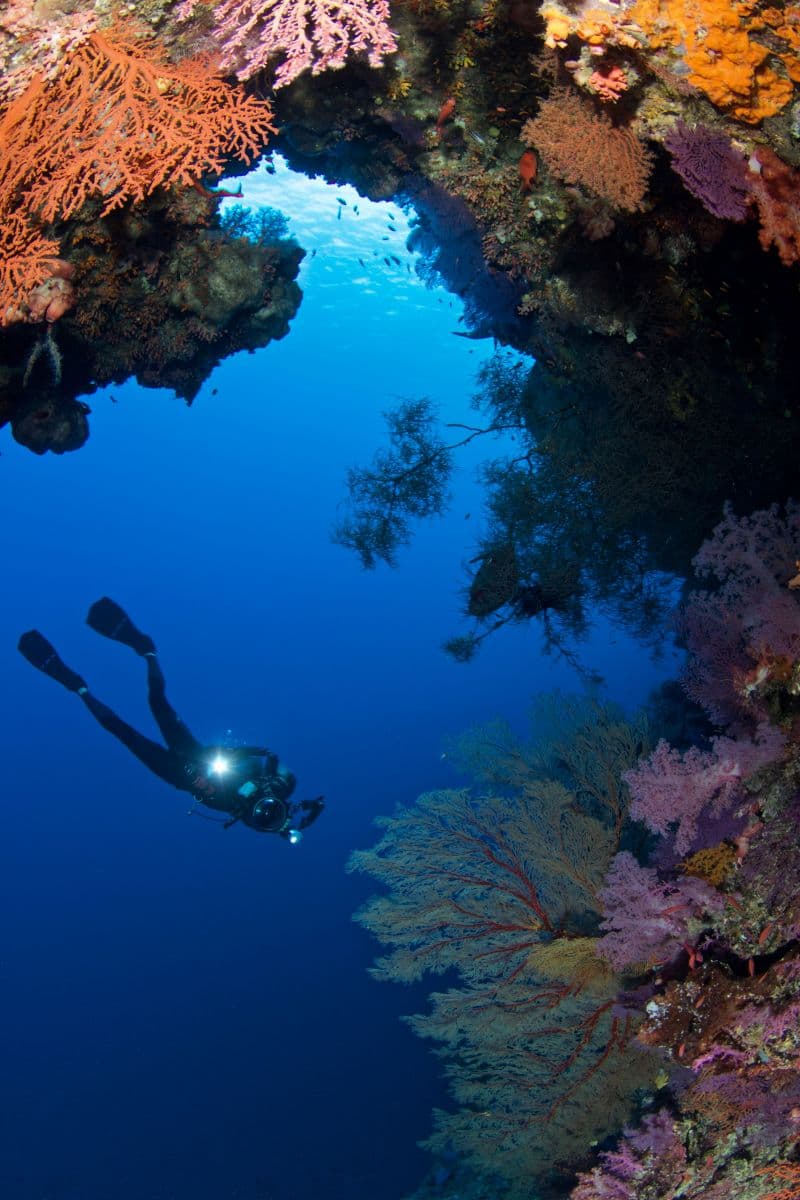
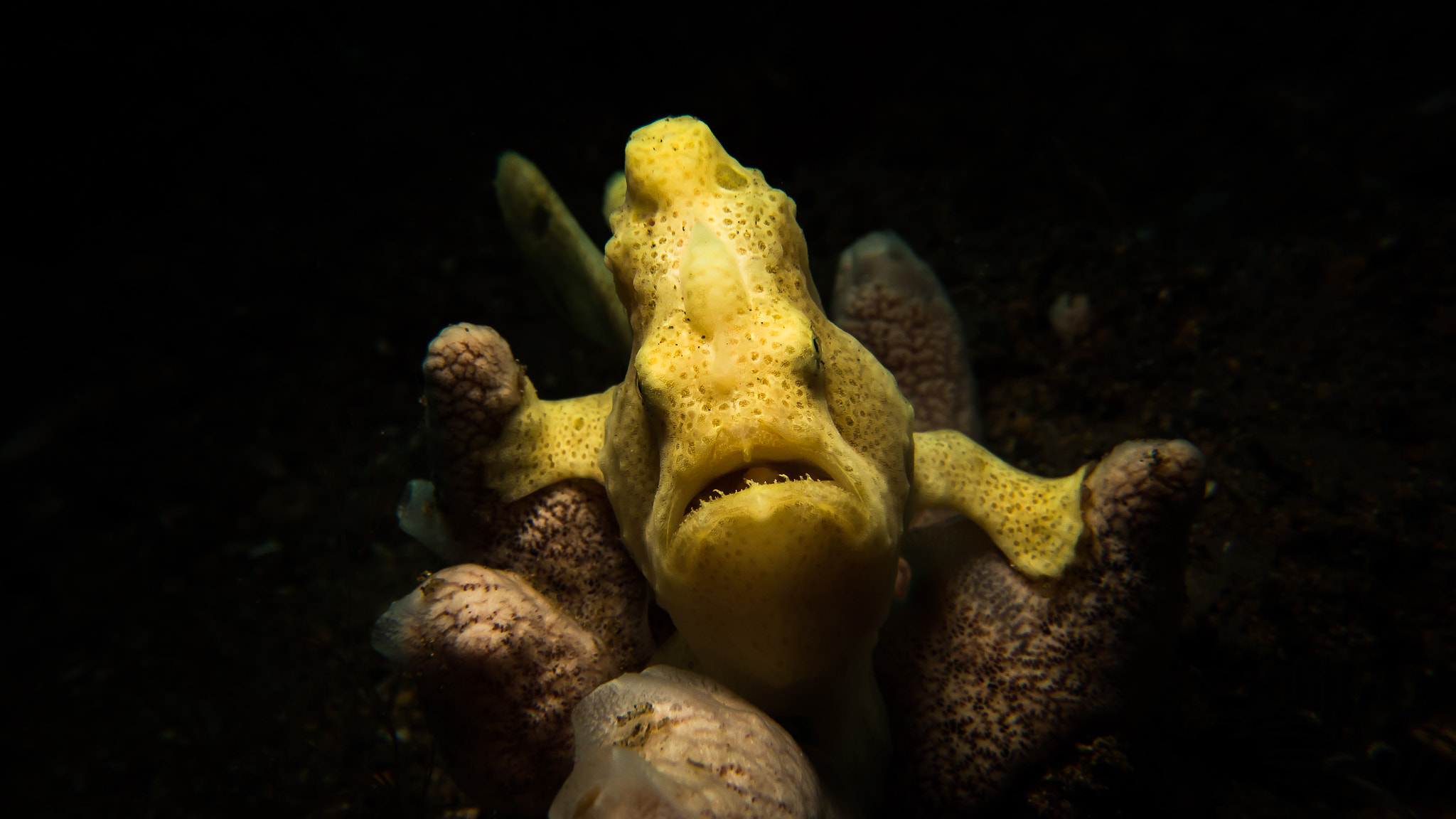
Frogfish are the reason underwater photographers book muck diving trips to Southeast Asia. Not sharks, not mantas — frogfish. They sit still, they change color, they have faces that look like they were designed by someone who had never seen a fish but had strong opinions about grumpy old men. For macro photographers, a well-lit frogfish portrait on a sponge is the shot that justifies the flight, the resort, and the 4:30 AM boat ride.
The problem is that frogfish are not evenly distributed. Some dive sites produce them reliably. Others are famous for other critters and happen to have frogfish occasionally. And within a single destination — say, Lembeh Strait — certain sites are frogfish factories while others are better for octopus or seahorses. If you are planning a trip specifically to photograph frogfish, the site-level detail matters more than the destination-level marketing.
This guide breaks down where frogfish actually live in Indonesia and the Philippines, what species you will find at each location, which dive sites produce the best photo opportunities, and when to go. We are not covering every macro critter in Southeast Asia — just frogfish.
What Makes a Good Frogfish Site
Before diving into locations, it helps to understand what frogfish want. The family Antennariidae are ambush predators. They sit on a surface — usually a sponge, rubble pile, or artificial structure — and wait for small fish and shrimp to come within striking distance of their lure (the illicium, a modified dorsal spine tipped with a fleshy esca). They do not chase prey. They do not swim well. They find a spot and stay there, sometimes for weeks.
This behavioral predictability is what makes them excellent photography subjects. A frogfish that has been sitting on the same sponge for three days will still be there when you return. It will be in the same position, facing the same direction, with the same background. This gives photographers time to plan composition, lighting, and background — luxuries that pelagic subjects never offer.
The best frogfish sites share a few characteristics: mixed substrate (sand, rubble, sponge patches, and debris), moderate depth (5 to 25 meters), low to moderate current, and a guide who knows where the residents live. That last point is not optional. Frogfish are cryptic. Some species — the hairy frogfish especially — are almost invisible against their chosen substrate. Without a trained spotter, you will swim past them.
Lembeh Strait, North Sulawesi, Indonesia
Lembeh is the world's most reliable frogfish destination. Not the only good one, but the one where the probability of seeing multiple frogfish species on a single trip is highest. The Strait records approximately eight to nine frogfish species regularly, and experienced guides can typically locate frogfish on most dives during prime season (Lembeh Resort, 2026; Murex Resorts, 2026).
Species You Will See
Lembeh's frogfish roster includes the full Indo-Pacific range plus some local specialties:
- Giant frogfish (Antennarius commersoni) — the largest species, reaching 30 cm. Found on barrel sponges and wrecks. Excellent for portrait work because of its size and expressive face. Can change color over days to match its sponge host.
- Hairy frogfish (Antennarius striatus) — Lembeh's signature critter. Covered in spinules that mimic algae or hydroids. Most common at Hairball sites. One of the hardest frogfish to spot and one of the most rewarding to photograph.
- Painted frogfish (Antennarius pictus) — smaller, with bold spotted patterns. Very common on sponges and rubble throughout the Strait.
- Warty frogfish (Antennarius maculatus) — textured skin with warts and filaments. Often found in shallow sponge patches.
- Freckled frogfish (Antennatus coccineus) — tiny (under 5 cm), with a characteristic black-edged ocellus. Found in reef crevices around 10 meters.
- Randall's frogfish (Antennatus randalli) — even smaller, with distinctive white spots behind the eye. A target for photographers who want something most divers never see.
- Ocellated frogfish (Nudiantennarius subteres) — rare, with a prominent black spot on the dorsal fin. A genuine trophy find.
- Sargassum frogfish (Histrio histrio) — associated with floating Sargassum weed. Unusual to see underwater but possible near the surface at the ends of the Strait.
Best Dive Sites for Frogfish in Lembeh
Hairball (1, 2, and 3): Black-sand muck slope from 5 to 20 meters. The shallow sections are prime hairy frogfish territory, with multiple individuals often visible on a single dive. The site also produces giant and painted frogfish on scattered sponges. Night dives here are excellent for behavioral shots — frogfish feed more actively after dark, and the illicium lure becomes more visible under dive lights.
Teluk Kambahu (TK1, TK2, TK3): Large black-sand bay with rubble and low coral heads. Ideal for bottom-dwelling frogfish species. TK is slower-paced than Hairball — the substrate is more uniform, so guides need to work harder, but the frogfish they find tend to be on cleaner backgrounds that photograph well.
Police Pier: Mixed sand, rubble, and scattered soft corals near a disused pier structure. The artificial substrate creates microhabitats that attract frogfish along with ribbon eels, sea moths, and octopus. Good for variety if you want more than just frogfish on a single dive.
Jahir: Sloping sand with scattered debris. Known for a resident giant frogfish that often sits near the shallow buoy line — repeat visitors can get the same animal in different lighting conditions across multiple trips.
Air Bajo (1, 2, 3): Shallow sandy flat (4-6 meters) dropping to about 20 meters. Standard Lembeh muck site where frogfish, seahorses, and octopus are frequently found. The shallows are good for natural-light macro work.
When to Go
Lembeh has frogfish year-round. The Strait is sheltered enough that weather rarely cancels dives entirely. Visibility is better from March to November, with September through November offering the best combination of calm conditions and clear water. December through February brings more rain and slightly reduced viz, but frogfish do not care about rain — they are still there.
For a detailed comparison of Lembeh against other macro destinations, see our Anilao vs Lembeh breakdown.
Ambon Bay, Maluku, Indonesia
Ambon is the frogfish destination for photographers who want something genuinely rare. The bay and its surrounding muck sites produce standard Indo-Pacific frogfish species — giant, painted, warty — but the reason people fly to Ambon is one animal: the psychedelic frogfish (Histiophryne psychedelica).
This species is endemic to Ambon. It has been found nowhere else in the world. It is round, banded in orange and white, and moves by jet-propulsion rather than swimming. It is also extremely difficult to find — sightings are genuinely rare, even with experienced local guides. When one is located, operators typically share the coordinates among trusted guides so that visiting photographers get a chance.
Dive Sites
Laha (1, 2, 3): Classic muck slopes near Ambon's airport. High macro diversity with frogfish, rhinopias, blue-ringed octopus, and mandarin fish. The rubble-and-debris substrate creates ideal ambush-predator habitat.
Twilight Zone / Deep Laha: Deeper muck and rubble (20-30 meters) with rare critters. The depth limits bottom time for recreational divers, but the reward is species found nowhere else at shallower sites.
Ambon Bay Piers: Pier structures attract debris, sponges, and the entire food chain that comes with them. Frogfish perch on ropes, tires, and encrusted pilings — backgrounds that create unusual and compelling compositions.
When to Go
Ambon is diveable year-round, with the best conditions from September to November and March to May. Visibility in the bay itself is never great (5-15 meters is typical) — this is muck diving, not reef diving — but the critter density compensates.
Anilao, Batangas, Philippines
Anilao sits in the Verde Island Passage, which marine biologists describe as the center of the world's marine biodiversity. For frogfish photographers, Anilao offers something that Lembeh and Ambon do not: proximity to coral reefs alongside muck sites. You can photograph a frogfish on a sponge in the morning and a school of jacks on a wall in the afternoon, all within a 15-minute boat ride.
Frogfish Species in Anilao
The species assemblage overlaps heavily with Lembeh:
- Giant frogfish — frequently photographed on barrel sponges and encrusted moorings. Anilao's reef sites (Twin Rocks, Kirby's Rock) produce giant frogfish against colorful sponge backgrounds that Lembeh's black sand cannot match.
- Painted frogfish — very common. Often found on sponges at reef edges.
- Warty frogfish — in shallow rubble and sponge patches.
- Hairy frogfish — occasionally found at muck sites, particularly during cooler months (December through February).
Best Dive Sites
Secret Bay (Mainit): Anilao's primary muck site. Black sand with scattered debris, hot springs in some areas, and a high density of macro life. Frogfish are regularly found here along with ghost pipefish, blue-ringed octopus, and mandarin fish. This is the site most comparable to Lembeh's Hairball.
Basura: Classic muck slope near the Anilao pier area. Named for the debris that once accumulated here (the site has since been cleaned up and is now a marine sanctuary). Frogfish, seahorses, and a wide range of nudibranchs.
Coconut Point / Coconut Bay: Sandy bay with scattered rubble and artificial structures. One of Anilao's most productive all-round macro sites.
Twin Rocks and Kirby's Rock: Reef sites where giant frogfish are found on sponge-covered walls. The colorful sponge backgrounds make these sites better for wide-angle macro or close-focus wide-angle (CFWA) work than pure muck sites.
When to Go
Anilao's prime macro season runs from November through May, when conditions are calm and visibility reaches 15-25 meters. The cooler months (December through February) can produce hairy frogfish sightings and bring slightly more active frogfish behavior. March through May offers the best visibility and calmest conditions.
Dauin (Dumaguete), Negros Oriental, Philippines
Dauin is the Philippines' other great frogfish destination, and it has a seasonal advantage that Anilao lacks: from February through June, frogfish density along the Dauin coast spikes dramatically. In April, operators report frogfish "littering the dive sites" — multiple individuals on a single dive is normal rather than lucky (Regal Diving, 2026).
Dive Sites
Masaplod Norte and Masaplod Sur: Mixed muck and reef sites along the Dauin coast. Frequent frogfish sightings, with giant and painted species on sponge patches and artificial reef structures.
Dauin Sanctuary (Dauin 1 and 2): Marine protected area with rich sponge growth. The no-take zone has allowed substrate to develop over years, creating ideal frogfish habitat. Giant and painted frogfish are common.
Secret Corner and Secret Bay: Muck-dominated sites with frogfish, mimic octopus, ghost pipefish, and seahorses. The "Secret" naming convention in the Philippines is overused — these are well-known sites — but the diving is excellent.
Seasonality
Dauin has two distinct macro seasons:
- February to June (frogfish season): Peak frogfish numbers. Best for photographers who want density of subjects and the ability to choose between individuals for the best background and composition.
- October to January (octopus season): Frogfish are still present but in lower numbers. The draw shifts to mimic octopus, wonderpus, and blue-ringed octopus.
If frogfish are your primary target, plan for March through May. If you want both frogfish and octopus, late February or early March hits the overlap.
Other Indonesian Sites Worth Considering
Bangka Island, North Sulawesi
Operators based in Lembeh (Two Fish Divers and others) offer day trips or combined itineraries that include Bangka. The island's soft-coral reefs and pinnacles produce giant frogfish on colorful sponges — a different aesthetic than Lembeh's black sand. For photographers who want both macro and wide-angle on the same trip, Bangka adds variety.
Bali (Tulamben, Seraya, Padang Bai)
Bali's northeast coast has established macro sites that regularly produce frogfish:
- Seraya Secrets and Melasti: Dedicated muck sites with painted, warty, and hairy frogfish.
- USAT Liberty Wreck (Tulamben): The famous wreck produces giant frogfish on sponges and corals growing on the ship's structure. The combination of wreck architecture and frogfish creates compositions unavailable at pure muck sites.
Bali is not on the same level as Lembeh for frogfish density, but it is easily combined with a Lembeh or Komodo trip and adds cultural and logistical convenience that remote Maluku or North Sulawesi destinations cannot match.
Planning a Frogfish-Specific Trip
Indonesia-Only Route (10-14 days)
Lembeh Strait (5-7 days) for maximum species variety, then Ambon (3-4 days) for the psychedelic frogfish hunt and deep-muck specialties. This combination gives you the best chance of photographing eight or more frogfish species on a single trip.
Philippines-Only Route (7-10 days)
Anilao (3-4 days) for reef-and-muck variety, then Dauin (3-4 days) for peak frogfish density (if traveling February through May). Alternatively, add a day at Puerto Galera for wall-dwelling frogfish on Sabang Wrecks and Dry Dock.
Combined Indonesia-Philippines (14-21 days)
For the dedicated photographer with time: Lembeh (5 days) → Ambon (3 days) → Anilao (3 days) → Dauin (3 days). This covers all four major frogfish regions and produces the widest range of species and backgrounds.
Budget Expectations
Frogfish diving in these regions is not expensive by international dive-trip standards, but the costs are front-loaded in the flight:
- Lembeh: USD 150-350 per night at a dive resort (3-4 dives per day included). Budget options exist in Bitung town; mid-range and luxury resorts line the Lembeh side of the Strait.
- Ambon: USD 120-250 per night. Fewer resort options than Lembeh — this is still a relatively undeveloped dive destination.
- Anilao: USD 80-200 per night. Day-trip diving from Manila is possible (2.5-3 hour drive), which reduces accommodation costs. Resorts along the Anilao coast range from basic to boutique.
- Dauin: USD 70-180 per night. Dumaguete has a domestic airport with direct flights from Manila. The Dauin coast is lined with dive resorts at every price point.
For a broader look at Philippines diving costs and logistics, see our Philippines for beginners guide.
Photography Tips Specific to Frogfish
Frogfish are the ideal macro subject for photographers at every level. They are stationary, they tolerate close approach, and they are found in predictable locations. But getting a good frogfish photo — one that shows texture, color, and personality — requires more than pointing a macro lens at a sitting fish.
Lens choice: A 60mm or 100/105mm macro lens works for standard frogfish portraits. For very small species (Randall's, freckled, ocellated), a 100/105mm lens or a diopter gives better magnification. For close-focus wide-angle shots of giant frogfish on sponges, a 15mm fisheye or rectilinear wide-angle with a close-focus diopter produces dramatic results.
Lighting: Frogfish have textured skin that responds well to side-lighting. Position your strobes at 10 and 2 o'clock, slightly behind the plane of the subject, to bring out the warts, spinules, and filaments. Avoid front-on flash — it flattens the texture that makes frogfish compelling.
Background: This is where site selection matters. Lembeh's black sand creates clean dark backgrounds that isolate the subject. Anilao's reef sponges provide colorful backgrounds that add context. Neither is better — they produce different images. If you are shooting for portfolio diversity, plan dives at both types of site.
The lure: The illicium (the "fishing rod" on top of the frogfish's head) with its esca (the lure tip) is the most distinctive feature of the family. Getting a shot with the lure extended requires patience — frogfish deploy it when hunting, and not every individual will display it during a dive. Night dives increase your chances, as frogfish are more active feeders after dark.
Behavior shots: If you find a frogfish near a cleaning station or with a visible prey item nearby, stay and wait. The strike — when the frogfish expands its mouth to engulf prey in milliseconds — is one of the fastest feeding events in the animal kingdom and nearly impossible to anticipate. But if it happens while you are set up and shooting, it is the kind of image that wins competitions.
Sources
- Lembeh Resort. "Frogfish in Lembeh Strait." Lembeh Resort Blog, 2026.
- Murex Resorts. "Diving Lembeh." Murex Resorts, 2026.
- Two Fish Divers. "Giant Frogfish Lembeh Strait." Two Fish Divers Blog, 2026.
- Zublu Diving. "Legendary Lembeh." Zublu Insights, 2026.
- Zublu Diving. "Which Is Better: Scuba Diving in the Philippines or Indonesia?" Zublu Insights, 2026.
- Regal Diving. "Dive Philippines." Regal Diving Blog, 2026.
- Scuba Travel. "Best Dives in the Philippines." Scuba Travel, 2026.
- Infinite Blue Dive Travel. "15 Best Dive Sites of the Lembeh Strait." Infinite Blue Dive Travel, 2026.
- Divehappy. "Cheap Scuba Diving in South East Asia." Divehappy, 2026.