
You just earned your Open Water certification. The card is in your wallet, the salt is still in your hair, and you are already scrolling flight prices to somewhere warm, cheap, and full of fish. The Philippines appears on every "best diving in Southeast Asia" list—7,641 islands, 22,500 miles of coastline, the apex of the Coral Triangle where 76 percent of the world's coral species live (WWF, 2024). The problem is that those same lists throw Tubbataha's liveaboard-only walls and Malapascua's 4 AM thresher shark dives at you alongside gentle house reefs, as if all of it is equally appropriate for someone with eight open-water dives in their logbook.
It is not. And that is fine. The Philippines has plenty of sites that will let you build confidence, see extraordinary marine life, and not spend the boat ride back to shore regretting your life choices. This article picks five of them—sites we would genuinely recommend to a diver with zero to thirty logged dives and a USD 2,000–5,000 total trip budget. No advanced certifications required. No terrifying current stories. Just good diving at depths your training prepared you for.
How We Chose These Five Spots
We applied four filters. Every site on this list cleared all four:
- Maximum depth under 30 meters (100 feet). Open Water certification limits you to 18 meters (60 feet). We looked for sites where the interesting stuff happens at 5–20 meters, with optional deeper sections only if you upgrade to Advanced Open Water on the trip.
- Mild to negligible currents. Strong currents turn a relaxing dive into an exercise in survival. Sites with known current issues—even famous ones—were excluded unless the specific beginner-accessible sections are sheltered.
- Shore entry or short boat ride. Long boat rides in rough seas are miserable for new divers who may already be fighting mild seasickness. We favored sites reachable in under thirty minutes by boat, or accessible from shore.
- Genuine marine life payoff. "Beginner-friendly" should not mean boring. Every site on this list offers something worth flying halfway around the world to see.
Sites that failed even one filter got cut, no matter how famous. We discuss what we excluded—and why—in the final section.
Spot #1: Anilao, Batangas — The Critter Capital Two Hours from Manila
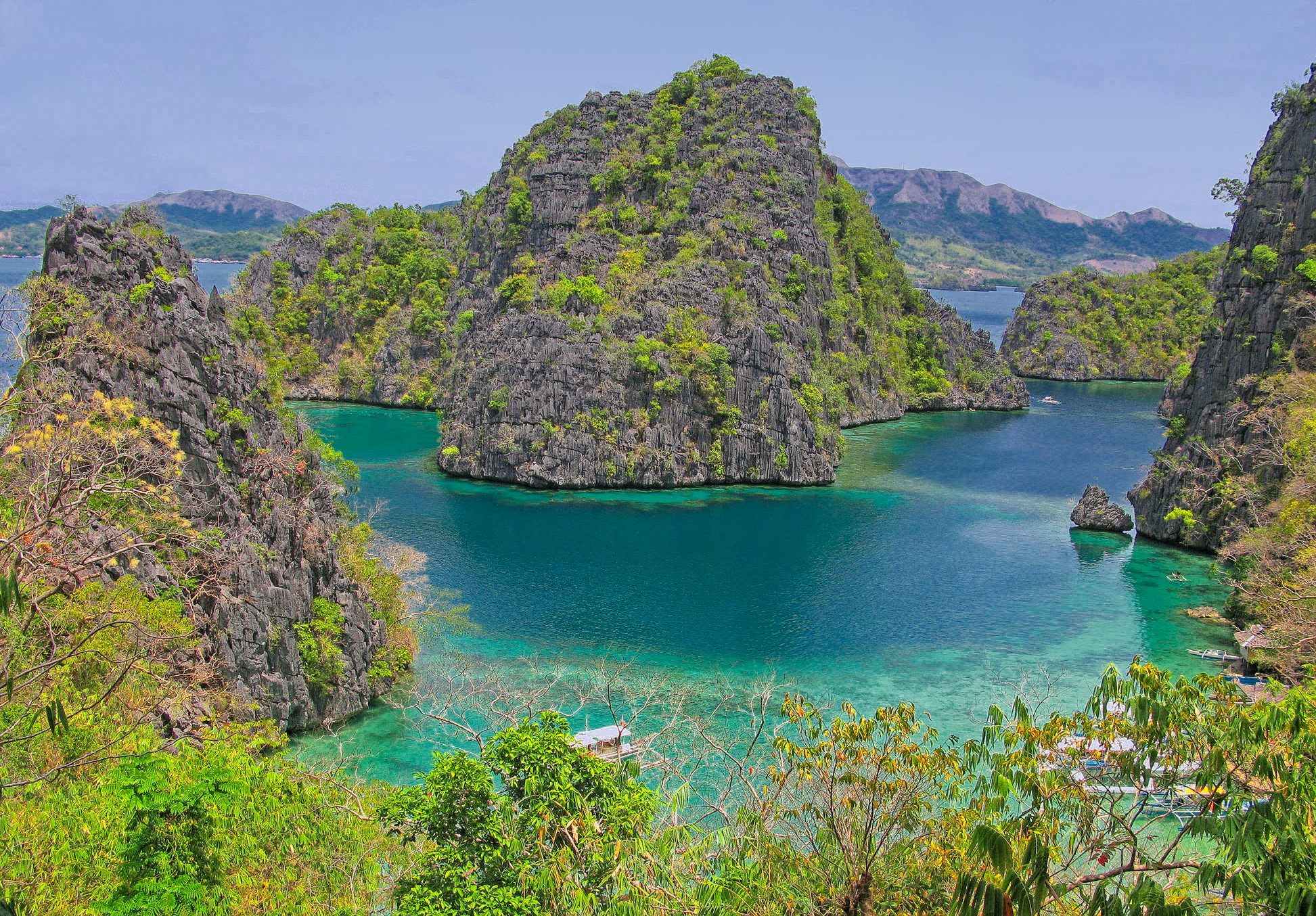
Why it makes the list: Anilao is the single most accessible world-class dive destination in the Philippines. It sits on the southern tip of Batangas province, roughly two hours by car from Manila—no domestic flights, no ferry connections, no overnight transit. You can land at Ninoy Aquino International Airport at noon and be underwater by 4 PM.
The diving here is muck and macro: sandy slopes, patch reefs, and artificial structures teeming with the kind of small, bizarre creatures that win underwater photography contests. In the 2025 Ocean Art photo contest, Anilao shots won seven awards, including the top three places in the compact macro category (SCUBA Travel, 2026). This is the place where you will see your first hairy frogfish, flamboyant cuttlefish, blue-ringed octopus, or harlequin shrimp.
What you will actually see:
- Twin Rocks — A shore-accessible double pinnacle averaging 16 meters (55 feet). Harlequin shrimp, hairy frogfish, ribbon eels, and nudibranchs crowd the coral heads. The site maxes out at around 20 meters, making it ideal for Open Water divers.
- Mainit Point — Known as the birthplace of SCUBA in the Philippines. Stonefish, frogfish, and occasional reef sharks on early-morning dives. Depth range: 8–22 meters.
- Anilao Pier (Secret Bay) — Night diving here is legendary. Octopuses, cuttlefish, bobtail squid, and stargazers emerge after dark. Depth: 5–15 meters.
The logistics that matter:
- Depth: 5–25 meters across most sites. Twin Rocks, the most popular site, maxes at 20 meters.
- Current: Minimal. Anilao's sheltered position in the Batangas coast means currents are gentle to nonexistent on most sites. Isla Verde, in the channel between Luzon and Mindoro, has stronger currents—save that for Advanced Open Water.
- Water temperature: 26–29°C year-round. A 3mm wetsuit is sufficient.
- Visibility: 15–30 meters, best from November to May during the northeast monsoon dry season.
- Getting there: Private car or van from Manila, approximately 2 hours. Resorts arrange transfers for USD 40–60 each way.
- Dive costs: USD 25–40 per fun dive including guide. Multi-day packages at resort-operated dive centers typically run USD 60–80 for two dives including boat and lunch.
- Accommodation: USD 40–120/night at beachfront dive resorts. Budget guesthouses available from USD 20/night.
The honest caveat: Anilao's macro focus means you will not see large pelagics, coral gardens, or dramatic walls. If you are picturing Finding Nemo reef scenes, this is not that. The appeal is small, strange, and often hilarious creatures—frogfish that look like lint, shrimp smaller than your pinky nail, octopuses that change color and texture in real time. It rewards patience and a good guide. If you do not love muck diving by dive three, move on—Anilao is not for everyone.
Verdict: The best first stop in the Philippines for a newly certified diver. Arrive, decompress from the flight, and spend two to three days easing into warm-water diving under the supervision of experienced macro guides. If you have a compact camera, bring it.
Spot #2: Moalboal, Cebu — The Sardine Spectacle
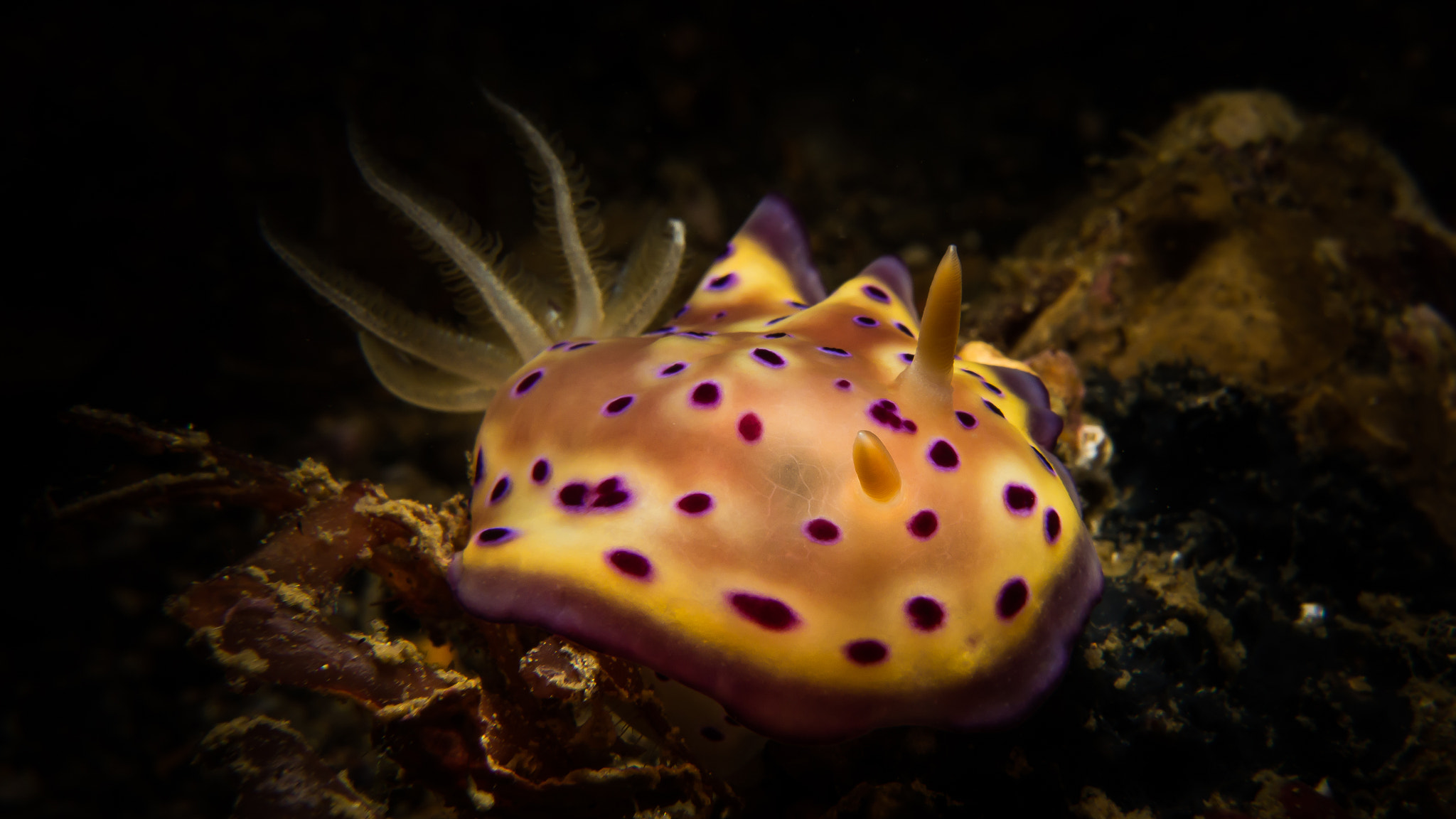
Why it makes the list: Moalboal sits on the southwestern coast of Cebu island, overlooking the Tañon Strait—a 100-mile marine protected area and sanctuary for whale sharks, reef sharks, rays, and marine mammals (DIVEIN, 2025). The headline attraction is the sardine ball: thousands of sardines swirling in a shimmering, constantly shifting tornado just off Panagsama Beach. You can see it from shore. You can snorkel it. You can dive right through the middle of it.
This is the kind of spectacle that makes a newly certified diver fall in love with the ocean.
What you will actually see:
- Panagsama Beach (Sardine Run) — The sardines are resident year-round, forming massive bait balls just 20–30 meters from shore at depths of 5–15 meters. Turtles are common—green and hawksbill turtles cruise through the sardines regularly.
- Pescador Island — A 30-minute boat ride from Panagsama. This marine sanctuary has shallow plateaus starting at 5 meters, sloping to walls that drop past 35 meters. The shallows are coral-covered and full of life: anemones, clownfish, moray eels, and lionfish. Open Water divers can enjoy the top section; Advanced Open Water divers can explore the deeper walls.
- House reef — Panagsama's house reef is one of the best free dives in the Philippines. Walk in from the beach and you are immediately on a coral slope with turtles, trumpet fish, and the sardine ball overhead.
The logistics that matter:
- Depth: 5–35 meters. The sardines and house reef are 5–15 meters; Pescador's plateaus are 8–20 meters.
- Current: Mild to moderate. Pescador can have gentle drift currents, but nothing that should trouble a confident Open Water diver.
- Water temperature: 27–30°C year-round.
- Visibility: 15–30 meters, best March through May.
- Getting there: Fly Manila to Cebu (1 hour 20 minutes, USD 40–100 one-way on Cebu Pacific or Philippine Airlines). Moalboal is a 2.5–3 hour drive from Cebu City. Alternatively, fly to Dumaguete and take a ferry to Cebu's west coast.
- Dive costs: USD 15–25 per fun dive—one of the cheapest diving destinations in the world. Two-dive day trips including Pescador Island cost USD 40–60.
- Accommodation: USD 20–80/night along Panagsama Beach.
The honest caveat: Moalboal's town is not glamorous. Panagsama Beach is a narrow strip of dive shops, budget resorts, and backpacker bars. If you want polished resort infrastructure, look elsewhere. The diving is outstanding for the price, but the topside experience is backpacker-tier. That said, most divers spending USD 2–5K on a Philippines trip will find the value ratio here unbeatable—USD 15 dives with turtles and sardine balls are hard to argue with.
Verdict: Two to three days. The sardines and turtles are the draw; Pescador Island adds a proper reef experience. Pair Moalboal with a few days in Dauin or Apo Island (see below) for a Visayas mini-itinerary.
Spot #3: Dauin, Dumaguete — Muck Diving on a Budget
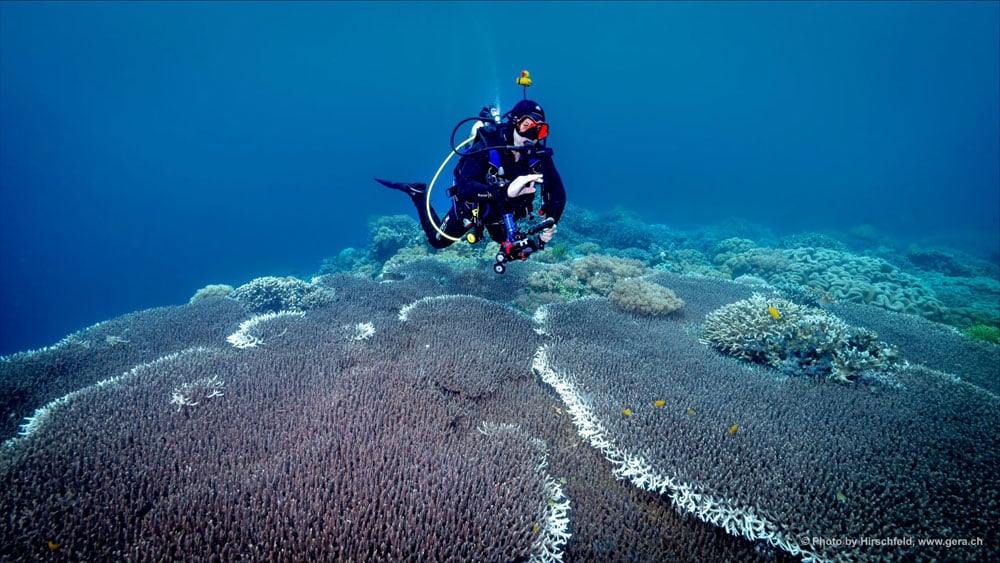
Why it makes the list: If Anilao is the premium macro experience, Dauin is its laid-back, half-price sibling. Located just south of Dumaguete city on Negros Oriental, Dauin offers black-sand muck diving that rivals Anilao for critter diversity—at roughly half the accommodation and dive costs. The shore entries are easy, the sites are shallow, and the muck diving community is small and welcoming.
What you will actually see:
- Secret Corner — A sandy slope with rocky outcrops, 8–18 meters deep. Warty frogfish, anemone crabs, cleaner shrimp, seahorses, and multiple octopus species including blue-ringed, mototi, and mimic (DIVEIN, 2025).
- The Pyramids — Artificial pyramid structures on a sandy bottom that have matured into productive fish-aggregating habitats. Excellent for both daytime macro hunting and night dives. Depth: 10–18 meters.
- Masaplod Sanctuary — A sloping reef with juvenile fish, sea grass, and coral patches. The gentlest site in the area—perfect for a first dive after arrival.
The logistics that matter:
- Depth: 5–25 meters. Most sites average 10–18 meters.
- Current: Negligible. Shore diving on a sheltered coast.
- Water temperature: 27–30°C.
- Visibility: 10–20 meters. Dauin's muck sites are not about visibility—they are about finding tiny things on the bottom. Clear-water days do happen, but do not come expecting 30-meter viz.
- Getting there: Fly Manila to Dumaguete (1 hour, USD 50–120). Dauin is a 20–30 minute drive from Dumaguete airport.
- Dive costs: USD 20–30 per fun dive. Night dives typically USD 30–35.
- Accommodation: USD 25–80/night. Budget beachfront resorts with dive centers attached are the norm.
The honest caveat: Dauin's muck diving is genuinely unglamorous underwater. You are staring at sand, rubble, and debris for much of the dive, waiting for a guide to point at something invisible that turns out to be a 2-centimeter hairy frogfish pretending to be a sponge. If you need coral gardens, walls, or big fish to stay engaged, Dauin will bore you. It is a site for divers who get excited about seeing a creature they cannot name, not for those who want visual spectacle from the moment they descend. Pair it with Apo Island (see Spot #5) for contrast.
Verdict: Two days maximum, combined with Apo Island day trips. Dauin is the base; Apo Island is the payoff. The muck diving is world-class but niche—not every diver will love it, and that is perfectly fine.
Spot #4: Coron's Shallow Wrecks, Palawan — WWII History at Accessible Depths
Why it makes the list: On September 24, 1944, US Navy bombers sank twelve Japanese ships in Coron Bay in fifteen minutes. Those wrecks now sit in 3–42 meters of warm, clear water, encrusted with corals and colonized by marine life. Coron is among the best wreck diving in Southeast Asia, and several of those wrecks are shallow enough for Open Water divers to explore safely.
The key word is "shallow." Not all of Coron's wrecks are beginner-appropriate—Irako at 42 meters and Akitsushima at 35 meters are firmly advanced territory. But three wrecks sit in the 3–19 meter range and offer an extraordinary introduction to wreck diving without requiring penetration training or deep experience.
What you will actually see:
- East Tangat Wreck — A 35-meter gunboat lying at 3–19 meters near shore. The shallowest sections are snorkeling depth; the deeper stern is encrusted with soft corals, barrel sponges, and hydroids. Schools of batfish, sweetlips, and juvenile barracuda patrol the structure. This is the ideal first wreck dive.
- Lusong Gunboat — So shallow that the hull breaks the surface at low tide. Snorkelers can see it from above; divers can swim around and through the superstructure at 3–8 meters. Excellent for photography and for divers who are nervous about wreck penetration—the entire site is shallow enough to surface in an emergency.
- Olympia Maru — A 124-meter cargo vessel sitting upright with the top of the funnels at 12 meters and the keel at 30 meters. Open Water divers can explore the upper sections—the collapsed bridge, the cargo holds, and the school of fusiliers around the gun turret. The site is used by local operators as a "warm-up wreck" for divers arriving in Coron before they tackle deeper sites (DIVEIN, 2025).
The logistics that matter:
- Depth: East Tangat 3–19 m; Lusong 3–8 m; Olympia Maru 12–30 m (shallow sections at 12–18 m).
- Current: Mild to moderate on sheltered wrecks. Some wrecks in open water (Okikawa Maru, Irako) can have strong currents—stick to the beginner-accessible sites.
- Water temperature: 27–30°C.
- Visibility: 10–20 meters. Coron's visibility is generally lower than other Philippine destinations due to nutrient-rich water, but it is more than sufficient for wreck exploration.
- Getting there: Fly Manila to Busuanga (Coron) airport, 45 minutes. Alternatively, ferry from El Nido (3.5 hours) or direct flights from Cebu.
- Dive costs: USD 30–45 per wreck dive. Three-dive day trips cost USD 75–100, including lunch and boat.
- Accommodation: USD 30–100/night in Coron town. Liveaboard options also available for multi-day itineraries.
The honest caveat: Coron's beginner-friendly wrecks are genuinely shallow, but wreck diving carries inherent risks—entanglement, silt-outs, disorientation, and overhead environments that prevent direct ascent. Even on shallow wrecks, we recommend diving with an experienced wreck guide and staying on the exterior of the structure until you have proper wreck penetration training. The shallow wrecks of East Tangat and Lusong are open-water accessible; do not let anyone convince you that the deeper wrecks (Irako at 42 meters, Kogyo Maru's engine room) are suitable for newly certified divers. They are not.
Verdict: Three days. Spend day one on the shallow wrecks (East Tangat, Lusong) and the Olympia Maru. Day two, revisit favorites or try Coron's reef sites. Day three, consider a Kayangan Lake snorkel day or an island-hopping tour. If you catch the wreck diving bug, Coron is a compelling reason to come back with Advanced Open Water and wreck specialty training.
Spot #5: Apo Island, Negros Oriental — Pristine Reefs, Sea Turtles, and Easy Drift Diving
Why it makes the list: Apo Island is a small volcanic island off the southern tip of Negros Oriental, reachable by a thirty-minute banca boat from the village of Malatapay. It has been a no-take marine sanctuary since 1985—one of the oldest community-managed marine protected areas in the Philippines (Silliman University Marine Laboratory; Raymundo & White, 2004)—and the results are extraordinary. The hard coral coverage is among the healthiest in the Visayas (Divernet, 2025), and green and hawksbill turtles are so abundant that seeing five to ten on a single dive is routine.
The diving is drift diving—currents carry you along the reef wall—but the currents are generally mild and predictable, flowing parallel to the island's coastline. A guide drops you in, you drift, and the boat picks you up at the other end. This makes it one of the easiest forms of diving for beginners: no kicking, no navigation, just float and look.
What you will actually see:
- Coconut Point — The island's signature drift dive. Soft coral seascapes, massive barrel sponges, and dense schools of anthias and fusiliers at 8–25 meters. Turtles are almost guaranteed.
- Masma Point ("Chapel") — A shallower section with hard coral gardens, anemone fields, and the site nicknamed "Clownfish City" for its density of anemonefish. Depth: 5–18 meters.
- Rock Point — Sloping reef with sea fans, nudibranchs, and juvenile reef sharks in deeper sections. Depth: 5–22 meters.
The logistics that matter:
- Depth: 5–25 meters across most sites. The coral gardens and turtle-cleaning stations are 8–15 meters.
- Current: Mild to moderate, flowing parallel to the island. Drift dives are the standard—your guide manages the entry and exit points. On rare days when current is too strong, operators shift to more sheltered sites on the island's leeward side.
- Water temperature: 27–30°C.
- Visibility: 15–30 meters, best March through May.
- Getting there: Fly Manila to Dumaguete (1 hour). Drive 25 km south to Malatapay (45 minutes), then a thirty-minute banca boat to the island. Most divers base themselves in Dauin or Dumaguete and take day trips. Overnight stays on the island are possible in basic guesthouses.
- Dive costs: Day-trip packages from Dauin typically cost USD 70–90 for two dives including boat transfers, guide, and lunch. Marine sanctuary fee: PHP 300 (approximately USD 5).
- Accommodation on-island: Limited to a handful of basic guesthouses, USD 15–40/night. Most divers stay in Dauin.
The honest caveat: Apo Island's drift diving, while generally mild, is still drift diving. On days when the current picks up, less confident divers may feel swept along faster than they are comfortable with. Communicate honestly with your guide about your comfort level—good operators will adjust the dive plan, pick a sheltered site, or shorten the drift. Also, the island's limited infrastructure means day trips from Dauin are the practical choice; overnight stays are spartan.
Verdict: Two to three day trips from a Dauin base. Apo Island is the payoff after Dauin's muck diving—healthy coral, abundant turtles, and easy drift diving that feels like flying over an underwater garden. It is one of the best places in the Philippines to fall in love with reef diving.
The Decision Framework: Which Spot for Which Diver?
Not every beginner is the same. Use this table to match your priorities to the right spot:
| If you are... | Go to... | Why |
|---|---|---|
| Nervous about your first international dive | Anilao | Shore entries, no currents, 2 hours from Manila airport. Lowest barrier to entry. |
| On a tight budget (under USD 2,500 total) | Moalboal or Dauin | USD 15–25 dives, USD 20–80/night accommodation. Best value in the Philippines. |
| Excited about wreck diving | Coron (shallow wrecks) | WWII history at beginner-accessible depths. East Tangat and Lusong are 3–19 meters. |
| Passionate about marine biology / photography | Anilao or Dauin | Macro critters that win international photo contests. Bring a camera. |
| Wanting turtles and healthy coral | Apo Island | Five to ten turtles per dive is normal. The healthiest hard coral in the Visayas. |
| Planning a two-week trip with variety | Moalboal + Dauin + Apo Island | Three destinations within a few hours of each other. Fly into Cebu, bus to Moalboal, ferry to Dumaguete, day-trip Apo. |
| Combining diving with non-dive activities | Coron | Kayangan Lake, island hopping, hot springs, and wreck diving in one destination. |
What We Cut and Why
Tubbataha Reefs, Sulu Sea — Liveaboard-only, open only March through mid-June, USD 1,500–3,000 for a typical week. Spectacular, but not a beginner destination—the currents, depths, and remoteness make it intermediate to advanced territory. Save it for dive fifty.
Malapascua, Cebu — Thresher sharks at Monad Shoal sound amazing until you learn the dive starts at 4 AM, hits 25–30 meters, and requires comfort in currents at dawn on a dark plateau. The thresher shark dive is not appropriate for newly Open Water-certified divers. Gato Island's caverns and swim-throughs also require experience. Come back with Advanced Open Water and twenty-plus dives.
Puerto Galera — Excellent diving, but the best sites (Verde Island Drop-Off, Canyons) have strong currents that make them unsuitable for beginners. The Sabang area has calmer sites, but they are less impressive than what Anilao offers at a similar difficulty level.
Nusa Penida (Bali) — Wrong country, but worth mentioning because the same logic applies: do not let anyone sell you an advanced-current dive site as a beginner experience. If a site requires Advanced Open Water and current experience, it requires Advanced Open Water and current experience—regardless of what the tour brochure says.
Cost Summary: What a Beginner Philippines Dive Trip Actually Runs
For a two-week trip from North America or Europe, excluding international flights:
| Expense | Range (USD) |
|---|---|
| International flights (round-trip, economy) | $600–1,200 |
| Domestic flights (1–2 segments) | $80–200 |
| Accommodation (14 nights, budget to mid-range) | $300–1,000 |
| Dive costs (20–25 dives) | $400–750 |
| Equipment rental (if needed) | $100–200 |
| Marine park / sanctuary fees | $10–30 |
| Local transport (tricycles, vans, ferries) | $100–250 |
| Food and drinks | $200–400 |
| Tips for dive guides | $80–150 |
| Miscellaneous (SIM, laundry, souvenirs) | $50–100 |
| Total (excluding international flights) | $1,320–3,080 |
The Philippines is one of the most affordable diving destinations in the world. At USD 15–40 per fun dive, you can log twenty-five dives for the cost of five in the Maldives or three in the Galapagos (LiveAboard.com, 2026). The infrastructure is mature—English is widely spoken, most dive guides are PADI- or SSI-certified professionals, and equipment rental is reliable if not always brand-new.
Frequently Asked Questions
Is the Philippines safe for first-time international divers?
Yes, with the standard precautions that apply to any developing-country destination. The major dive regions—Cebu, Dumaguete, Batangas, Palawan—are stable, well-traveled, and have mature tourism infrastructure. The UK Foreign Office advises against travel to Mindanao and the Sulu archipelago due to security concerns (ScubaTravel, 2026); avoid those areas. Stick to the destinations listed in this article and you will be in well-patrolled, tourist-friendly territory.
Do I need to bring my own equipment?
No. All recommended dive operators provide full equipment rental—BCD, regulator, wetsuit, mask, fins—for USD 5–15 per dive. However, if you have your own mask and dive computer, bring them. A properly fitting mask is the single piece of equipment that most affects dive comfort, and your own computer means you always know your nitrogen loading.
Can I get Advanced Open Water certified in the Philippines?
Absolutely, and it is a smart move. Many operators offer the PADI Advanced Open Water course for USD 250–350, which includes five adventure dives over two to three days. Taking the course on-site lets you access deeper wrecks in Coron, Pescador's walls in Moalboal, and night dives at Anilao—all while building experience under professional supervision. If you plan a two-week trip, consider spending the first week at Open Water level and the second week upgrading.
When is the best time to go?
December through April is the dry season across most of the Philippines and the best time for diving. Visibility peaks, seas are calmer, and rainfall is minimal. Water temperatures stay 27–31°C year-round (ScubaTravel, 2026). Avoid July through October if possible—that is monsoon season, with higher rainfall, reduced visibility, and occasional typhoon disruptions. June and November are transitional: diving is usually fine, but conditions are less predictable.
How do I get between dive destinations?
Domestic flights are cheap and frequent. Cebu Pacific and Philippine Airlines connect Manila, Cebu, and Dumaguete for USD 40–120 one-way. Ferries connect Cebu to Dumaguete and Bohol. For Luzon destinations like Anilao and Puerto Galera, private van transfers from Manila cost USD 40–60 each way. Internal flights book out during peak season (December–January, Holy Week); reserve at least two weeks in advance.
Have a question about planning your first Philippines dive trip, or want a second opinion on which destination suits your certification level? Drop us a line at hello@mantaradive.com—we are happy to help.
Sources and Methodology
This article draws on site descriptions, condition data, pricing, and diver reviews cross-referenced from the following independent sources: SCUBA Travel 2026 Philippines diving guide (site descriptions, visibility data 15–40 m for Anilao/Puerto Galera, water temperature 26–29°C seasonal breakdown, Anilao Ocean Art 2025 photo contest results, 7 awards from Anilao shots, best dive season December–April, dive operator listings and pricing for Cebu and Puerto Galera regions, Pacific Divers Puerto Galera pricing $25/dive shop gear $20 own gear, Ocean Globe Moalboal pricing approximately £10/dive); DIVEIN.com 2025 Philippines diving guide by Sylvia Jenkins PADI Instructor and Rebecca Strauss (Anilao Twin Rocks depth 55 ft/16 m and marine life catalog, Coron wreck depth and skill-level classifications with East Tangat 9–62 ft and Lusong shallow/surface, Moalboal Panagsama Beach sardine run description and Pescador Island depth 10–115 ft, Dauin Secret Corner site description and marine life, Apo Island Coconut Point max depth 80 ft and Masma Point description); Divezone.net Philippines diving overview (Anilao rated one of best dive sites, Coron WWII wrecks description, Moalboal Pescador Island sardine ball recommended by Savedra dive shop, Apo Island described as "incredible" and "world-class coral with gigantic mushroom coral" in diver reviews, SeaQuest Dive Centers and Sea Explorers as multi-location operators); ScubaTravel Philippines dive operators guide (Moalboal operator listings including Ocean Globe, Neptune Diving Adventure, Nelson's, Challenger Divers, SeaQuest and Sea Explorers multi-location presence, Malapascua operator listings, Puerto Galera operator listings and pricing); WWF Coral Triangle data (76% of world's coral species, 6 of 7 marine turtle species, 2,228+ reef fish species in the Coral Triangle region). All USD figures reflect early-2026 published rates; actual costs vary by operator, season, and booking lead time. Dive conditions—visibility, current, and water temperature—reflect typical seasonal averages reported by operators and experienced divers, not guarantees. Additional sources for this article: Raymundo & White, 2004 (Apo Island MPA history, Silliman University Marine Laboratory, via University of Guam PDF); Divernet / Scuba Diver Magazine, 2025 (Apo Island coral health and conservation profile by Adrian Stacey); LiveAboard.com, 2026 (Maldives and Galapagos liveaboard pricing benchmarks for cost comparison).
Related MantaraDive planning links
- Solo Diving in the Philippines: Which Resorts and Liveaboards Welcome Solo Travelers?
- Komodo Liveaboard Prices: What It Actually Costs (and What's Worth It)
- Red Sea Liveaboard Itinerary: North vs South for European Divers
- Lembeh Strait for Macro Photographers: Complete 2026 Guide
- 5 Essential Beginner Tips for Your First Tropical Dive Trip
- Best Dive Sites in Bali: 3 That Matter for a 7-Day Trip
- Cebu vs Bohol Diving vs Palawan: Which Philippine Island for Your First Dive Trip?
- Malapascua Thresher Sharks: Is the 5 AM Dive Still Worth It in 2026?