Nine thousand to thirteen thousand dollars all-in for a week of diving. That is what a Galapagos liveaboard actually costs a North American diver in 2026 once you add flights, the doubled national park fee, nitrox, fuel surcharges, and the crew gratuity that nobody mentions in the brochure. A comparable Socorro trip—the Revillagigedos archipelago off Mexico, delivering hammerheads, giant mantas, and the same class of pelagic spectacle—runs five to seven thousand dollars all-in for a longer itinerary. The question this article answers, with 2026 pricing and real diver data, is whether the Galapagos premium buys something Socorro cannot deliver, or whether it buys a Darwin and Wolf sticker on your luggage.
The case for Galapagos rests on a specific set of facts: Darwin and Wolf Islands host the densest scalloped hammerhead aggregations documented anywhere on Earth, seasonal whale shark encounters at depths accessible to recreational divers, and a marine ecosystem shaped by three converging ocean currents that no other dive destination replicates. The case against rests on a different set of facts: the 2026 national park fee doubled to $200, liveaboard fares start at $4,500 before any extras, and the all-in cost for a competent mid-range trip commonly clears $9,000—roughly $4,000 to $8,000 more than a Socorro liveaboard of similar or longer duration. Both are true. The question is which set of facts matters more to you.
Why This Article Matters
We analyzed published 2026 liveaboard fare sheets across the Galapagos dive fleet, the revised Galapagos National Park fee structure, Socorro liveaboard pricing from Nautilus Liveaboards and SeaCrush, dive count and marine life encounter data from Galapagos Sky, Humboldt Explorer, and Master Liveaboards itineraries, and community discussion from ScubaBoard and Liveaboard.com comparing the two destinations. The output is a cost-benefit framework: what Galapagos diving actually costs in 2026, what that money buys underwater versus Socorro, and which diver profiles should book which destination. This is not a brochure. If you want one, the operator websites are free.
The Real 2026 Cost: What a Galapagos Liveaboard Actually Sets You Back
Headline liveaboard fares for the Galapagos range from $4,590 to $7,795 for 7–8 night itineraries. Those numbers are real, and they are also roughly half the story. Once you add international and domestic flights, the $200 national park fee, the $20 Ingala transit card, nitrox, fuel surcharges, gear rental if you need it, pre-trip hotel nights in Quito or Guayaquil, and the crew gratuity that the industry treats as mandatory but never includes in the quote, the total commonly lands 60–80% above the published vessel fare.
7–8 Night Liveaboard Cost, All-In (per diver, USD, 2026)
| Cost component | Budget (Danubio Azul, ~$4,590) | Mid-range (Humboldt Explorer, ~$6,295) | Luxury (Galapagos Sky, ~$7,495) |
|---|---|---|---|
| Vessel fare | $4,590 | $6,295 | $7,495 |
| International flights (US–Ecuador rt) | $950 | $950 | $950 |
| Domestic flights (Quito/Guayaquil–Galapagos rt) | $525 | $525 | $525 |
| Galapagos National Park fee | $200 | $200 | $200 |
| Ingala transit card | $20 | $20 | $20 |
| Nitrox (7 nights) | $150 | $150 | $150 |
| Fuel surcharge | $150 | $150 | $150 |
| Pre/post hotels, transfers, meals | $350 | $350 | $350 |
| Crew gratuity (~12% of fare) | ~$551 | ~$756 | ~$899 |
| Misc. onboard extras | $150 | $200 | $250 |
| Total all-in | $7,636 | $9,641 | $11,989 |
Sources: GalapagosIslands.com (2026 dive cruise comparison table); Happy Gringo (Humboldt Explorer 2026 fact sheet); Galapagos Sky (2026 published rates); Galapagos Government Council (2026 park fee); AdventureSmith Explorations (Galapagos cost guide); Family Divers (Tiburon Explorer 2026 pricing); Master Liveaboards (Galapagos Master extras sheet).
A few specific data points behind the table. Danubio Azul, the most affordable dive liveaboard that includes Darwin and Wolf in its itinerary, lists at $4,590 for an 8-day cruise (GalapagosIslands.com). Humboldt Explorer—the mid-range workhorse that most ScubaBoard threads reference as the default competent choice—publishes $6,295 per person for January–June 2026, with a $150 fuel surcharge, $150 nitrox supplement, and $35 hyperbaric chamber access fee on top (Happy Gringo, 2026). Tiburon Explorer, the newer and more upscale Explorer Ventures sister ship, comes in at $7,295 for 7 nights with wine, beer, and wifi included (Explorer Ventures, 2026). Galapagos Sky, the luxury standard-bearer, publishes $7,495 for a 7-night deluxe cabin and $7,795 for master, with 10-night itineraries running $8,890–$9,290 (Galapagos Sky, 2026).
The national park fee doubled in recent years from $100 to $200 for international visitors aged 12 and older, a change that many older guides and forum posts have not caught up with (Galapagos Government Council, 2026; AdventureSmith). The Ingala transit control card is a separate $20 per person (Master Liveaboards extras sheet). Both are payable in cash in US dollars—Ecuador uses the USD as its official currency, which eliminates exchange-rate risk but does not reduce the sticker shock.
Round-trip international airfare from North America to Quito or Guayaquil runs $800–$1,200 in economy, with advance booking occasionally capturing fares below $600 and last-minute purchases pushing past $1,500 (AdventureSmith, 2026). Domestic flights from the mainland to Baltra or San Cristobal add $450–$650 round-trip (Happy Gringo; Family Divers, 2026). Total transit time from a US hub to the liveaboard commonly reaches 14–18 hours door-to-door including connections—shorter than Raja Ampat but meaningfully longer than a Socorro trip departing from Cabo San Lucas.
The honest number to budget: $7,500–$8,000 all-in at the budget tier, $9,000–$10,500 for mid-range, and $11,000–$13,500 for luxury—for a North American diver on a 7–8 night itinerary. European travelers add $300–$800 to the flight component. Anyone budgeting at the published vessel fare alone will be 40–60% short.
What the Money Buys: Darwin, Wolf, and the Hammerhead Case
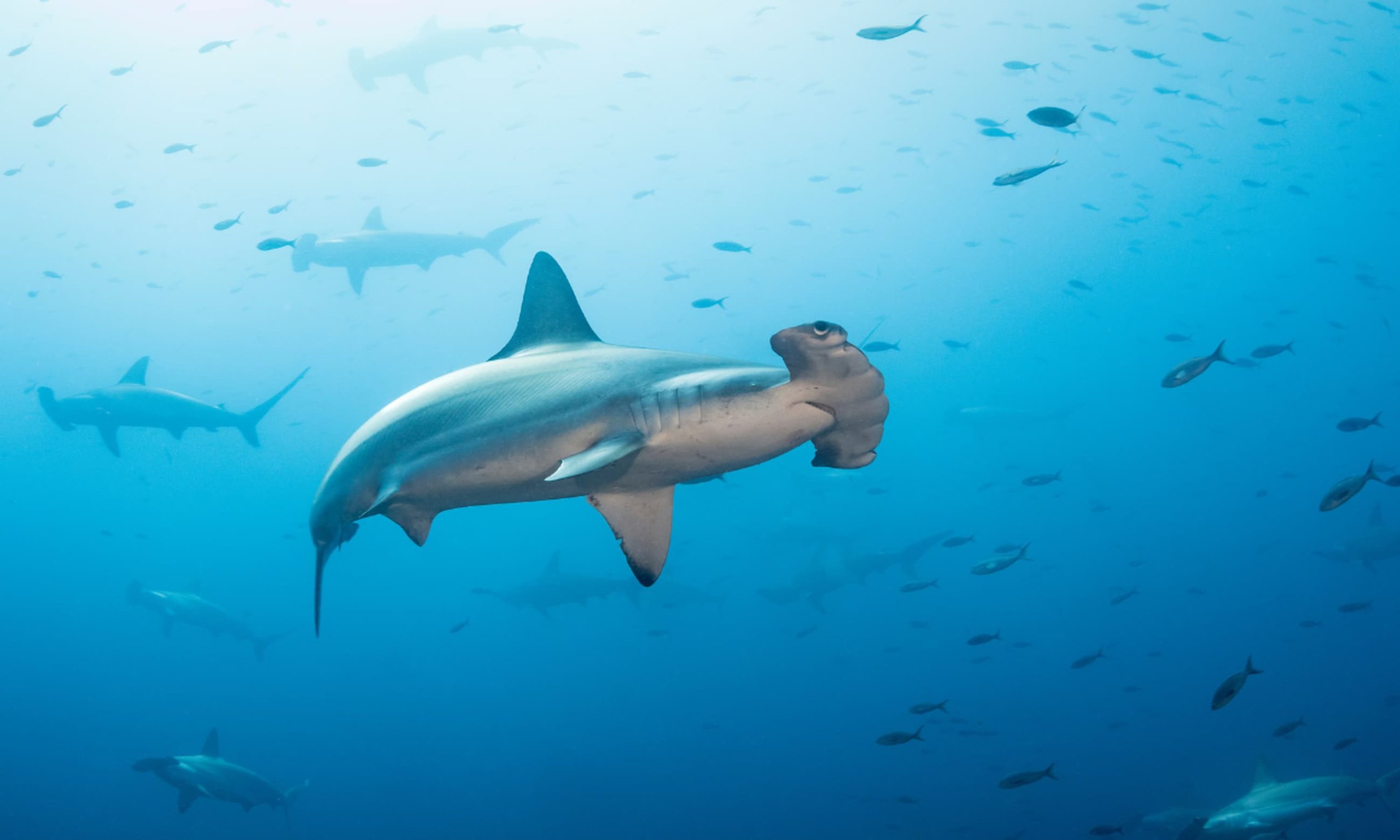
The Galapagos premium buys access to Darwin and Wolf Islands—two uninhabited volcanic outposts roughly 190 kilometers north of the main archipelago, reachable only by liveaboard, sitting directly in the path of the Cromwell Current upwelling. This oceanographic accident produces the densest scalloped hammerhead aggregations recorded by any dive operation worldwide. Schools of 50–200 hammerheads are routine at Darwin's Arch and Wolf's Landslide; in peak season, divers report hammerhead clouds so dense they obscure the blue (Galapagos Sky; Dive-The-World; ScubaBoard).
The Headline Dive Sites
Darwin's Arch. The iconic rock formation—now partially collapsed but still the site's namesake—is the single most famous hammerhead dive on the planet. Divers descend to a plateau at 18–25 meters along a wall where scalloped hammerheads school in currents that funnel between the island and the seamount. Whale sharks—large females, often pregnant—pass through from June through November, with peak encounters in September–October. The dive demands current competence, negative entries, and comfort at depth; this is not a site where you develop those skills (Galapagos Sky; Master Liveaboards; ScubaBoard).
Wolf Island (Landslide and Shark Bay). Wolf delivers the same hammerhead density as Darwin but with a different character: steeper walls, more intense currents, and encounters with Galapagos sharks, silvertips, and occasional tiger sharks. The Landslide site features a sloping reef face where hammerheads congregate at cleaning stations, often at 12–18 meters, making them accessible on a standard recreational profile. Shark Bay is shallower and more protected, used as the check-out dive and for surface intervals with sea lions (Explorer Ventures; Dive-The-World).
Cousin's Rock. A mid-trip site on the return south, Cousin's Rock offers a contrast to the pelagic intensity of Darwin and Wolf. The dive features macro life—seahorses, nudibranchs, frogfish—plus sea lions, eagle rays, and occasional hammerheads in smaller numbers. Photographers often describe it as the trip's best wide-angle/macro combination site (Bluewater Dive Travel; ScubaBoard).
Gordon Rocks (optional). Some itineraries include Gordon Rocks off Santa Cruz, a current-swept site known for hammerhead schools at depth and manta cleaning stations. The dive is more exposed and weather-dependent than the northern sites; operators often use it as a weather-day alternative (GalapagosIslands.com).
What This Adds Up To
Water temperature at Darwin and Wolf runs 16–24°C depending on season—the Cromwell Current brings cold, nutrient-rich water from the deep Pacific, which is why the hammerheads are there but also why a 5mm wetsuit or drysuit recommendation is standard. Visibility ranges from 10–25 meters, with the best conditions in the warm season (December–May) and more plankton-rich, green-water conditions in the cooler season (June–November) when whale sharks peak. A 7-night itinerary delivers 18–22 dives including night dives, with 8–12 of those dives at Darwin and Wolf on a competent itinerary (Master Liveaboards; WB Diving, 2026).
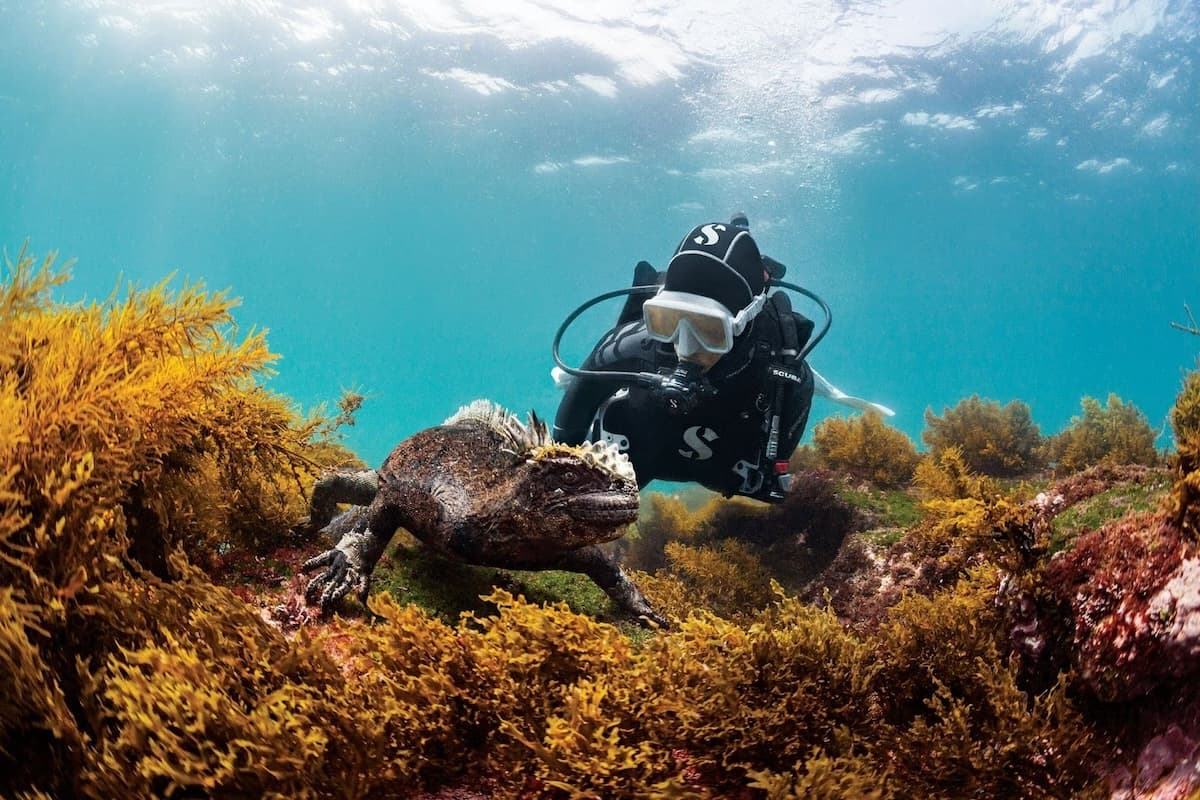
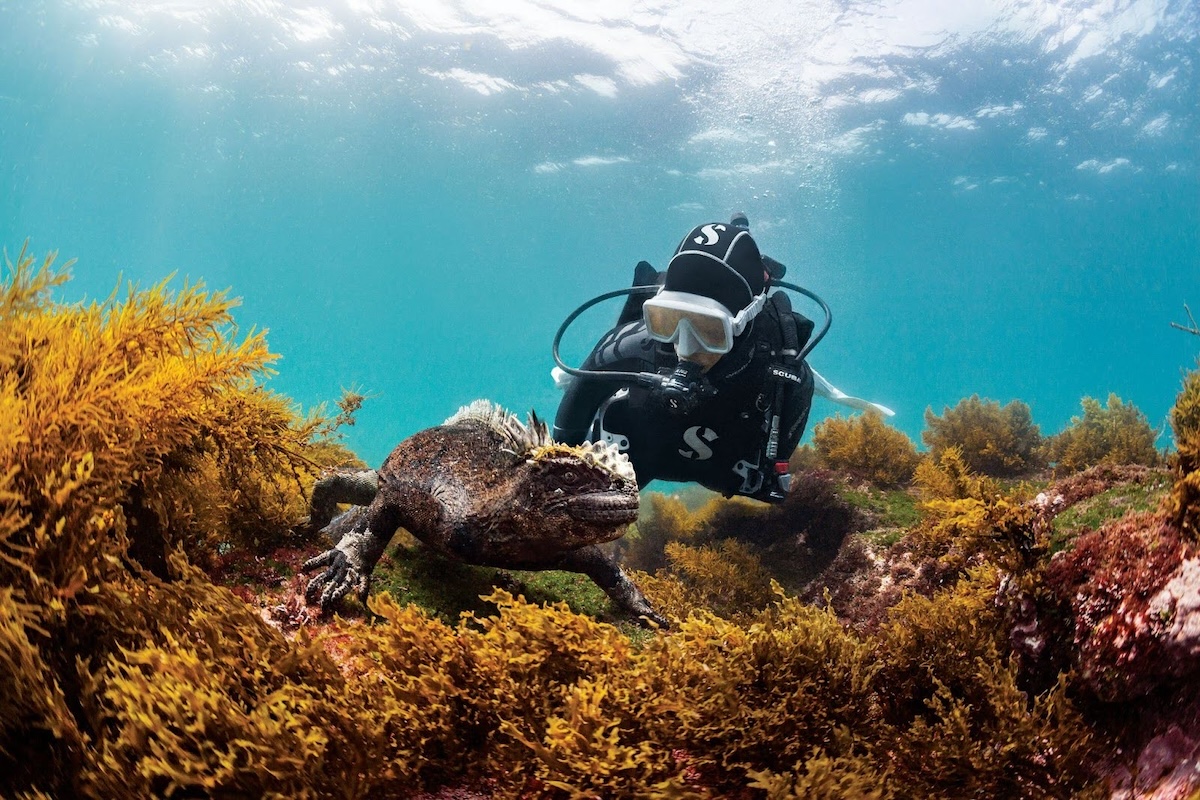
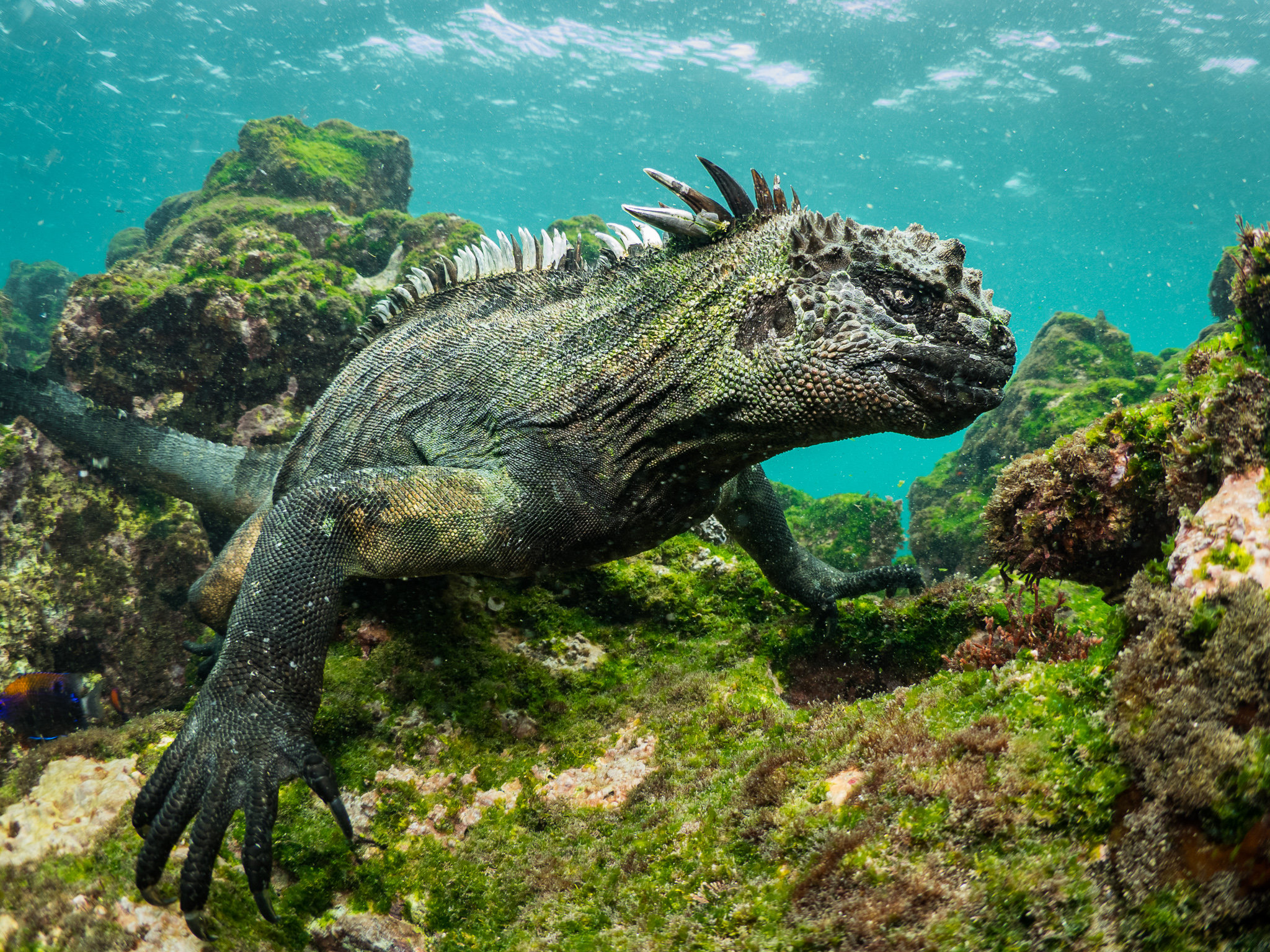
The marine life list beyond hammerheads and whale sharks includes Galapagos sharks, silvertip sharks, blacktip reef sharks, manta rays, eagle rays, marble rays, sea lions, marine iguanas (the world's only sea-going lizard), Galapagos penguins, and massive schools of jacks and barracuda. The endemism rate—the percentage of species found nowhere else—is the highest of any marine reserve on Earth (Galapagos Conservation Trust; Reef Life Survey).
That is the case for the spend. It is real, it is verifiable, and for dedicated shark divers, it is the single most compelling set of encounters available on a recreational liveaboard itinerary.
The Socorro Benchmark: What $5,000–$7,000 All-In Buys You
Socorro—the Revillagigedos archipelago, a Mexican marine reserve 400 kilometers southwest of Cabo San Lucas—is the destination that most experienced pelagic divers compare directly against Galapagos. The comparison is fair: both deliver big-animal encounters in remote, current-swept island systems accessible only by liveaboard, both attract advanced divers willing to pay a premium for shark and manta density, and both have seen price increases in recent years. The question is whether the Galapagos premium—roughly $4,000–$8,000 more all-in depending on the tier comparison—buys a meaningfully different experience.
Socorro 2026 Pricing
Socorro liveaboard fares for 2026 sit in a lower band than Galapagos equivalents. Published per-trip fares from major operators cluster around $3,000–$4,500 for 8–9 night itineraries, with luxury vessels pushing toward $5,000–$6,000 (LiveAboard.com; SeaCrush, 2026). The Socorro marine park fee is approximately $450 per person—significantly higher than the Galapagos $200 park fee but included in most operator quotes rather than added as a separate line item (SeaCrush). Nitrox runs $100–$150 per trip, similar to Galapagos. Crew gratuities follow the same 10–15% convention.
All-in cost for a Socorro liveaboard from a US starting point: $5,000–$7,000 for a competent mid-range 9-night trip, including flights from Los Angeles or San Jose del Cabo (often under $200 domestic), the marine park fee, nitrox, and tips. A luxury Socorro trip on a vessel like Nautilus Belle Amie or Rocio del Mar runs $7,000–$9,000 all-in (Nautilus Liveaboards; SeaCrush, 2026).
That puts the Galapagos-versus-Socorro price gap at roughly $4,000–$8,000 in favor of Socorro when comparing like-for-like tiers. The gap narrows at the luxury end and widens at the budget end, but it is consistently real and consistently significant.
What Socorro Delivers for Less
Socorro's headline attraction is giant oceanic manta rays—animals with wingspans reaching 6–7 meters that are famously interactive, circling divers, making eye contact, and returning for repeated passes at cleaning stations. The manta encounters at Socorro are, by broad consensus in the dive community, the most predictable and intimate giant manta experience available on any liveaboard itinerary worldwide (Nautilus Liveaboards; Jay Clue Dive Guides; Divernet). Galapagos mantas are present but less reliably encountered and generally less interactive.
Socorro also delivers hammerheads—large schools at sites like Roca Partida and The Boiler—plus silvertip sharks, Galapagos sharks, whitetip reef sharks, silk sharks, and occasional tiger sharks and whale sharks. The shark density is real but, for scalloped hammerheads specifically, does not match the sheer volume reported at Darwin and Wolf. Roca Partida, a volcanic pinnacle rising from deep water, is often described as Socorro's single best dive site and delivers a shark density comparable to Wolf Island, but without the same hammerhead schooling behavior (Jay Clue; ScubaBoard).
Water temperature at Socorro runs 22–28°C—warmer than Galapagos's 16–24°C band—which means more comfortable diving in a 3mm wetsuit and no need for the cold-water exposure protection that Galapagos demands. Visibility is typically 15–30 meters, similar to Galapagos but with less plankton-driven variability. Currents at Socorro are real but generally less intense than at Darwin and Wolf, making the destination more accessible to strong intermediate divers rather than exclusively advanced.
The Trade-Off Matrix
| Factor | Galapagos | Socorro | Edge |
|---|---|---|---|
| Hammerhead density | Highest documented worldwide | Large schools, less predictable | Galapagos |
| Giant manta encounters | Present but less reliable | Best in world—predictable, interactive | Socorro |
| Whale shark season | June–November, reliable at Darwin | Sporadic, not a primary draw | Galapagos |
| Endemic species | Marine iguanas, penguins, flightless cormorants | None comparable | Galapagos |
| Water temperature | 16–24°C (cold) | 22–28°C (comfortable) | Socorro |
| Current intensity | Very strong, demanding | Strong but more manageable | Socorro |
| Accessibility from US | 14–18 hrs door-to-door | 4–8 hrs from Cabo | Socorro |
| All-in cost (mid-range) | $9,000–$10,500 | $5,500–$7,000 | Socorro |
| Trip duration (standard) | 7–8 nights | 8–10 nights | Socorro |
| Dive count (standard) | 18–22 | 18–22 | Tie |
| National park regulation | Strict, limited licenses | Strict, limited season | Tie |
Sources: Galapagos Sky (2026); Nautilus Liveaboards; SeaCrush (Socorro vs Galapagos comparison); LiveAboard.com; ScubaBoard community threads (2024–2026); Jay Clue Dive Guides; Dive-The-World; Explorer Ventures.
What the Money Doesn't Buy: The Honest Reality Check
The case against the Galapagos premium is just as real as the case for it, and the operator marketing surfaces it about as often as a whale shark surfaces at a cleaning station in the Maldives—which is to say, almost never.
The cold water is a real factor. Water at Darwin and Wolf drops to 16–18°C during the cooler months (June–November), which coincides with peak whale shark season. A 5mm wetsuit is the minimum; some divers prefer semi-drysuits or full drysuits. The cold is not dangerous, but it reduces bottom time for divers who are not prepared for it, and it makes surface intervals uncomfortable on exposed dive decks. Socorro at 22–28°C is simply more pleasant diving for most people (ScubaBoard; Master Liveaboards).
The currents are not optional. Darwin and Wolf sit at a major oceanic current intersection. Negative entries, reef-hook use, and strong drift technique are standard operating procedure—not optional skills. Operators recommend Advanced Open Water with 50+ logged dives as a minimum, and the practical floor is closer to 75 dives with documented current experience. Down-current incidents are documented in trip reports; this is not a destination where you develop current skills (ScubaBoard; Galapagos Sky; Explorer Ventures).
The liveaboard supply is structurally constrained. Ecuador limits the number of dive liveaboard licenses, and each vessel carries a maximum of 16 passengers. This creates a supply ceiling that keeps prices elevated year-round. Deep discounts are rare; shoulder-season promotions exist but are typically 10% off, not 30% (Galapagos Sky special offers; GalapagosIslands.com).
The $200 park fee is new money. The national park entrance fee doubled from $100 to $200 for international visitors—a change that older guides, forum posts, and even some operator websites have not fully updated. Combined with the $20 Ingala card and $150 fuel surcharges, the mandatory extras alone now exceed $370 per person before you set foot on the boat (Galapagos Government Council, 2026; AdventureSmith).
The transit penalty is real but moderate. At 14–18 hours from a US hub, Galapagos is meaningfully farther than Socorro (4–8 hours from Cabo) but significantly closer than Raja Ampat (30+ hours). For time-poor divers, the transit differential is often the deciding factor between Galapagos and Socorro rather than the cost difference.
The Cost-Benefit Decision Matrix
| Diver profile | Typical priorities | Galapagos or Socorro? | Why |
|---|---|---|---|
| Hammerhead obsessive (75+ dives, current-comfortable) | Maximum hammerhead density, willing to pay for it | Galapagos | Darwin and Wolf deliver hammerhead encounters no other destination matches |
| Manta-first diver | Interactive giant manta encounters, warm water | Socorro | Socorro mantas are the world's best—predictable, interactive, repeat passes |
| Photographer (wide-angle pelagic) | Variety of megafauna per frame, endemism | Galapagos | Hammerheads + whale sharks + marine iguanas + penguins = unmatched variety |
| Budget-constrained advanced diver ($5K–$7K all-in) | Best big-animal diving per dollar | Socorro | 40–50% cheaper, comparable shark density, better mantas |
| Time-poor US diver (< 10 days) | Maximum dive time per vacation day | Socorro | 4–8 hours from Cabo vs. 14–18 hours to Galapagos |
| Cold-tolerant, high-budget diver wanting the "ultimate" | The single most dramatic liveaboard week available | Galapagos | Darwin and Wolf is the apex destination; Socorro is the best alternative, not the equal |
| First advanced pelagic trip | Building big-animal experience | Socorro | Warmer, more accessible currents, lower cost of entry, still delivers world-class encounters |
| Repeat Socorro diver | The next level up | Galapagos | If Socorro was your introduction, Darwin and Wolf is the graduation |
Sources: synthesis of Galapagos Sky (2026), Nautilus Liveaboards, SeaCrush (Socorro vs Galapagos), LiveAboard.com (2026), ScubaBoard threads (2024–2026), Happy Gringo (2026), Explorer Ventures (2026).
The Best Galapagos Dive Boats for 2026
The Galapagos dive fleet is small—roughly a dozen dedicated dive liveaboards—and the differences between them matter more than in a destination with 30-plus boats. Here is the 2026 lineup by tier, with honest assessments.
Budget Tier ($4,500–$5,500 vessel fare)
Danubio Azul ($4,590 for 8 days). The most affordable dive liveaboard that includes Darwin and Wolf. Basic but functional cabins, competent guides, and the same itinerary as boats costing twice as much. The trade-off is simpler cuisine, fewer onboard amenities, and a more spartan dive deck. Nitrox is extra ($150). Best for: divers who want Darwin and Wolf without paying for onboard luxury (GalapagosIslands.com; Galapatours).
Aqua ($5,195 for 8 days). Slightly above Danubio Azul in both price and comfort. Galapagos Shark Diving operates citizen science expeditions on Aqua, adding a research dimension to the itinerary. Nitrox is $150–$250 depending on the charter type. Best for: divers interested in conservation-minded itineraries and willing to pay a modest premium over the budget floor (ZuBlu; Galapagos Shark Diving).
Mid-Range Tier ($6,000–$7,300 vessel fare)
Humboldt Explorer ($6,295 for 8 days). The mid-range standard-bearer and the boat most ScubaBoard threads reference as the default recommendation. 16 passengers, competent dive guides described as "the best in the business" for finding hammerheads, solid if not luxurious cabins, and a proven itinerary. Fuel surcharge $150, nitrox $150, hyperbaric chamber fee $35. Best for: the majority of advanced divers who want a reliable, well-run Galapagos experience without overpaying (Happy Gringo, 2026; ScubaBoard).
Tiburon Explorer ($7,295 for 7 nights). The newer, more upscale Explorer Ventures sister ship to Humboldt. Modern cabins, wifi included, wine and beer included, and a Nautilus Lifeline GPS device for each diver. The premium over Humboldt buys tangible comfort upgrades. Best for: divers willing to pay $1,000 more for a noticeably better onboard experience (Explorer Ventures, 2026; Family Divers).
Calipso ($7,195 for 8 days). Often described as the best value-for-comfort ratio in the Galapagos fleet. Spacious dive deck, camera facilities, and a mid-luxury feel at a mid-range price. Bluewater Dive Travel calls it "one of the better boats in the Galapagos." Best for: underwater photographers who need good camera facilities without the luxury price tag (Bluewater Dive Travel; GalapagosIslands.com).
Galaxy Diver II ($7,100 for 8 days). Modern 16-passenger vessel with clean, spacious accommodations and strong reviews. Best for: divers who want a contemporary boat experience at a competitive price point (GalapagosIslands.com; TripAdvisor).
Luxury Tier ($7,200–$9,300+ vessel fare)
Galapagos Sky ($7,495–$7,795 for 7 nights; $8,890–$9,290 for 10 nights). The luxury benchmark for Galapagos diving. 33-meter vessel, dedicated solely to scuba diving, with enhanced cabin standards and attentive service. Charter rate of $103,972 for up to 16 divers works out to ~$6,500 per person if fully booked—a meaningful group discount. Best for: divers who want the best available onboard experience and are not price-sensitive (Galapagos Sky, 2026).
Aggressor III ($7,200 for 8 days). The Galapagos entry in the global Aggressor fleet. Consistent brand standards, comfortable salon and sun deck, and the familiarity of the Aggressor name for divers who have used their boats elsewhere. Best for: brand-loyal Aggressor divers and those who value consistent service standards (Aggressor; Happy Gringo).
Galapagos Master ($7,140 for 7 nights; $10,400 for 10 nights). Operated by Master Liveaboards with detailed extras pricing—nitrox $150/$225 for 7/10 nights, full gear rental $270/$405. The 10-night itinerary expands Darwin and Wolf dive days and adds western island sites. Best for: divers who want the longest available itinerary and are willing to pay for it (Master Liveaboards, 2026).
The MantaraDive Recommendation
After running the 2026 numbers and the diver-profile matrix, our position is direct: Galapagos is worth the premium for divers whose primary objective is maximum hammerhead density and the Darwin and Wolf experience. It is not worth the premium for divers whose primary objective is giant manta encounters, warm water, or value-per-dollar—Socorro delivers all three better.
If you fit the Galapagos profile—75+ logged dives, current-comfortable, budget that absorbs $9,000–$12,000 all-in, and a specific interest in hammerhead schooling behavior and Galapagos endemism—the right move is to book a 7-night itinerary on a mid-range vessel (Humboldt Explorer or Calipso) departing June through November for peak whale shark season at Darwin. The mid-range tier delivers 90% of the experience at 60% of the luxury cost, and the $2,000–$3,000 saved over a luxury boat buys your next Socorro trip.
If you fit the Socorro profile—first advanced pelagic trip, budget-sensitive, time-poor, or manta-first—book Socorro. A 9-night Nautilus Belle Amie or Rocio del Mar itinerary at $5,500–$7,000 all-in delivers giant mantas, hammerheads, and warm water at a price point that Galapagos cannot match. Use the $4,000–$5,000 saved to fund a second trip.
The single biggest mistake we see: a diver booking Galapagos as their first advanced pelagic trip, discovering at Darwin's Arch that the current and cold are real, and wishing they had built those skills at Socorro first. The second-biggest mistake: a dedicated hammerhead diver booking Socorro because it is cheaper and spending the trip comparing every dive to what Darwin and Wolf would have delivered. Know which diver you are before you book.
Honest Caveats
A few facts that operator marketing tends to omit:
- The national park fee doubled to $200 and is payable in cash on arrival. Many older guides, forum posts, and even some operator fact sheets still cite the $100 figure. Verify before you fly (Galapagos Government Council, 2026).
- Nitrox is almost never included in the base fare. Budget $150 for 7 nights, $225 for 10. Some group charters and citizen-science expeditions include it; verify the specific booking (Galapagos Shark Diving; Master Liveaboards).
- Fuel surcharges of $150 are standard and sometimes variable. They are quoted separately from the vessel fare and are subject to change based on marine diesel prices (Happy Gringo; Family Divers, 2026).
- Darwin's Arch collapsed in 2021. The iconic rock formation eroded and fell into the sea. The dive site remains—hammerheads do not care about the architecture—but the photograph you see in marketing materials may not match current conditions (Galapagos Conservation Trust).
- Liveaboard availability is constrained year-round. Limited licenses and 16-passenger maximums mean that popular departures book out 6–12 months in advance. Last-minute availability exists but at premium prices or on less desirable dates (GalapagosIslands.com).
- Cold-water exposure protection is not optional. At 16–24°C, a 5mm wetsuit is the minimum for most divers. Under-dressing reduces bottom time and enjoyment. Budget for proper exposure gear if you do not own it (Master Liveaboards; ScubaBoard).
Practical Planning FAQ
Is Galapagos diving suitable for intermediate divers?
It can be, but only on the less current-intensive sites. Cousin's Rock, Gordon Rocks on calm days, and some central island sites are manageable for AOW divers with 30+ dives. Darwin and Wolf are not—they demand advanced current skills, negative entries, and comfort at depth. If your primary goal is Darwin and Wolf, build your dive count and current experience at Socorro or another pelagic destination first.
Which specific dive sites should I ask the operator about?
Use named sites to test whether an operator is giving you real advice. For Galapagos, ask about Darwin's Arch, Wolf's Landslide and Shark Bay, Cousin's Rock, and Gordon Rocks. Ask how many dives will be at Darwin and Wolf specifically—the answer should be 8–12 on a 7-night itinerary. If the salesperson cannot tell you the current conditions at each site or which sites are weather-dependent, keep shopping.
What gear or training makes the biggest difference?
The practical kit: SMB, reef hook for Darwin and Wolf, nitrox, a 5mm wetsuit minimum (semi-dry or drysuit for June–November), and spare camera batteries because charging windows can be limited on some boats. The training priority is buoyancy first, current awareness second, and negative entry technique third. If you cannot hold position in a current without sculling or touching the reef, Darwin and Wolf will be stressful rather than spectacular.
What budget range should I plan around?
A realistic planning range is $7,500–$8,000 for a budget liveaboard all-in, $9,000–$10,500 for mid-range, and $11,000–$13,500 for luxury—all assuming a North American starting point and a 7–8 night itinerary. Add $250–$300 if you need full gear rental. The hidden costs are usually the park fee increase, fuel surcharges, pre-trip hotel nights in Quito, and the crew gratuity that nobody mentions until checkout.
Galapagos vs Socorro: which should I do first?
Socorro first for most divers. Warmer water, more manageable currents, lower cost, shorter transit, and still world-class hammerhead and manta encounters. Galapagos second, once you have built current skills and want the densest hammerhead aggregations on the planet. The exception: if hammerheads are your singular obsession and you have the budget and dive count, go straight to Galapagos.
What should I read next before booking?
Cross-reference this guide against our Raja Ampat vs Komodo diving comparison, Komodo Liveaboard Prices, Red Sea Liveaboard Itinerary: North vs South, and Tubbataha Reef Liveaboard for additional liveaboard pricing context across destinations. If you are weighing Galapagos against a Coral Triangle trip, our Is Raja Ampat Worth It? analysis provides the cost-benefit framework for that comparison.
Sources and Methodology
This article draws on data cross-referenced from the following independent sources: GalapagosIslands.com (2026 dive cruise comparison table with fleet-wide pricing); Happy Gringo (Humboldt Explorer 2026 fact sheet with itemized surcharges); Galapagos Sky (2026 published rates for 7-night and 10-night itineraries, charter pricing, and special offers); Explorer Ventures (Tiburon Explorer 2026 pricing and fact sheet); Master Liveaboards (Galapagos Master extras sheet with itemized nitrox, gear rental, and wifi pricing); Galapagos Shark Diving (Aqua liveaboard pricing and citizen science expedition details); Family Divers (Tiburon Explorer 2026 group trip pricing with inclusions); AdventureSmith Explorations (Galapagos cost guide with flight estimates and park fee confirmation); Galapagos Government Council (2026 national park entrance fee of $200 for international visitors); Galapatours (Danubio Azul vessel profile and pricing); ZuBlu (Aqua daily rate analysis and Origin luxury yacht pricing); Bluewater Dive Travel (Calipso review and mid-range fleet analysis); Galapagos Conservation Trust (Darwin's Arch collapse, marine iguana conservation status); SeaCrush (Socorro vs Galapagos comparison with Socorro cost estimates); Nautilus Liveaboards (Socorro fleet pricing and marine life data); LiveAboard.com (Socorro liveaboard listings with AUD pricing converted to USD); Jay Clue Dive Guides (Socorro diving conditions and marine life); Dive-The-World (Darwin and Wolf dive site descriptions); ScubaBoard (multi-thread synthesis of 2024–2026 trip reports comparing Galapagos and Socorro, current-incident reports, and boat recommendations); TripAdvisor (Galaxy Diver II and Galapagos Sky reviews). All US dollar figures reflect rates published in early 2026; actual costs vary by operator, season, cabin class, departure airport, and booking lead time. Diver profile recommendations reflect operator-reported skill prerequisites and community consensus, not absolute rules. National park fee and transit card amounts should be verified against official Ecuadorian government sources before booking.
Related MantaraDive planning links
- Is Raja Ampat Worth It? An Honest Cost-Benefit Breakdown for 2026
- Komodo Liveaboard Prices: What It Actually Costs (and What's Worth It)
- Raja Ampat vs Komodo Diving: Which Indonesian Liveaboard Earns Your Money in 2026?
- Red Sea Liveaboard Itinerary: North vs South for European Divers
- Tubbataha Reef Liveaboard: The 3-Month Season You Shouldn't Miss
- Best Solo-Friendly Liveaboards in the Maldives, Indonesia, and Philippines
- Blue Holes Palau: Complete Guide for Divers
- Maldives Liveaboard vs Resort: Which Delivers Better Diving in 2026?