A Tubbataha liveaboard is inconvenient by design. You cannot day-trip it from Palawan, you cannot tack it casually onto a beach holiday, and you cannot choose from twelve easy months the way you might for Anilao, Bohol, or much of the Visayas. The reef sits far out in the Sulu Sea, the trip starts in Puerto Princesa, and the dive season is short enough that good cabins often disappear long before most travelers have requested vacation dates.
That narrow window is exactly why Tubbataha reef diving still feels different. Tubbataha is not a resort destination with a famous reef nearby. It is a remote marine park where all visitor access is vessel-based, where operators need permits, where the weather decides when the crossing is realistic, and where the reef spends most of the year without divers.
The three-month Tubbataha season can feel like a planning problem. For the right diver, it is the reason to go.
The Short Answer
Plan a Tubbataha liveaboard if you want the Philippines at its most remote, reef-rich, and pelagic-focused. The best practical window is the official liveaboard season from roughly mid-March to mid-June, with April and May usually the simplest months to book for stable seas, warmer dry-season weather, and the highest chance of completing the standard itinerary.
Do not choose Tubbataha because it is the easiest Philippines dive trip. It is not. Choose it because you want several days on a boat, walls dropping into deep blue water, reef sharks, turtles, schooling jacks and barracuda, possible mantas or whale sharks, and a protected reef system that is managed as a serious marine park rather than a casual tourist stop.
If you are new to diving, short on budget, prone to seasickness, or traveling outside the season, choose somewhere else in the Philippines. If you are already comfortable on boats and want one of Southeast Asia's strongest liveaboard weeks, build the trip around Tubbataha instead of trying to squeeze it in.
Why Tubbataha Has Such a Short Season
Tubbataha is remote even by Philippine standards. The Tubbataha Management Office says most scuba divers reach the park by booking a liveaboard from Puerto Princesa, followed by a 10-12-hour sea crossing. There are no hotels in the park and no shore-based dive centers. Once you commit, the boat is your accommodation, restaurant, dive platform, camera room, weather shelter, and route plan.
The season is short because the Sulu Sea only gives operators a dependable access window. Liveaboard itineraries generally run from mid-March to mid-June, when sea conditions are calm enough for crossings and repeated diving around the atolls. Outside that period, monsoon patterns make the trip too exposed for regular tourism operations.
That is the most important planning truth: Tubbataha is not closed for scarcity theater. It is seasonal because the route is offshore, unsheltered, and operationally serious. The short season concentrates demand into a few months, but it also limits visitor pressure and gives the reef a long annual break from tourism.
What Makes the Diving Different
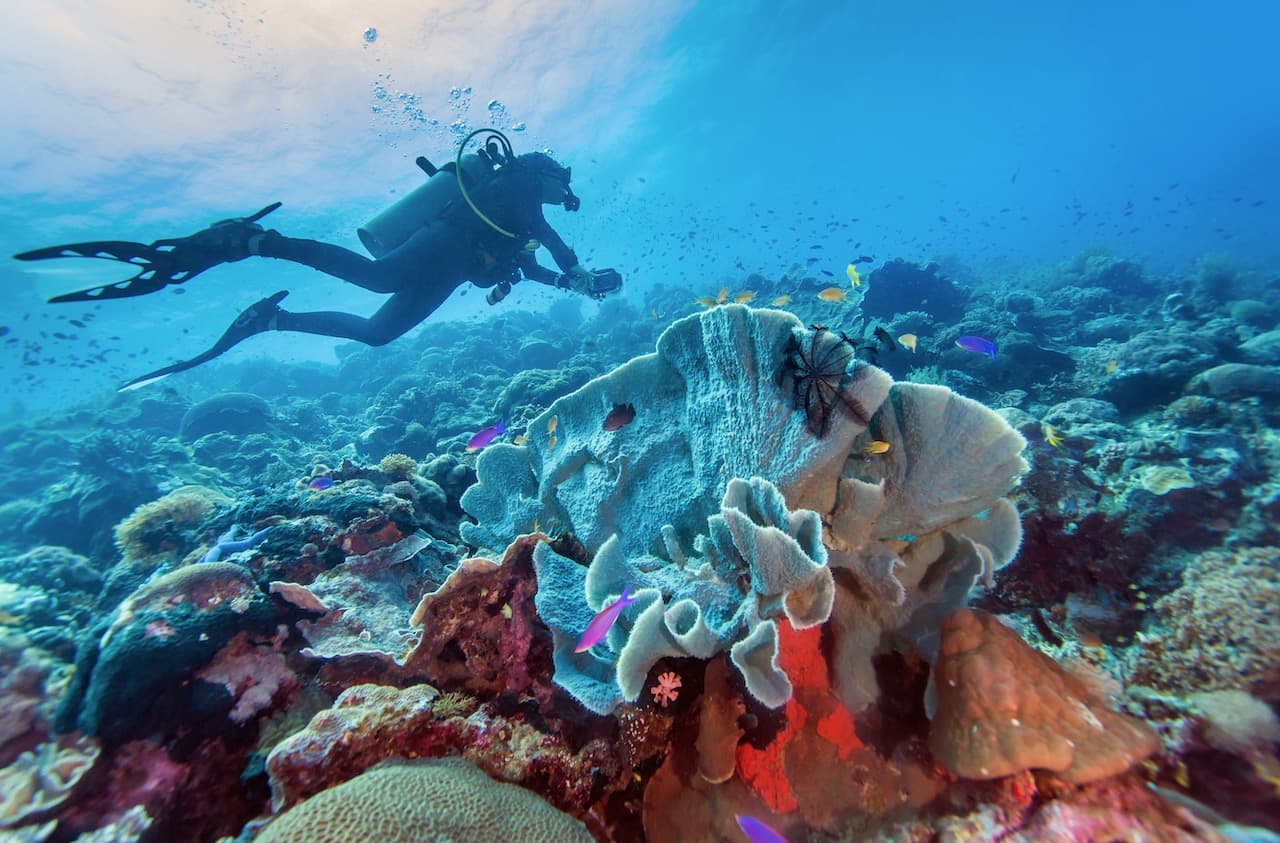
UNESCO describes Tubbataha Reefs Natural Park as a nearly 100,000-hectare protected marine area in the center of the Sulu Sea, including the North and South Atolls and Jessie Beazley Reef. The site contains reef flats, lagoons, steep walls that drop beyond 100 meters, deep open sea, and habitat for sharks, turtles, cetaceans, Napoleon wrasse, barracuda, trevally, manta rays, whale sharks, seabirds, and hundreds of coral and fish species.
That combination creates a dive style that is less about one famous animal and more about scale. Tubbataha is a big-water reef destination. A typical day is not "one signature site, one shallow garden, one macro hunt." It is wall diving, current checks, blue-water scanning, reef corners, shark silhouettes, schooling fish, and coral coverage that feels more intact than many easier-to-reach Philippine reefs.
The reefs are also remote enough that you are not sharing the water with local day boats, snorkel tours, jet skis, resort traffic, or beach vendors. The boats you see are usually other permitted liveaboards or park-related vessels. That does not guarantee solitude on every mooring, but it changes the atmosphere. Tubbataha feels like a dive expedition rather than a holiday with diving attached.
The Liveaboard Rhythm
Most Tubbataha itineraries are built around five to seven days including the crossing, though operators vary. Expect a departure from Puerto Princesa, an overnight passage, several dive days in the park, and a return crossing. Some boats may include Jessie Beazley, North Atoll, South Atoll, or weather-dependent route changes. Exact sites are never guaranteed, and that is normal for an exposed marine park.
The daily rhythm is classic liveaboard diving: wake early, dive, eat, dive, rest, dive, eat again, and repeat if conditions and park rules allow. Nitrox is worth pricing in advance because repetitive profiles can be substantial, especially when dives are planned around walls and current-exposed corners. Photographers should ask about camera tables, charging rules, rinse tanks, and whether the boat has enough space for full-frame housings, strobes, and spare batteries.
This is not the best place to discover whether you like liveaboards. You are offshore for days. Cabins are finite. Weather delays can affect comfort. If your ideal trip includes nightlife, shore restaurants, beach walks, independent exploring, or a flexible "maybe I skip tomorrow" rhythm, Tubbataha will feel restrictive. If your ideal trip is wake, dive, eat, sleep, repeat, it is exactly the point.
Who Tubbataha Is Best For
Tubbataha is best for certified divers who are already comfortable with boat diving, blue water, negative entries when requested, current briefings, SMB use, and multi-dive days. You do not need to be a technical diver, but you should not be learning basic buoyancy on a remote liveaboard. Advanced Open Water, nitrox training, recent dive experience, and calm ascent discipline all make the trip better.
It is especially strong for divers who care about reef condition and marine-park context. The official park site describes Tubbataha as a large no-take marine sanctuary in the Coral Triangle, and UNESCO emphasizes its role in ecological processes across the Sulu Sea. You are paying for more than a bed on a boat. You are paying to visit a protected reef system where management, enforcement, vessel rules, and conservation fees matter.
It is not ideal for brand-new Open Water divers, nervous partners, travelers who need guaranteed flat seas, or mixed groups where only one person is truly dive-focused. If one traveler wants a spa, beach club, and occasional two-tank morning, choose Bohol, Cebu, Dumaguete, or Anilao. Tubbataha rewards groups who are aligned around diving as the main event.
Month-by-Month Planning
March is the beginning of the window. It can be excellent, but the first departures may still feel like a seasonal transition. If you book March, choose an operator with clear contingency communication and arrive in Puerto Princesa with buffer time. Do not land the same afternoon you are supposed to board.
April is the cleanest planning month for many divers. It sits well inside the dry-season window, operator schedules are fully underway, and demand is high because experienced travelers know this is prime time. Book early, especially for better cabins, smaller boats, or specific departure dates.
May is also a strong month. It is often hot, settled, and busy. If you are combining Tubbataha with Palawan or Visayas travel, May can work well, but keep the liveaboard at the center of the itinerary. Build other plans around it rather than risking the liveaboard connection after a tight domestic transfer.
June is the tail end. Early June trips can still be excellent, but the southwest monsoon becomes a bigger consideration as the month progresses. If you can only travel in June, treat the departure as more weather-sensitive, ask operators how they handle itinerary changes, and add buffer days before international flights.
Outside mid-March to mid-June, do not plan on Tubbataha. There are plenty of other Philippines diving choices, but Tubbataha is a seasonal liveaboard destination.
Costs and Fees to Budget
The official Tubbataha FAQ says most travelers book liveaboard dive boats early, sometimes as much as a year ahead, and that package costs vary by boat and number of dive days from about USD 1,000 to over USD 4,000. That spread is real. Budget boats, cabin class, guide ratio, fuel assumptions, nitrox, equipment rental, marine-park fees, and inclusions can change the final price dramatically.
The Tubbataha Management Office also lists conservation fees. Visitor entry is PHP 5,000 per person, while vessel entry fees vary by gross tonnage. Many liveaboards collect or include the visitor fee, but you should verify exactly what your quote covers. Ask whether the price includes marine-park fees, port fees, transfers, tanks, weights, nitrox, rental gear, dive computer rental, crew tips, soft drinks, alcohol, and domestic airport transfers.
Also budget for the itinerary around the boat. You may need a night in Puerto Princesa before boarding and another after disembarkation. You may need baggage allowance for camera gear or dive equipment. If you are flying internationally, add a no-dive buffer before departure and avoid tight same-day flight chains after the boat returns.
The expensive mistake is not choosing a better cabin. It is booking flights so tightly that one weather delay, late domestic arrival, or baggage issue threatens the whole trip.
Tubbataha vs Apo Reef
The Tubbataha vs Apo Reef comparison is useful because both are Philippine reef destinations that can appear in liveaboard conversations, but they solve different trip problems.
Tubbataha is the more remote, seasonal, expedition-style choice. It is liveaboard-only for normal dive tourism, far from shore, and tightly linked to the mid-March to mid-June access window. It is the better fit if your main goal is the biggest, most protected, most iconic offshore reef trip in the Philippines.
Apo Reef, in Occidental Mindoro, is easier to combine with other Luzon or Coron-region travel and has a different access profile. UNESCO's tentative-list description places Apo Reef Natural Park and its buffer zone at 27,469 hectares, much smaller than Tubbataha but still significant. Marine Conservation Institute describes Apo Reef Natural Park as protecting a major contiguous reef system and serving as an important no-take zone in the Philippine protected-area network.
Choose Apo Reef if your schedule does not match Tubbataha season, your budget is tighter, or you want a shorter Philippines reef expedition. Choose Tubbataha if you are specifically planning around the best offshore reef diving the country offers and can commit to the liveaboard window.
The simplest rule: Apo Reef is the more flexible alternative; Tubbataha is the trip you plan the calendar around.
How to Choose a Tubbataha Liveaboard
Start with permits and safety, not cabin photos. The Tubbataha tourism page says accredited liveaboards secure permits and work with the management office on conservation messaging, park rules, and illegal-activity reporting. Ask operators whether their vessel has current Tubbataha permits for your specific season and what documentation or park fees are included in the booking.
Then check the diving operation. How many divers per guide? Is nitrox available? Are SMBs required? Does the boat provide reef hooks, and if so, when are they appropriate under local rules? How are current checks handled? What is the minimum certification or logged-dive recommendation? Does the boat support photographers without turning the salon into a charging hazard?
Finally, match the boat to your tolerance. Some divers want maximum dive count and simple cabins. Others need more space, a smoother vessel, better food, or a quieter camera workflow. There is no universal best Tubbataha liveaboard. There is a best boat for your budget, experience, date, comfort needs, and gear load.
A Practical Booking Timeline
For April and May departures, start looking nine to twelve months ahead if you want a specific boat or cabin. The season is short, the fleet is finite, and repeat divers often reserve early. If your dates are flexible, you may still find space later, but do not expect the same choice.
Before paying a deposit, confirm the embarkation point, expected boarding time, disembarkation time, transfer plan, included fees, cancellation terms, fuel surcharges, nitrox cost, equipment rental availability, and certification requirements. Also ask what happens if weather prevents the crossing or forces an itinerary change. You are not looking for a promise that nothing will change; you are looking for an operator who explains the decision process clearly.
After booking, keep your dive skills current. A refresher in a pool is useful if you have not dived recently, but a few real boat dives before the trip are better. Practice deploying an SMB, holding a safety stop without a line, managing current calmly, and checking gas more often than you think you need to.
Common Mistakes
The first mistake is treating Tubbataha like a Palawan add-on. It is not an El Nido lagoon day, a Coron wreck morning, or a Puerto Princesa side trip. It is the anchor of the itinerary.
The second mistake is underestimating the crossing. Ten to twelve hours at sea is normal, and even good boats move. Pack seasickness medication you have tested before, not something you discover on departure night.
The third mistake is booking by price alone. A cheap berth is not a bargain if the boat is poorly matched to your experience, equipment, comfort needs, or safety expectations.
The fourth mistake is ignoring conservation rules. Tubbataha is a no-take protected area with strict management for a reason. Good buoyancy, no-touch behavior, careful finning, and respect for briefings are not optional etiquette. They are part of the cost of visiting.
MantaraDive Recommendation
For experienced divers who can travel between mid-March and mid-June, Tubbataha is one of the strongest reasons to plan a Philippines liveaboard. It is not the cheapest route, the easiest route, or the most flexible route. It is the route that gives you the best chance of seeing the Philippines as an offshore reef system rather than a chain of accessible resort destinations.
Book April or May if you have the choice. Use March or June if your schedule requires it, but add more buffer and ask more weather questions. Spend money first on the right operator, nitrox, insurance, and travel margin before upgrading luxuries. Keep the trip dive-centered, and do not overload the same itinerary with too many other Philippine transfers.
The three-month Tubbataha season is worth planning around because it protects the thing you are going to see. The limitation is not a flaw in the product. It is part of why the reef still feels like Tubbataha.
Talk to a Specialist
MantaraDive can help compare Tubbataha liveaboards, cabin categories, Puerto Princesa transfer plans, and backup Philippines routes if your dates fall outside the season. Bring your target month, certification level, logged dives, nitrox status, camera setup, budget range, and seasickness tolerance.
We will help you decide whether Tubbataha should be the center of your trip, whether Apo Reef is a smarter alternative, or whether your first Philippines plan should start with easier shore-based diving before you commit to a remote liveaboard.
Sources
Sources reviewed for this guide include Tubbataha Reefs Natural Park's official FAQ, tourism operator page, permits and fees page, and about Tubbataha page; UNESCO's Tubbataha Reefs Natural Park listing; UNESCO's Apo Reef Natural Park tentative-list page; Marine Conservation Institute's Tubbataha Blue Parks profile and Apo Reef Natural Park profile; and Liveaboard.com's current Tubbataha season guide.
Practical Planning FAQ
Is a Tubbataha liveaboard suitable for a first liveaboard?
Only if you are already a confident diver and genuinely want a dive-focused week. Tubbataha is not technically extreme for every diver, but it is remote, seasonal, and boat-bound. If you are unsure whether you like liveaboard life, try an easier route first.
How many dives should I have before Tubbataha?
There is no single magic number, because recent experience matters more than a lifetime total. As a practical rule, arrive comfortable with boat entries, current, buoyancy near walls, SMB deployment, and multi-dive days. Advanced Open Water and nitrox are strongly useful.
What month should I book?
April and May are the safest default choices for most travelers. March can be excellent but sits at the season opening. June can also be excellent, especially early in the month, but carries more tail-end weather uncertainty.
Is Tubbataha better than Apo Reef?
For a once-in-the-Philippines offshore reef liveaboard, Tubbataha is the stronger destination. Apo Reef is still valuable, usually more flexible, and easier to fit into some itineraries. Choose based on season, budget, and how much of your trip you want to dedicate to one remote reef system.
What should I read next before booking?
Cross-check this guide against Philippines diving for beginners, Cebu vs Bohol vs Palawan diving, whale shark diving in the Maldives, Philippines, and Indonesia, and Philippines, Maldives, or Raja Ampat liveaboard planning. Those comparisons help decide whether Tubbataha is the right centerpiece or an ambition for a later trip.