
Most first-time Maldives divers are not really choosing between 26 atolls. They are choosing between three practical options: North Male, South Male, and Ari Atoll. Those are the atolls most likely to appear in your first quote because they sit close enough to Velana International Airport for a one-week trip, have mature dive infrastructure, and appear on central-atolls liveaboard routes.
The problem is that they are sold with the same vocabulary. Every operator says "manta rays," "sharks," "channels," "thilas," and "world-class reefs." On the water, the trips feel different. North Male is the easiest Maldives dive trip to execute. South Male is the current-and-channel option. Ari Atoll is the best first-trip choice if whale sharks or a more complete Maldives wildlife itinerary matter.
This maldives atolls comparison diving guide is written for certified divers planning their first Maldives trip, not for collectors trying to rank every atoll in the country. The question is simple: if you can choose only one base or one central liveaboard route, where should you dive first?
The Short Answer
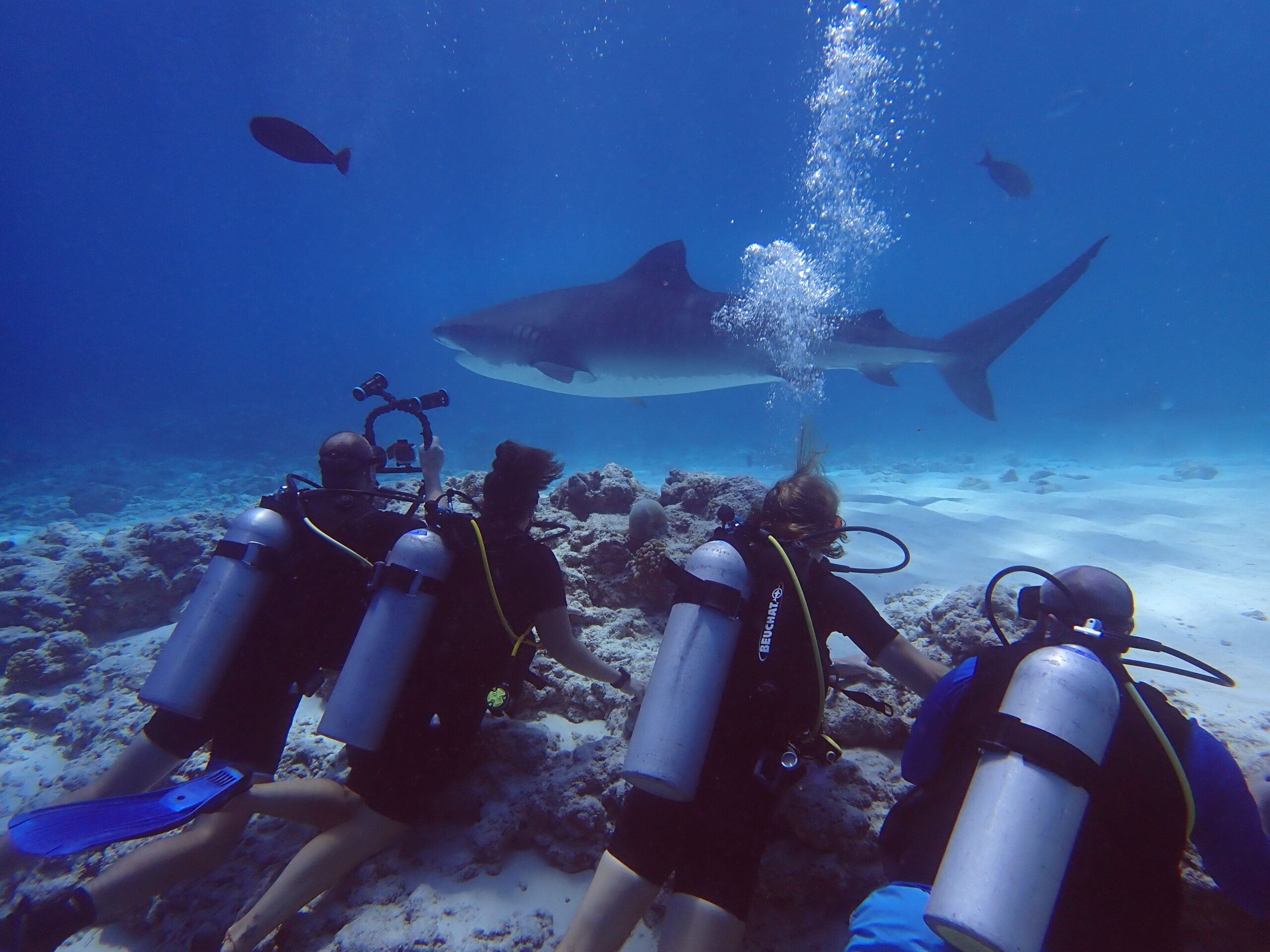
For most first-time Maldives divers, Ari Atoll is the best single-atoll choice. It gives the broadest wildlife mix, the strongest whale shark case in South Ari, classic thila diving in North Ari, and enough resort, guesthouse, and liveaboard options to fit different budgets.
Choose North Male Atoll if you want the simplest logistics, short transfers, a proven resort base, and famous sites such as Banana Reef, HP Reef, Lankan Manta Point, and the Maldives Victory wreck. It is the least complicated answer for a short trip or a mixed diver and non-diver holiday.
Choose South Male Atoll if you are comfortable in current and want channel diving close to Male without committing to a full liveaboard week. Sites such as Kandooma Thila, Cocoa Corner, Guraidhoo Corner, and Vaadhoo Kandu can be excellent, but they are less forgiving than the easy version of the Maldives many beginners imagine.
| First-trip priority | Best atoll | Why |
|---|---|---|
| Easiest airport logistics | North Male | Speedboat transfers, many resorts, short trip friendly |
| Whale shark priority | Ari Atoll | South Ari is the Maldives' year-round whale shark aggregation zone |
| Manta cleaning-station dives | North Male or Ari | Lankan Manta Point in North Male; multiple Ari cleaning stations by season |
| Strong current and shark channels | South Male | Better match for confident Advanced divers |
| One atoll for the widest wildlife range | Ari Atoll | Whale sharks, mantas, reef sharks, turtles, thilas, outer reefs |
| Mixed diver and non-diver trip | North Male | Easiest resort choice and least transfer friction |
How Maldives Atoll Diving Works
Maldives dive planning is geography first. Reefs are arranged around atolls, and the most productive dives happen in three main environments.
Thilas are submerged pinnacles inside the atoll. They are the signature Maldives reef dives: fish-covered tops, overhangs, soft coral, reef sharks, turtles, and current that can range from mild to serious. North Ari is especially famous for thilas such as Maaya Thila and Fish Head.
Kandus are channels where ocean water moves in and out of the atoll. These are the shark and current dives. South Male is built around this style of diving more than North Male is. On incoming current, divers often hook in or hold position near the channel mouth while grey reef sharks, whitetip reef sharks, eagle rays, and schooling fish work the flow.
Giris and reefs are shallower formations used for check dives, night dives, training, and relaxed coral dives. North Male has a large number of these, which is one reason it works well for first Maldives trips.
Season also matters. The northeast monsoon, broadly December through April, usually brings calmer seas and better visibility on many western sides. The southwest monsoon, May through November, brings more plankton, more rain, and stronger manta activity on selected eastern sides. For a deeper seasonal breakdown, see our guide to the best time to dive Maldives for manta rays and whale sharks.
North Male Atoll: Easiest Logistics, Famous Sites, Real Crowds
North Male Atoll is the default first Maldives dive base because it is convenient. You land at Velana International Airport, meet a resort or guesthouse representative, and often reach your island by speedboat rather than domestic flight or seaplane. That matters on a seven-night trip. Less transfer time means more actual holiday and fewer moving parts if your international flight lands late.
The diving is also historically important. Banana Reef was one of the Maldives' first internationally known dive sites, with caves, overhangs, schooling fish, and a profile that can be handled by many Open Water and Advanced Open Water divers in good conditions. HP Reef, sometimes called Rainbow Reef, is known for soft coral and stronger current. Lankan Manta Point is the major seasonal draw, especially from roughly late August through November, when reef mantas visit cleaning stations at diveable depths. The Maldives Victory wreck, near Hulhule, adds a genuine wreck option for divers with enough experience for current, depth, and a square profile.
North Male's weakness is not quality. It is density. The atoll has resorts, day boats, local island operators, and liveaboards all working a relatively accessible zone. The best-known sites can feel busy, especially in peak dry-season weeks. If your dream Maldives trip is quiet blue water and remote reefs, North Male may feel too developed.
For a first trip, that trade-off is often acceptable. North Male is the best atoll Maldives first time divers should consider when the group includes a newer diver, a nervous traveler, a non-diving partner, or anyone who values simple transfers over maximum remoteness.
Best for: short trips, resort holidays, mixed-experience couples, first Maldives dives, manta cleaning-station timing from late southwest monsoon into November.
Think twice if: whale sharks are your main goal, you dislike boat traffic, or you want a trip that feels far from Male.
South Male Atoll: Channels, Current, and a Sharper Edge
South Male sits just below North Male, so it keeps the airport advantage while changing the dive style. This is the atoll for divers who read "channel diving" and feel interested rather than anxious.
South Male atoll dive sites such as Kandooma Thila, Cocoa Corner, Guraidhoo Corner, Embudhoo Kandu, and Vaadhoo Kandu are the reason experienced divers choose the area. On the right current, these sites can deliver grey reef sharks, whitetip reef sharks, eagle rays, dogtooth tuna, schooling snapper, and dramatic blue-water approaches. Kandooma Thila in particular is often treated as a signature site, with a long pinnacle, schooling fish, and current that can make it either thrilling or inappropriate depending on the day.
The important phrase is "on the right current." South Male rewards operators who plan carefully around tides and divers who can descend efficiently, control buoyancy, deploy an SMB, and stay calm in flow. A diver with 15 warm-water dives and no current experience can still enjoy South Male when conditions are gentle, but the atoll's best dives are not built around that diver.
South Male is also less of a megafauna specialist than Ari. You can see sharks and rays, and manta encounters are possible by season, but South Male is not the atoll to book if your emotional goal is a whale shark. It is the atoll to book if you want close-to-airport logistics with more edge than North Male.
Best for: Advanced Open Water divers, current-comfortable buddy pairs, central liveaboard routes, channel diving, shark action close to Male.
Think twice if: this is your first ocean-current destination, you are traveling with a new diver, or you want the highest-probability whale shark itinerary.
Ari Atoll: The Best All-Rounder for Wildlife

Ari Atoll is usually split in diver conversations into North Ari and South Ari. Together, they form the strongest answer for a first Maldives trip where marine life is the point.
North Ari is classic thila country. Maaya Thila, Fish Head, Hafsa Thila, Bathala Maaga Kan Thila, and similar sites are why many central-atolls liveaboards spend serious time here. Expect reef sharks, turtles, morays, schooling fusiliers, jacks, snapper, and coral formations that feel like the Maldives people came to see. Maaya Thila is also famous as a night dive when conditions and operator permissions line up.
South Ari changes the headline. The Maamigili to Dhigurah corridor sits inside the South Ari Marine Protected Area, one of the world's best-known year-round whale shark aggregation zones. The Maldives Whale Shark Research Programme has documented this juvenile whale shark population since 2006, and the area remains the country's clearest whale shark target for first-time visitors. Encounters are never guaranteed, and many are snorkeling or surface encounters rather than scuba dives, but South Ari is still the atoll you choose if whale sharks are the non-negotiable reason for the trip.
Ari also gives you a better resort and local-island spread than many divers realize. A luxury resort can put you near excellent house reefs and boat dives. Local islands such as Dhigurah and Maamigili can lower the total trip cost while keeping you close to whale shark search zones. A liveaboard can combine Ari with North Male, South Male, Rasdhoo, or Vaavu, which is why central routes are so popular for first Maldives liveaboards.
The weakness is logistics. Ari usually requires more transfer planning than North or South Male. Some resorts rely on seaplanes. Local islands may require domestic flights, scheduled speedboats, or ferry timing that does not always match international arrivals. That does not make Ari difficult, but it does make it less frictionless than a North Male speedboat resort.
Best for: whale shark priority, broad wildlife, central-atolls liveaboards, divers who want one atoll with the widest range of Maldives experiences.
Think twice if: your trip is very short, your arrival time makes transfers awkward, or you care more about easy resort logistics than wildlife range.
Logistics and Cost: What Changes Between the Three
North Male and South Male are the easiest atolls to reach from Velana International Airport. Many resorts and local islands use scheduled or private speedboats. That keeps transfer costs lower and makes short trips workable. If you only have five nights in the Maldives, the Male atolls deserve extra weight for that reason alone.
Ari Atoll can be easy or fiddly depending on the island. Resort transfers may use seaplanes, which are scenic but costly and daylight dependent. Local-island routes can be excellent value but require closer attention to speedboat schedules. The payoff is that Ari puts you closer to the wildlife many divers associate with the Maldives.
Costs vary more by accommodation style than by atoll. A North Male luxury resort can cost far more than a Dhigurah guesthouse. As a planning baseline for 2026, budget-minded local-island trips can land below USD 3,000 excluding long-haul flights, mid-range liveaboards often fall around USD 3,500 to 5,500 total per diver once flights and taxes are included, and luxury resorts can run far higher. For the detailed math, compare this piece with our Maldives diving budget guide and our Maldives liveaboard vs resort breakdown.
Taxes and fees also matter. The Maldives tourism goods and services tax moved to 17 percent in July 2025, and Green Tax charges are now meaningful enough to check line by line. Always compare final invoices, not headline rates.
Which Atoll Fits Your Diver Profile?
If you have 10 to 30 logged dives: choose North Male unless you have a specific reason not to. You will get famous sites, easier conditions if your operator chooses well, and the least stressful transfer setup. Ari can also work from the right resort or local island, but avoid itineraries that overpromise current-heavy dives before you are ready.
If you are Advanced Open Water with 30 to 75 dives: choose Ari if wildlife variety matters, South Male if current and sharks matter, and North Male if comfort and logistics matter. This is the range where personal preference starts to outweigh certification level.
If whale sharks are the goal: choose South Ari or a liveaboard that includes South Ari. Do not book North Male and assume a whale shark excursion will solve the problem.
If manta rays are the goal: match your dates to the site. North Male's Lankan Manta Point is strongest late in the southwest monsoon. Ari has seasonal manta cleaning stations and South Ari manta possibilities, but Baa Atoll's Hanifaru Bay is the separate peak manta-feeding story. If mantas are your only goal, read the seasonal guide before choosing any of these three.
If you want the best first liveaboard route: choose a central-atolls itinerary that includes North Male, South Male, Ari, and often Vaavu. That route exists because it solves the first-timer problem: it gives you a sample of airport-adjacent reefs, channel dives, Ari thilas, and South Ari whale shark searches in one week.
Common Booking Mistakes
The first mistake is treating "Maldives" as one dive destination. A beautiful North Male resort does not put you near South Ari whale sharks. A South Ari guesthouse does not give you instant access to Lankan Manta Point. The map matters.
The second mistake is choosing South Male for a new diver because it is close to the airport. Close does not mean easy. Ask the dive center how often they choose gentler sites, whether they require Advanced Open Water for channel dives, and how they handle divers who are not comfortable in current.
The third mistake is booking Ari for whale sharks but staying too far from the active search corridor. South Ari is the whale shark headline, not every island with "Ari" in the address. Ask specifically how long the boat ride is to the Maamigili and Dhigurah area.
The fourth mistake is ignoring monsoon-side site selection. Visibility, plankton, current direction, and manta probability all shift through the year. A good operator moves with conditions. A weak plan repeats a brochure route regardless of the week.
The MantaraDive Recommendation
If you are planning your first Maldives dive trip and can choose only one atoll, MantaraDive recommends Ari Atoll for most divers. It gives the most complete version of the Maldives: thilas, reef sharks, turtles, mantas by season, and the country's strongest whale shark case in South Ari.
Choose North Male when the trip needs to be simple, short, comfortable, or friendly to a mixed diver and non-diver group. It is not the most adventurous option, but it is often the right first step.
Choose South Male when you already know you like current. It can be superb, but it should be selected deliberately, not because it appears next to North Male on a map.
For many first-time divers, the best answer is not a single resort at all. It is a central-atolls liveaboard or a two-base itinerary that combines North Male convenience with Ari wildlife. That structure reduces the chance of booking the wrong atoll for the animal, season, or experience level you actually care about.
Sources
Research and data for this article drew from the following sources: PADI Maldives dive destination guide and PADI dive site pages for North Male, South Male, Ari Atoll, Banana Reef, Kandooma Thila, and SS Maldives Victory; Maldives Whale Shark Research Programme for South Ari whale shark research and conservation context; Manta Trust Maldives for reef manta population and seasonal manta behavior; Maldives Inland Revenue Authority tourism tax guidance for TGST and Green Tax context; LiveAboard.com Maldives central-atolls itineraries and season calendar; ZuBlu Maldives destination, North Male, South Male, and Ari Atoll guides; Bluewater Dive Travel Maldives liveaboard and resort planning guides; Maldives Magazine 2025-2026 Maldives diving cost and house reef coverage; operator route examples from Maldives Aggressor, Emperor Maldives, and Spirit Liveaboards; MantaraDive internal comparisons from the Maldives liveaboard vs resort, Maldives diving budget, and best-time-to-dive Maldives guides; Unsplash image metadata from Tanja Cotoaga, Ursulla Krapf, Andre Kaim, and Adrian Juracek. Prices, taxes, and route examples were checked against sources available in May 2026 and can change by operator, season, cabin class, transfer type, and booking lead time.
Practical Planning FAQ
Is choosing North Male, South Male, or Ari Atoll suitable for newer divers?
It can be, but only if the operator matches the itinerary to certification level rather than selling the most dramatic version of the destination. For Maldives, ask for the first two dives to stay conservative: easy entries, clear ascent procedures, a guide who keeps the group small, and a hard plan for what happens if current, visibility, or surface chop changes during the day. Newer divers should treat the first day as a checkout day, not a bucket-list race.
Which specific dive sites or route stops should I ask about?
Use named sites to test whether an operator is giving you real advice. For this trip, ask about Banana Reef, Lankan Manta Point, Kandooma Thila, Maaya Thila, Fish Head, and South Ari whale shark reefs. If the salesperson cannot explain which of those are seasonal, current-sensitive, beginner-friendly, or camera-friendly, keep shopping. Strong operators will tell you which sites they would skip for your dates as clearly as which sites they hope to include.
What gear or training makes the biggest difference?
The practical kit is simple: SMB, 3mm suit, dive computer, reef hook only where permitted, and a current-aware briefing checklist. The training priority is buoyancy first, current awareness second, and camera handling last. If you cannot hold position without sculling or touching the reef, leave the big camera rig behind until the second half of the trip. A good guide would rather manage a calm diver with modest gear than a distracted diver with expensive equipment.
What budget range should I plan around?
A realistic planning range is USD 80-150 per resort boat dive, USD 3,200-5,500 for a liveaboard, and USD 50-90 per dive from local islands. The hidden costs are usually transfers, marine-park fees, Nitrox, equipment rental, crew tips, private guide surcharges, and lost-dive buffers for weather. If the trip is built around a rare animal encounter, add at least one spare day so a cancelled morning does not become the whole story.
What should I read next before booking?
Cross-check this guide against planning link 1, planning link 2, planning link 3, planning link 4, planning link 5. Those pages cover adjacent seasons, route trade-offs, beginner fit, and cost assumptions, which helps prevent a single article from carrying the whole booking decision.
Related MantaraDive planning links
- Solo Diving in the Philippines: Which Resorts and Liveaboards Welcome Solo Travelers?
- Komodo Liveaboard Prices: What It Actually Costs (and What's Worth It)
- Red Sea Liveaboard Itinerary: North vs South for European Divers
- Lembeh Strait for Macro Photographers: Complete 2026 Guide
- 5 Essential Beginner Tips for Your First Tropical Dive Trip
- Best Dive Sites in Bali: 3 That Matter for a 7-Day Trip
- Maldives Liveaboard vs Resort: Which Actually Gives You Better Diving in 2026?
- Maldives Diving Under $3,000: A Realistic Budget Guide for 2026