
Maldives diving November vs February looks like a simple dry-season question until the monsoon details start moving the answer. February is the cleaner, calmer, more predictable month. November is the transition month with more plankton, more weather variability, and better odds for late-season mantas in the right atolls. Both can produce excellent dives. They do not suit the same traveler.
The short verdict: February wins for most divers, especially first-time Maldives liveaboard guests, underwater photographers, and anyone who wants the highest chance of blue water and settled seas. November wins for divers who value manta and whale shark potential over perfect visibility, can tolerate a few imperfect weather days, and want shoulder-season value before peak dry-season rates harden.
This article answers the practical booking question: when choosing between November and February, which month gives the better Maldives dive trip for your goals, route, and experience level?
Why This Article Matters
We compared Maldives weather diving data, monsoon timing, liveaboard route logic, marine-life seasonality, and dive-operator guidance for central atolls, Baa, South Ari, Vaavu, Lhaviyani, and the southern channels. The result is not a generic "best month" list. It is a diver-specific decision framework for choosing between a transition month and the middle of the Maldives dry season.
November vs February at a Glance
| Decision factor | November | February | Winner |
|---|---|---|---|
| Monsoon position | End of southwest monsoon, shifting toward northeast flow | Core northeast dry season | February |
| Weather reliability | Improving but still transitional | Drier, sunnier, calmer | February |
| Sunshine | Typically below Jan-Mar highs | Maldives Met Service reports 10-11 hours average sunshine in Jan-Mar | February |
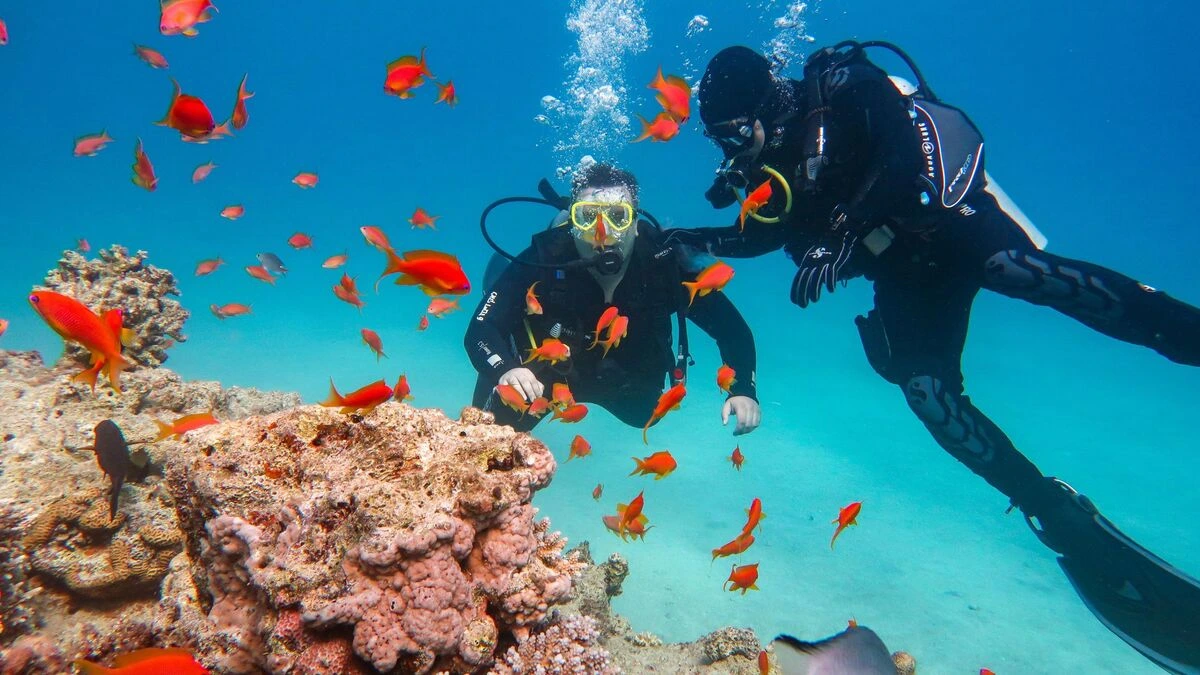
| Visibility | Variable: often 15-25 m depending on atoll side and plankton | Often 25-30 m or better on favored sides | February |
| Water temperature | About 26-30 C year-round | About 26-30 C year-round | Tie |
| Manta potential | Strong late-season chance at Lankan and some Baa/South Ari areas | Lower, mostly cleaning-station and west-side opportunities | November |
| Whale shark potential | Strong in South Ari, especially transition weeks | Strong in South Ari, with cleaner surface conditions | Tie |
| Current predictability | Less predictable during the monsoon shift | Stronger but more seasonally established | February |
| Photography | More plankton, more green water risk | Cleaner wide-angle conditions | February |
| Value | Shoulder-season pricing and availability can be better | Peak season, higher demand | November |
If one month must win outright, February is the safer recommendation. But "safer" is not the same as "best for everyone." November can be the smarter month for divers who are chasing animals rather than postcard visibility.
What the Monsoons Actually Do
The Maldives has two dominant monsoon seasons. The Maldives Meteorological Service describes the southwest monsoon as normally running from mid-May to November and the northeast monsoon as January to March, with December and April as transition months. For divers, operators often simplify that into a southwest season from roughly May to November and a northeast season from November or December through April.
That overlap around November is the point. November is not a clean wet-season month in the way June or July can be. It is the month when the system starts to change. Winds ease, departures become more attractive, and central-atoll liveaboards ramp up, but the water can still carry plankton and the week-to-week weather can remain uneven.
February is different. It sits inside the established northeast pattern. Bluewater Dive Travel describes January to April as the best period for Maldives liveaboards, with very good visibility during the driest, warmest stretch. PADI's Lhaviyani Atoll guidance also places the best diving in the dry northeast monsoon from November to April, with year-round water temperatures around 27-30 C.
For a first Maldives trip, that stability matters. You are not only choosing underwater conditions. You are choosing surface intervals, channel-crossing comfort, tender transfers, photography light, and how often the captain has to adjust the plan.
Weather and Sea State: February Is the Cleaner Bet
February wins the weather category clearly. The Maldives Meteorological Service reports higher average sunshine during January, February, and March than the rest of the year, and those months sit outside the main southwest rainfall pattern. Rain can still happen, but it is usually less disruptive than in the wetter monsoon months.
November weather is better than many divers expect, but it is not as predictable. The same official climate page notes that southwest-monsoon rainfall is higher and that rain is often showery with sunny periods between. That matters because a November forecast can look dramatic without ruining a trip, but it also means divers should build in tolerance for squalls, chop, and schedule changes.
For resort divers, the gap shows up in boat comfort and house-reef visibility. For liveaboard divers, it shows up in route flexibility. A good captain can often find divable water in November, but February gives the crew more stable options across North Male, South Male, Ari, Vaavu, and Lhaviyani.
The honest caveat: February is not automatically easy diving. Explorer Ventures notes that northeast-season current can be strong depending on itinerary, and that current begins flowing in November, strengthens through January, and starts to subside as February progresses. February seas are usually calmer, but channel dives such as Miyaru Kandu, Fotteyo Kandu, Kandooma Thila, and Cocoa Corner can still demand current comfort.
Visibility and Photography
February is the stronger month for visibility. Dive The World describes the northeast season as bringing good eastern-side visibility around 20-30 m or more, with December to March generally offering the best overall visibility. Bluewater's Maldives liveaboard guide similarly points to January through April for very good visibility.
November visibility is more variable because plankton remains part of the story. Bluewater notes that August to November can still have good liveaboard conditions, but plankton can reduce visibility while attracting manta rays and whale sharks. That is the basic November trade: less crystalline water, more food in the water column, and therefore more big-animal logic in certain places.
Photographers should take this seriously. If the goal is reefscape wide-angle, shark silhouettes in blue water, clean sunballs, and easy color correction, February is the better month. If the goal is manta trains, whale shark surface encounters, or moody megafauna frames, November remains compelling.
For macro and reef behavior, the gap is smaller. Sites such as Maaya Thila, Fish Head, Banana Reef, HP Reef, and protected resort reefs can be rewarding in both months. The difference is that February makes it easier to plan the classic Maldives wide-angle portfolio.
Marine Life: November Keeps the Megafauna Edge
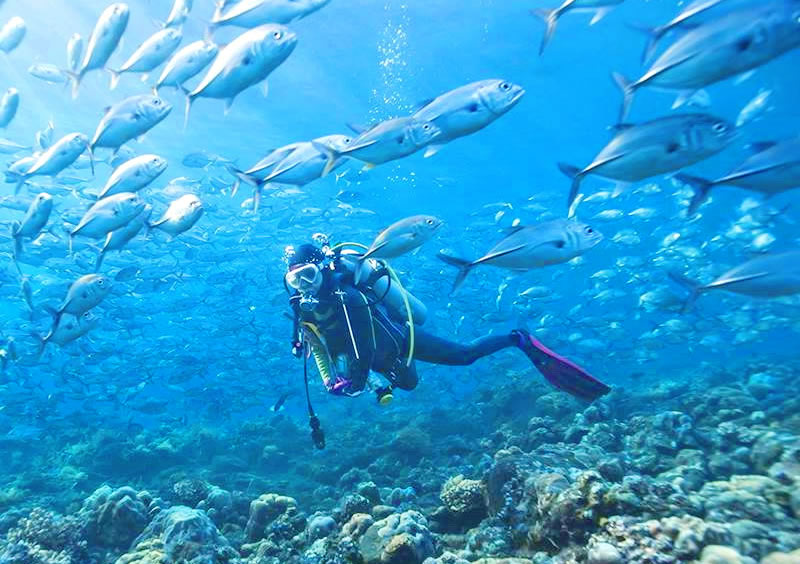
For manta rays, November is usually the more interesting choice. It catches the tail end of southwest-monsoon feeding dynamics, especially around Baa Atoll and North Male's Lankan Manta Point, while still being close enough to the season change for central-atoll routes to operate well. Explorer Ventures notes that the southwest season brings reduced visibility on the east side because of plankton and that those same conditions make it the stronger manta-feeding period.
February can still produce mantas, but the pattern is different. During northeast flow, mantas and whale sharks are more often discussed on the western sides of atolls, and encounters are less about huge plankton-feeding events and more about cleaning stations, route timing, and local knowledge. A February central-atolls liveaboard can see mantas; it should not be sold as the strongest manta month.
Whale sharks are closer to a tie. The South Ari Marine Protected Area is a year-round aggregation zone. The Maldives Whale Shark Research Programme research summary describes a resident South Ari population with high site fidelity and analyzed 1,077 encounters from 2014-2017. The same research notes that monsoon reversal affects spatial distribution, which is why operators reposition search effort by season.
In practice, November and February can both work well for South Ari whale sharks. November has the plankton-rich transition advantage and can be excellent for dedicated South Ari itineraries. February has calmer water and cleaner spotting conditions, which often makes the experience easier even if the animal probability is not meaningfully higher.
For sharks, February has the cleaner argument. Northeast-season channel flow can concentrate grey reef sharks, whitetip reef sharks, eagle rays, tuna, and other pelagics at eastern channel entrances. Vaavu's Miyaru Kandu and Fotteyo Kandu, South Male's Guraidhoo Corner, and the deeper southern channels are all more logically paired with the established dry-season route plan.
Best Routes in November
November favors flexible central-atolls liveaboards and animal-led resort planning. The best use of the month is not to lock yourself into a single expectation. It is to choose an operator that can move with the changing monsoon and make calls based on visibility, wind, and recent sightings.
Central Atolls liveaboard: A strong November route usually includes North Male, South Male, Ari, and Vaavu, with the captain choosing atoll sides based on the week. This is a good format for divers who want reef sharks, thilas, mantas, and the chance of South Ari whale sharks without betting the trip on one resort.
North Male plus Ari: This works when travelers want easier logistics and a wildlife upgrade. North Male gives airport convenience and sites such as Banana Reef, HP Reef, and Lankan Manta Point. Ari adds Maaya Thila, Fish Head, and South Ari whale shark searches near Dhigurah and Maamigili.
Baa Atoll add-on: Early November can still be useful for manta-focused travelers, but treat Hanifaru-style feeding as a late-season possibility, not a guarantee. If the whole trip depends on Baa manta feeding, July through October is a cleaner plan than November.
November is weaker for divers who want a predictable beach-and-dive holiday with no schedule friction. It is also weaker for new ocean divers who get anxious when visibility drops or the boat plan changes after breakfast.
Best Routes in February
February is built for classic Maldives liveaboard logic. The month suits central atolls, southern channels, and resort stays where reliable surface conditions matter.
Central Atolls liveaboard: This is the default February recommendation for most certified divers. North Male, South Male, Ari, and Vaavu combine airport convenience, thilas, drift dives, shark channels, manta possibilities, and South Ari whale shark searches. It is the safest all-rounder if you are deciding on the Maldives best month diving question and have no single-species obsession.
Vaavu and channel-heavy routes: February is strong for divers who want current, reef sharks, and blue-water entrances. Sites such as Miyaru Kandu, Alimatha jetty night dive, Fotteyo Kandu, Kandooma Thila, and Cocoa Corner fit the dry-season logic, but they require honest self-assessment. Advanced Open Water, Nitrox, good buoyancy, and SMB competence are useful.
South Ari resort or local island: February is one of the more comfortable windows for Dhigurah, Maamigili, Vilamendhoo, and LUX South Ari travelers who want whale sharks plus resort or guesthouse simplicity. The wildlife is never guaranteed, but the sea state and visibility are easier to work with.
Lhaviyani or North Male resort: For a mixed diver and non-diver holiday, February makes sense. PADI highlights Lhaviyani's dry-season calm and year-round 27-30 C water, while North Male keeps transfer time short and dive sites familiar.
The downside is price and demand. February sits in peak Maldives dry season. Better cabins, better resort rooms, and better liveaboard weeks can sell earlier and cost more.
Which Month Should Each Diver Choose?
| Diver profile | Choose November if... | Choose February if... |
|---|---|---|
| First Maldives liveaboard | You want shoulder-season value and can accept variable conditions | You want the most predictable first trip |
| Underwater photographer | You prioritize mantas or whale sharks over blue water | You want wide-angle clarity and sunlit reefs |
| Manta-focused diver | You are targeting late-season Lankan or Baa activity | Mantas are a bonus, not the trip goal |
| Whale shark-focused diver | You are booking South Ari with flexible search days | You want calmer South Ari conditions |
| Shark and channel diver | You are comfortable with transition-week uncertainty | You want established dry-season channel logic |
| Newer diver | You have a conservative operator and protected-site plan | You want the easier month overall |
| Budget-sensitive traveler | You can use shoulder-season availability | You accept peak-season pricing |
If this is your first tropical dive trip after certification, February is the cleaner choice. If you already have current experience and are booking a reputable liveaboard, November becomes more attractive because the upside can be higher than the average weather chart suggests.
The MantaraDive Recommendation
MantaraDive recommends February for most divers choosing between November and February. It is the better default for Maldives weather diving, visibility, sea state, first-time liveaboards, mixed-skill groups, and wide-angle photography. If a client asks for the safest single answer, February wins.
We recommend November only when the goal is specific: late-season mantas, South Ari whale sharks, better shoulder-season pricing, or a flexible liveaboard route with a crew that understands the monsoon change. November can beat February for animal-led trips, but it is less forgiving if the operator is rigid or the traveler expects perfect dry-season conditions.
The best practical split is this: book February when you want the Maldives to be easy. Book November when you want the Maldives to be interesting and can absorb some variability.
For related planning, pair this guide with our best time to dive Maldives manta and whale shark guide, Maldives liveaboard vs resort comparison, and North Male vs South Male vs Ari Atoll breakdown.
Talk to a Specialist
A November quote and a February quote can look similar on paper: same airport, same seven nights, same "Best of Maldives" label. The underwater trip can be materially different. MantaraDive advisors compare your certification level, comfort in current, photography goals, species priorities, and actual boat route before recommending a month. Send us your dates and preferred travel style and we will return a shortlist that explains what each itinerary is likely to do well and where it carries risk.
Practical Planning FAQ
Is choosing November or February for Maldives diving suitable for newer divers?
It can be, but only if the operator matches the itinerary to certification level rather than selling the most dramatic version of the destination. For Maldives, ask for the first two dives to stay conservative: easy entries, clear ascent procedures, a guide who keeps the group small, and a hard plan for what happens if current, visibility, or surface chop changes during the day. Newer divers should treat the first day as a checkout day, not a bucket-list race.
Which specific dive sites or route stops should I ask about?
Use named sites to test whether an operator is giving you real advice. For this trip, ask about North Male channels, South Ari whale shark routes, Baa Atoll manta access, Vaavu channels, and central-atoll thilas. If the salesperson cannot explain which of those are seasonal, current-sensitive, beginner-friendly, or camera-friendly, keep shopping. Strong operators will tell you which sites they would skip for your dates as clearly as which sites they hope to include.
What gear or training makes the biggest difference?
The practical kit is simple: SMB, reef hook where permitted, 3mm suit, nitrox certification, and a backup signaling mirror for drift days. The training priority is buoyancy first, current awareness second, and camera handling last. If you cannot hold position without sculling or touching the reef, leave the big camera rig behind until the second half of the trip. A good guide would rather manage a calm diver with modest gear than a distracted diver with expensive equipment.
What budget range should I plan around?
A realistic planning range is USD 3,200-5,500 for a mid-range liveaboard week and USD 4,700-8,000 for a resort-based dive week before long-haul flights. The hidden costs are usually transfers, marine-park fees, Nitrox, equipment rental, crew tips, private guide surcharges, and lost-dive buffers for weather. If the trip is built around a rare animal encounter, add at least one spare day so a cancelled morning does not become the whole story.
What should I read next before booking?
Cross-check this guide against planning link 1, planning link 2, planning link 3, planning link 4, planning link 5. Those pages cover adjacent seasons, route trade-offs, beginner fit, and cost assumptions, which helps prevent a single article from carrying the whole booking decision.
Sources and Methodology
This article cross-referenced the Maldives Meteorological Service climate page for monsoon timing, rainfall, temperature, and sunshine; Bluewater Dive Travel's Maldives liveaboard guide for January-April liveaboard conditions, August-November plankton trade-offs, and 26-30 C water-temperature guidance; Explorer Ventures' Maldives seasons and itineraries guide for northeast and southwest season route logic, current timing, and manta/whale shark placement; Dive The World's Central Atolls guide for 20-30 m northeast-season visibility, monsoon-side visibility patterns, and 26-29 C water-temperature guidance; PADI's Lhaviyani Atoll guide for dry-season dive conditions and year-round water-temperature range; and the Maldives Whale Shark Research Programme summary for South Ari whale shark aggregation research and the 1,077-encounter dataset. Operator and season statements were checked in May 2026; liveaboard routes, prices, and encounter probabilities can change by boat, week, current, and weather.
Related MantaraDive planning links
- Solo Diving in the Philippines: Which Resorts and Liveaboards Welcome Solo Travelers?
- Komodo Liveaboard Prices: What It Actually Costs (and What's Worth It)
- Red Sea Liveaboard Itinerary: North vs South for European Divers
- Lembeh Strait for Macro Photographers: Complete 2026 Guide
- 5 Essential Beginner Tips for Your First Tropical Dive Trip
- Best Dive Sites in Bali: 3 That Matter for a 7-Day Trip
- Best Time to Dive the Maldives for Manta Rays vs Whale Sharks (2026)
- Maldives Diving Under $3,000: A Realistic Budget Guide for 2026