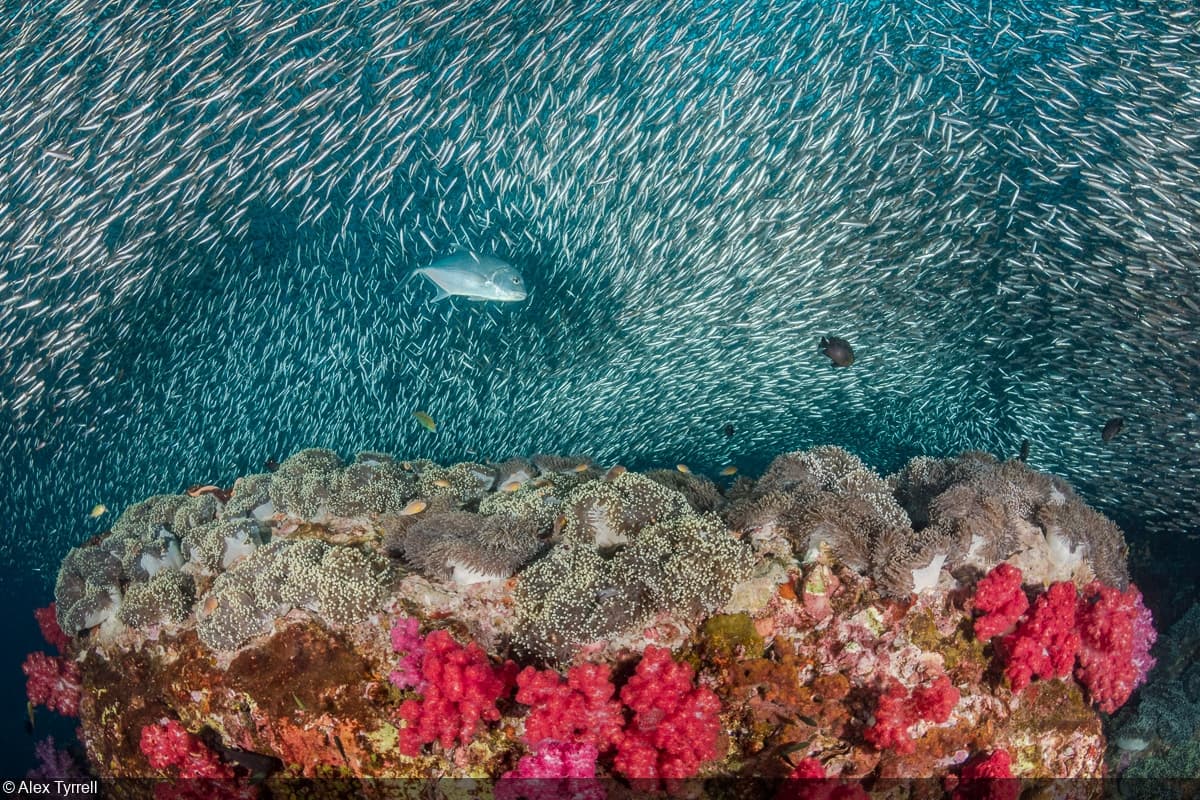
The best time to dive Curaçao is May through November. That answer surprises divers who assume the Caribbean's dry season — December through April — automatically means better diving. In Curaçao, the dry season brings stronger trade winds, choppier surface conditions, higher prices, and more crowded dive sites. The so-called off-peak months deliver warmer water, calmer seas, thinner crowds, and 30–40% lower pricing. The island sits outside the hurricane belt, so the traditional Caribbean storm risk barely applies.
Curaçao is a year-round destination. Water temperatures hold between 80°F and 85°F (27–29°C) every month. Visibility rarely drops below 60 feet (18 m) and often exceeds 100 feet (30 m). But the subtle seasonal differences matter — especially for photographers, macro hunters, and divers chasing specific marine-life events like coral spawning.
This article breaks down Curaçao's dive season month by month so you can book the right week for your goals.
Why Curaçao Works Year-Round
Curaçao sits at 12°N latitude, roughly 400 miles south of the main Atlantic hurricane track. The island receives only about 21 inches (530 mm) of rain per year — one of the driest islands in the Caribbean. The semi-arid climate means terrestrial runoff rarely clouds the reefs, and rain events are short, intense bursts that clear within an hour or two.
Water temperature varies by just 5°F across the entire year. That stability eliminates the seasonal thermocline drama that affects destinations like the Cayman Islands or the Bahamas, where winter water can drop to 76°F and force divers into thicker suits. In Curaçao, a 3mm shorty works in January and July.
The trade winds blow from the east year-round, peaking in June at around 20 mph. These winds rough up the north coast but leave the protected southern shore — where most of Curaçao's best dive sites sit — relatively calm. During the hurricane season (June–November), the winds actually diminish, creating some of the calmest surface conditions of the year.
The Seasonal Trade-Off: Dry Season vs Rainy Season
Curaçao's seasons are subtler than most Caribbean islands. The "dry season" runs roughly January through April. The "rainy season" spans October through February, but even the wettest months see only 70–100 mm of rain — comparable to a mild spring week in London.
| Factor | Dry Season (Jan–Apr) | Rainy Season (Oct–Feb) | Off-Peak Sweet Spot (May–Nov) |
|---|---|---|---|
| Water temp | 80–83°F (27–28°C) | 82–85°F (28–29°C) | 82–86°F (28–30°C) |
| Visibility | Often 100+ ft (30+ m) | 60–100 ft (18–30 m) | 80–100 ft (24–30 m) |
| Wind | Strongest trade winds | Moderate, diminishing | Calmest period |
| Rain | Minimal | Brief afternoon bursts | Occasional brief showers |
| Crowds | Peak tourist season | Shoulder season | Lowest volume |
| Pricing | Highest | Moderate | 30–40% below peak |
| Hurricane risk | None | None (outside belt) | Near zero |
The paradox: Curaçao's tourist high season (December–April) coincides with the windiest diving conditions. The tourism low season (May–November) aligns with the calmest seas, warmest water, and best marine-life events.
Month-by-Month Breakdown
January–March: Clear Water, Strong Winds
These months deliver the best visibility — often exceeding 120 feet (36 m) on the southern coast. The water is at its coolest (80–81°F / 27°C), but still warm enough for a 3mm shorty. Eagle rays appear more frequently during this window, and whale shark sightings spike along the channel between Curaçao and Klein Curaçao.
The trade-off is wind. Surface conditions can be choppy, and north-coast sites are often inaccessible. Dive operators run primarily on the sheltered south shore. Prices are at their highest, especially around Christmas, New Year, and Carnival (February).
Best for: Wide-angle photographers chasing maximum visibility, divers targeting eagle rays and whale sharks, travelers combining diving with Carnival.
April–May: The Transition Window
April marks the shift from dry to transitional conditions. Winds begin to ease, water temperatures climb to 81–83°F (27–28°C), and visibility remains excellent. Sea turtle nesting season begins — hawksbill and green turtles start their nocturnal runs to the beaches, and divers encounter them more frequently at sites like Playa Lagun.
Late April through May is one of the best value windows. Crowds thin as the high season ends, but underwater conditions are still excellent. Dive operators start offering shoulder-season pricing.
Best for: Budget-conscious divers who want excellent conditions without peak-season prices, turtle enthusiasts, divers who prefer moderate crowds.
June–August: Warm Water, Calm Seas
This is where Curaçao's diving hits its stride. Water temperatures reach 82–84°F (28–29°C), surface conditions are calm, and the north coast becomes accessible for the first time in months. Visibility holds at 80–100 feet (24–30 m).
Reef fish courtship displays peak during these months — males of butterflyfish, angelfish, and parrotfish show intensified coloration. Juvenile fish from spring spawning events settle onto the reefs, creating rich macro opportunities. The north-coast dive window opens, giving access to dramatic wall dives and geological formations rarely visited during the rest of the year.
Prices drop significantly. Accommodations run 20–30% below high-season rates.
Best for: Macro photographers, divers wanting to explore the north coast, underwater videographers seeking calm conditions, families combining diving with summer travel.
September–October: Coral Spawning Season
This is Curaçao's most spectacular diving window. Late August through mid-October marks peak coral spawning — a synchronized reproductive event where multiple coral species release eggs and sperm in coordination, creating an underwater "snowstorm." The timing follows lunar cycles after the full moon, when water temperatures hit 82–85°F (28–29°C).
The spawning event transforms the reef. Plankton-feeding fish congregate in massive numbers, larger predators follow, and normally nocturnal species become active. Scientists from SECORE International have documented elkhorn coral spawning events at multiple Curaçao sites during this period.
Visibility dips slightly (60–80 ft / 18–24 m) due to increased plankton, but that same plankton attracts filter-feeding megafauna. Whale shark sightings increase as these giants follow the plankton blooms.
September and October also deliver the lowest prices of the year. Resorts and dive operators offer their deepest discounts.
Best for: Divers chasing coral spawning, macro photographers, budget travelers, marine-life enthusiasts willing to trade some visibility for wildlife encounters.
November: The Underrated Month
November is Curaçao's most underrated diving month. The rainy season is tapering off, visibility climbs back toward 80–100 feet (24–30 m), water is still warm at 84–85°F (29°C), and crowds remain thin. Migratory species — jacks, barracudas, and occasionally dolphins — pass through as currents shift.
DEMA Specials drop in November, with dive resorts offering group rates up to 25% off for the following low season. It is the last month before the high-season price jump.
Best for: Divers who want warm water and good visibility without December crowds, travelers booking ahead for the following year's low season.
December: Split Personality
December is a transition month in both directions. Early December still carries off-peak pricing and calm conditions. By mid-December, the high season kicks in — prices spike, crowds arrive, and the trade winds strengthen. Visibility remains excellent, but surface conditions deteriorate on exposed sites.
If you must dive in December, aim for the first two weeks.
Best for: Early-December divers seeking a final off-peak window, holiday travelers willing to pay peak prices for festive atmosphere.
Coral Spawning: The Main Event
Curaçao's coral spawning deserves special attention because it is one of the most predictable and spectacular marine events in the Caribbean. The spawning follows a lunar rhythm: different coral species release gametes on specific nights after the full moon, typically between 9 PM and midnight.
The peak window runs late August through mid-October. Water temperatures must reach approximately 82°F (28°C), and sunset timing plays a role in triggering the release. Dive operators run special night dives during predicted spawning windows, often in collaboration with marine researchers.
What you see: millions of tiny egg-sperm bundles rising through the water column like reverse snowfall. The bundles attract plankton feeders, which attract predators. The entire reef food chain activates in a matter of hours.
This is not a once-a-year lottery. Multiple spawning events occur across several weeks, giving divers multiple chances to witness the phenomenon. Planning around the full moon in September or October offers the highest probability.
Marine Life Calendar
| Species | Best Months | Notes |
|---|---|---|
| Eagle rays | Jan–Mar | Cleaning stations active, cooler water brings pelagics |
| Whale sharks | Dec–Mar (sporadic) | Channel between Curaçao and Klein Curaçao |
| Sea turtles nesting | Apr–Oct | Hawksbill and green turtles, peak May–Aug |
| Turtle hatchlings | Jun–Nov | 45–60 days after nesting, responsible observation only |
| Coral spawning | Late Aug–mid-Oct | Lunar-cycle dependent, night dives |
| Reef fish courtship | Jun–Aug | Intensified coloration, territorial displays |
| Migratory jacks/barracuda | Sep–Nov | Current-driven seasonal movement |
| Nudibranchs/macro life | Year-round (best Jun–Nov) | Warm water boosts small-critter activity |
Pricing and Crowd Strategy
Curaçao's pricing follows a clear seasonal arc. The numbers:
- Peak season (Dec–Apr): Highest rates, 85%+ hotel occupancy, fully booked dive operators, 15–20 divers per guided group at popular sites.
- Shoulder season (May, Nov): 15–20% below peak, moderate crowds, excellent conditions.
- Off-peak season (Jun–Oct): 30–40% below peak, lowest tourist volume, warmest water, calmest seas.
The Klein Curaçao full-day dive trip (one tank, BBQ, open bar, equipment) runs about $285 during peak season and drops to $200–225 in the off-peak months. A week-long diving vacation during September or October can save $500–1,000 compared to a January trip — with arguably better underwater conditions.
Cruise ship visits drop by roughly 70% during the off-peak season, reducing day-trip diver congestion at shore-accessible sites.
How Curaçao Compares to Other Caribbean Destinations
Curaçao's biggest structural advantage is its position outside the hurricane belt. Destinations like the Bahamas, the Cayman Islands, and the Virgin Islands face real storm risk from August through October. Curaçao experiences calmer conditions during those same months.
Compared to Bonaire — the "shore diving capital of the world" — Curaçao offers more varied underwater terrain. Bonaire excels in fringing-reef shore dives; Curaçao combines shore diving with deeper offshore sites, wall dives, and the north-coast window that Bonaire lacks.
Water temperature stability also sets Curaçao apart. The Cayman Islands swing from 78°F in winter to 88°F in summer. Curaçao's 5°F annual range means no seasonal wetsuit adjustments.
The reverse seasonality — where the best diving coincides with the lowest prices — is rare in the Caribbean. Most destinations charge peak rates when conditions are best.
The MantaraDive Recommendation
We recommend June through October for most divers. This window delivers the warmest water (82–86°F), calmest seas, lowest prices, thinnest crowds, and access to the north-coast dive sites that are inaccessible during the windier months. September and October add the coral spawning spectacle — the single most dramatic marine event Curaçao offers.
Choose January–March if you prioritize maximum visibility above all else, or you are specifically targeting eagle rays and whale sharks. Accept the stronger winds, higher prices, and crowded sites as the cost of peak clarity.
Choose April–May if you want a shoulder-season compromise — excellent visibility, thinning crowds, turtle nesting activity, and prices that have not yet hit their annual peak.
Choose November if you want warm water, good visibility, and the DEMA Specials pricing window for booking the following year's low-season trip.
Avoid mid-December unless you are combining diving with holiday festivities and are willing to pay peak rates for windier surface conditions.
Curaçao is one of the few Caribbean destinations where the off-peak diving season genuinely outperforms the high season. The island's position outside the hurricane belt flips the usual Caribbean equation: the months that scare away casual tourists are the months that reward serious divers.