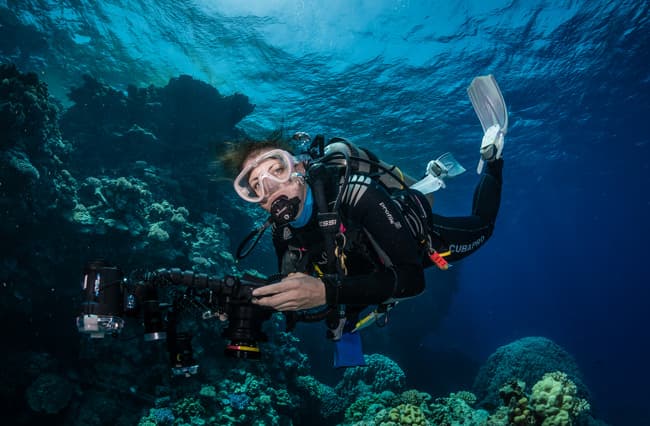
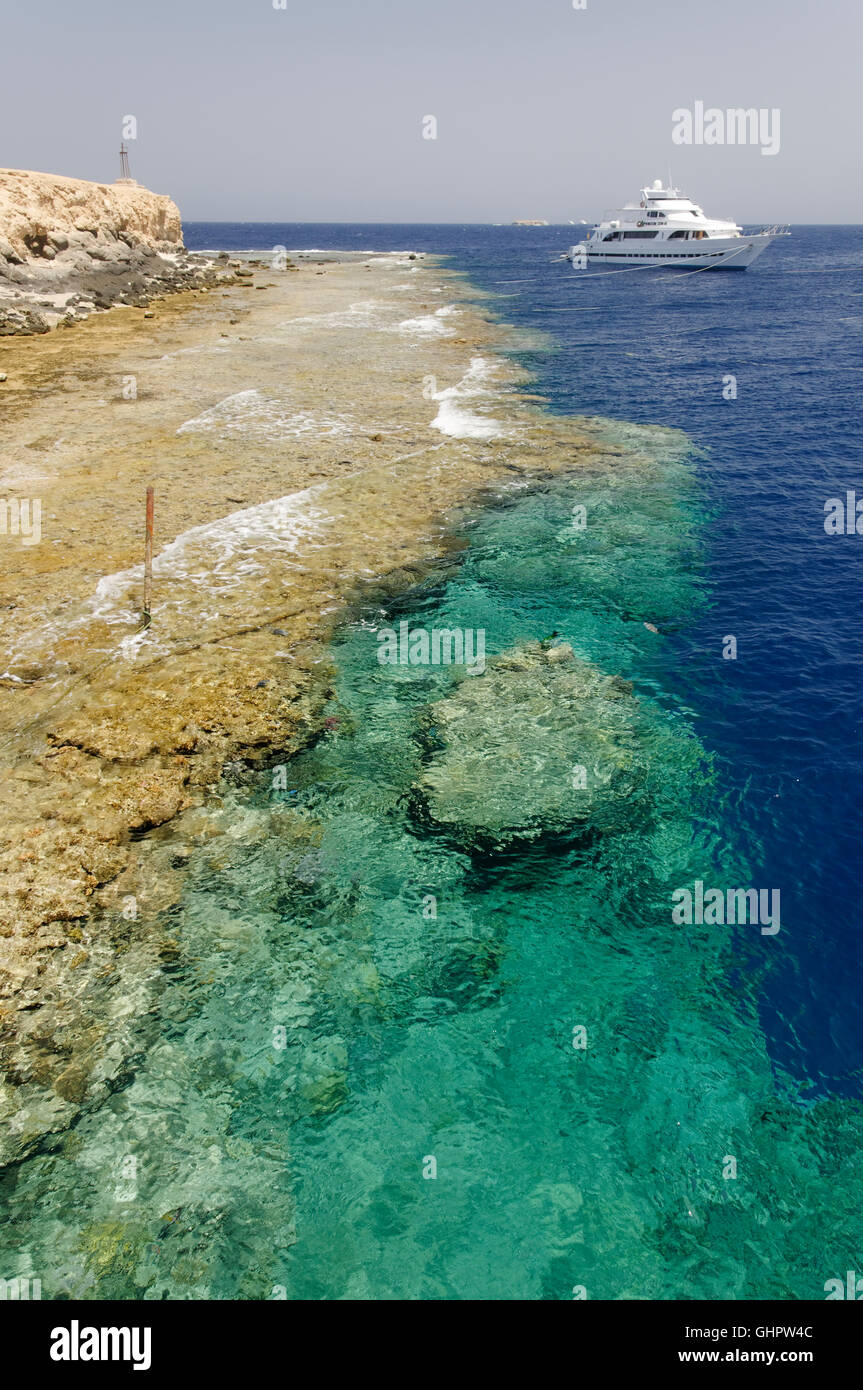
Two limestone pinnacles rising from 800 metres of open Red Sea water. No shallow reef shelf, no sheltered lagoon, no forgiving conditions if you overclaimed your experience on the booking form. The Brothers Islands — Big Brother and Little Brother, known locally as El Akhawein — sit 67 kilometres offshore from El Quseir, accessible only by liveaboard, and they are the single most reliable site in the Egyptian Red Sea for oceanic whitetip shark encounters. Add two historic wrecks draped across vertical walls, seasonal schools of scalloped hammerheads, visibility that routinely clears 30 metres, and currents that will test every diver on the boat, and you have what many experienced Red Sea divers consider the best diving Egypt offers.
The question is not whether the Brothers are worth diving — they are. The question is whether you are ready for them, which liveaboard itinerary makes sense for your budget and experience level, and when to go to maximise your chances of the encounters you care about most. This article answers all three with current 2026 pricing, operator comparisons, and an honest assessment of what the Brothers demand from divers.
Why This Article Matters
We cross-referenced published 2025–2026 fare data from Emperor Divers, Blue Planet, Sea Serpent Fleet, Red Sea Aggressor, Golden Dolphin, DUNE Silky, and 45 additional liveaboards listed on Divebooker and Liveaboard.com for Brothers itineraries, alongside marine park permit requirements from the Egyptian Environmental Affairs Agency, community trip reports from ScubaBoard and Liveaboard.com (479 verified reviews, 9.0 average rating), and dive condition data from Celesta Liveaboards, TravelToDive, and SSI's Red Sea technical diving guides. The output is a complete planning framework: what Brothers diving costs in 2026, what the money buys underwater, and which diver profiles should book which itinerary.
Getting to the Brothers: Liveaboard Only
The Brothers are a protected Egyptian marine reserve. There is no day-trip option — the 67-kilometre offshore distance, permit requirements, and exposed site conditions make liveaboard the sole access method. All diving is conducted from the vessel, with zodiac tenders dropping divers at dive sites and picking them up after each dive.
Departure ports:
| Port | Transfer from airport | Typical itinerary style |
|---|---|---|
| Hurghada (HRG) | 15–30 min | Brothers-only or North + Brothers |
| Port Ghalib (Marsa Alam) | 10–15 min | BDE circuit (Brothers, Daedalus, Elphinstone) |
| Marsa Alam | 30–45 min | BDE circuit or Brothers-only |
Passage time: 7–9 hours from Hurghada, typically sailed overnight so you arrive at the islands before dawn. The crossing crosses open Red Sea water — short, steep chop is common, especially in winter. If you are prone to seasickness, take medication before boarding, not after you are already feeling rough.
Trip length: Dedicated Brothers itineraries run 5–7 nights. Combined BDE (Brothers, Daedalus, Elphinstone) routes typically run 7–10 nights and are the most popular way to reach the Brothers — most operators include them as part of a broader southern Red Sea circuit rather than as a standalone destination.
The Dive Sites: Big Brother and Little Brother
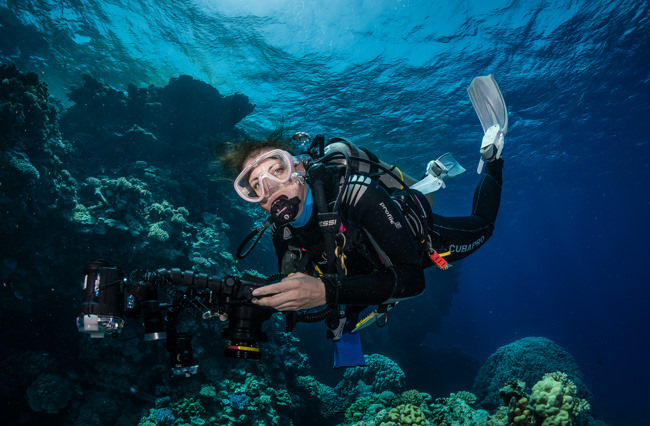
The two islands sit roughly one kilometre apart. Together they offer more than 12 distinct dive sites, almost all wall dives with steep drop-offs into deep blue water. There is no shallow reef shelf to speak of — you drop in, you are on the wall, and the depth below you is very real.
Big Brother
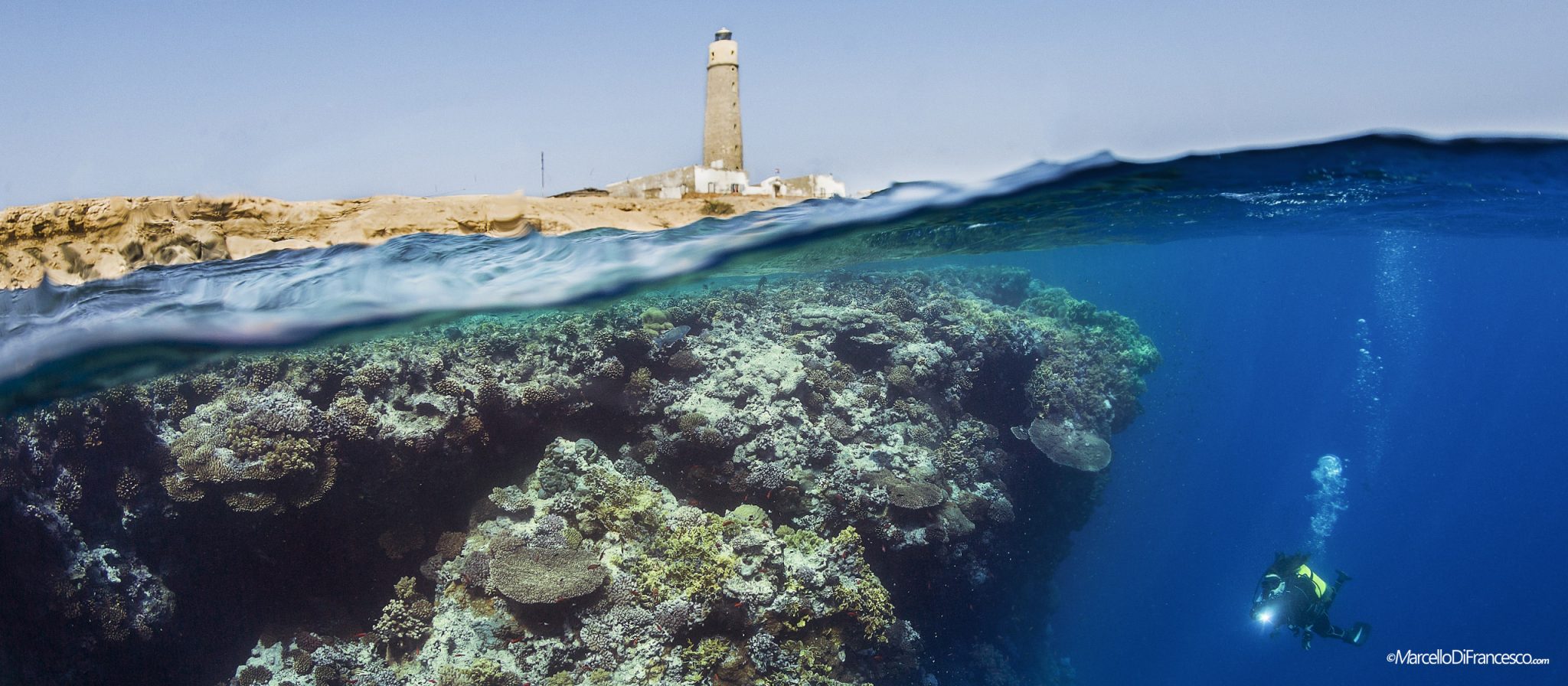
Big Brother is the larger island, roughly 400 metres long, marked by a lighthouse that has been operational since 1883. The diving centres on two world-class wrecks and a series of wall dives where pelagic encounters are the norm, not the exception.
The Numidia Wreck. A 130-metre British cargo ship that ran aground on Big Brother's northern tip in 1901. She lies draped across the wall between 10 and 80 metres — the bow section shallow enough for recreational divers, the stern descending well beyond recreational limits for technical exploration. After 125 years in the water, the Numidia is encrusted with enormous gorgonian fans, soft coral in reds and purples, and dense hard coral growth. Moray eels, glassfish schools, and lionfish occupy every dark corner. This is not a penetration wreck in the traditional sense — it is too broken up for that — but an exploration of a ship that has become part of the reef. One of the Red Sea's most atmospheric wreck dives (Celesta Liveaboards, 2026; TravelToDive, 2026).
The Aida Wreck. A smaller Egyptian navy supply vessel that sank in 1957, resting on Big Brother's southeastern side between 25 and 65 metres. More intact than the Numidia, with identifiable superstructure, swimmable deck areas, and dense coral growth. Batfish, grouper, and glass sweepers school around the hull in numbers that can block out the light in sections. More accessible for recreational divers than the deeper Numidia sections (Divebooker, 2026; Liveaboard.com, 2026).
The Walls. Big Brother's north and south walls offer drift diving along sheer vertical drop-offs covered in soft corals, gorgonian fans, and vibrant alcyonarians. The south wall is where oceanic whitetip sightings concentrate — these open-ocean predators patrol the wall's edge and will approach divers in the blue. Grey reef sharks are year-round residents. The north plateau, sitting at around 40 metres, is a known gathering point for hammerheads and silvertips emerging from the deep (Celesta Liveaboards, 2026; Dive The World, 2026).
Little Brother
Little Brother is smaller and more exposed — a tear-shaped rock with a flat surface barely above the waterline — but the diving is arguably more dramatic for pelagic encounters. The entire island can be circumnavigated on a single dive in good conditions, though current makes this highly variable.
Hammerhead territory. Little Brother is the Brothers' hammerhead hotspot. Scalloped hammerheads patrol the blue water off the northern and eastern walls, with peak encounters from May through October. Early morning dawn dives offer the best chances — drop to 25–30 metres, hover off the wall, and watch the open water. Schools rather than singles are possible in peak season (TravelToDive, 2026; Celesta Liveaboards, 2026).
The plateau and coral. The top of Little Brother sits at 4–6 metres, making it an excellent safety stop area. The shallow reef is notably pristine — healthier than Big Brother's walls, which see heavier diver traffic. Table corals, gorgonian fans, and healthy hard coral coverage make this a strong dive even when the sharks do not show (TravelToDive, 2026).
Current exposure. Little Brother is fully exposed to open-ocean conditions. Currents can be strong and unpredictable, sometimes changing direction mid-dive. Downwellings — sudden vertical currents that push divers deeper — have been reported here and at Big Brother's walls. Drift diving skills and independent SMB deployment are essential. This is not a site for divers who are not completely comfortable aborting a dive and ascending if conditions change (TravelToDive, 2026; Celesta Liveaboards, 2026).
The Sharks: What You Will See and When
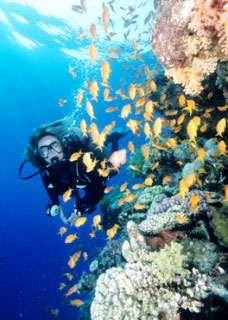
The Brothers are a pelagic crossroads — isolated offshore pinnacles sitting along a migratory highway where deep-water species cross between basins. The probability of significant pelagic encounters here is higher than almost anywhere else in the Egyptian Red Sea.
Oceanic Whitetip Sharks — Year-Round
Oceanic whitetips (Carcharhinus longimanus) are the Brothers' signature encounter. Unlike hammerheads, which are strongly seasonal, oceanic whitetips are present year-round, and the Brothers is considered one of the most consistent sites in the world for this species. These are open-ocean animals — curious, persistent, and capable of close approaches that feel genuinely intense. They will circle. They will come in. The appropriate response is to hold your position, stay in a close group, maintain eye contact, and avoid erratic movement. Encounters concentrate on Big Brother's south wall and Little Brother's northeast wall (TravelToDive, 2026; Celesta Liveaboards, 2026).
Shark etiquette matters here. Multiple incidents at the Brothers have been attributed to diver and guide error, not shark aggression. Oceanic whitetips are inquisitive top predators — anything flashy, erratic arm movements, or skin reflecting sunlight can draw them closer. Stay with your group, especially near the surface and away from the reef structure. Choose an operator whose guides stress shark etiquette (TravelToDive, 2026).
Scalloped Hammerhead Sharks — May to October
Peak season is May through October, with June through August the most consistent months. Sightings occur in the blue water off the wall rather than on it — look out into open water during your safety stop or while drifting along the wall's upper edge at Little Brother. Schools are possible in peak season. The Brothers is one of the highest-probability sites for hammerheads in the Red Sea, but these are wild animals in open ocean — treat it as high probability, not guaranteed (TravelToDive, 2026; Celesta Liveaboards, 2026).
Other Species
- Thresher sharks — Occasional sightings, primarily on early morning dives at Little Brother. Treat as a bonus, not an expectation (Celesta Liveaboards, 2026).
- Grey reef sharks — Year-round, patrolling the walls and drop-offs on both islands (Liveaboard.com, 2026).
- Silvertip sharks — Regular at Big Brother's north plateau, particularly at depth (Dive The World, 2026).
- Napoleon wrasse — Resident on both islands, some impressively large (Celesta Liveaboards, 2026).
- Giant trevally and barracuda — Schooling in the blue, often hunting at dawn (Divebooker, 2026).
- Manta rays — Occasional summer visitors, not seasonal enough to plan around (Celesta Liveaboards, 2026).
- Dolphins — Spinner and bottlenose dolphins common during the crossing and around the islands (Liveaboard.com reviews, 2025–2026).
- Whale sharks — Rare but documented; a February 2026 Liveaboard.com reviewer reported one at the Brothers (Liveaboard.com, 2026).
Conditions and Experience Requirements
The Brothers are not a beginner destination. The combination of strong current, significant depth, open-water exposure, downwelling risk, and active pelagic encounters requires a diver who is genuinely comfortable underwater — not just certified.
Certification and Experience
Minimum: Advanced Open Water or equivalent. Realistic minimum: 50+ logged dives including drift diving experience and good buoyancy control. Most operators require this; some premium operators recommend 100+ dives. If you have not dived in current before, the Brothers will be a stressful experience rather than an enjoyable one, and stressed divers in current at depth are a safety problem for everyone on the boat (TravelToDive, 2026; Celesta Liveaboards, 2026; Divebooker, 2026).
Currents
Expect currents on most dives. Sometimes gentle, sometimes strong enough to require negative entries — stepping off the zodiac and descending immediately. Downwellings have been reported. An SMB (surface marker buoy) is mandatory and you must be able to deploy it independently, not rely on the guide's. A reef hook is recommended for holding position in current while watching the pelagic show — check with your operator on their policy (Celesta Liveaboards, 2026; Divebooker, 2026).
Depth
Recreational divers typically operate between 15 and 30 metres. The wrecks extend deeper — the Numidia reaches 80 metres, the Aida reaches 65 metres — for those with appropriate technical training. A depth alarm on your dive computer is advisable given the tremendous drop-offs and 30+ metre visibility that can make depth perception deceptive (Liveaboard.com, 2026).
Visibility and Water Temperature
Visibility is usually excellent — 25 to 40 metres is typical, with the open-water location and deep surrounding water keeping conditions consistently clear. Water temperature ranges from 22°C in winter to 30°C in summer. A 5mm wetsuit is recommended for most of the year, with a hooded vest for winter months. Thermoclines can be significant, especially when currents are running (Celesta Liveaboards, 2026; TravelToDive, 2026).
Night Dives
Night dives are prohibited at the Brothers — the marine park does not allow them for conservation and safety reasons. The currents and surface conditions make night diving inadvisable regardless of the rules (Liveaboard.com, 2026).
Liveaboard Pricing: What Brothers Diving Costs in 2026
Brothers Islands itineraries are available from roughly 45 liveaboards listed on Divebooker alone, ranging from budget Egyptian vessels to premium international operators. Pricing varies enormously depending on vessel standard, cabin type, itinerary length, and season.
Budget Tier (from USD 105–157/day)
| Vessel | Per day (USD) | Rating | Notes |
|---|---|---|---|
| Blue Melody | from $105 | 4.7 (89 reviews) | Up to 40% off early booking; strong community favourite |
| Discovery II | from $106 | 4.3 (6 reviews) | Budget BDE circuit option |
| Hammerhead II | from $121 | — | Basic liveaboard, Brothers-focused itineraries |
| Golden Dolphin I | from $152 | 3.0 (1 review) | Classic Red Sea fleet vessel |
| Seawolf Dominator | from $146 | 4.8 (3 reviews) | Good value mid-range |
Source: Divebooker (2026 published rates). Per-day pricing; multiply by trip length for total. Marine park fees, port fees, and equipment rental typically extra.
Mid-Range Tier (USD 157–250/day)
| Vessel | Per day (USD) | Rating | Notes |
|---|---|---|---|
| DUNE Silky | from $157 | 4.8 (1 review) | Modern vessel, good dive deck |
| Omneia Spirit | from $188 | — | Comfortable mid-range |
| Odyssey | from $207 | 4.9 (3 reviews) | Premium service, up to 17% off deals |
| Blue Horizon | from $126–$250 | 4.7 (64 reviews) | Highly reviewed; up to 50% off seasonal deals |
Source: Divebooker (2026). Pricing fluctuates by season and cabin class.
Premium Tier (USD 250–500/day)
Operators like Red Sea Aggressor IV, Emperor Fleet (Emperor Elite, Emperor Superior), and Sea Serpent Excellence operate at the premium end with higher crew-to-guest ratios, Nitrox inclusion, and larger cabins. A 7-night premium BDE itinerary typically runs USD 1,800–3,500 per person in a standard cabin, rising to USD 3,000–5,000+ for master suites on the most exclusive vessels (Liveaboard.com, 2026; Divebooker, 2026).
The All-In Number
The vessel fare is roughly 60–70% of the total trip cost. A realistic all-in budget for a 7-night Brothers liveaboard:
| Cost component | Budget (USD) | Mid-range (USD) | Premium (USD) |
|---|---|---|---|
| Vessel fare (7 nights) | $750–$1,100 | $1,100–$1,800 | $1,800–$3,500 |
| International flights (Europe rt) | $200–$500 | $200–$500 | $200–$500 |
| International flights (N. America rt) | $600–$1,000 | $600–$1,000 | $600–$1,000 |
| Marine park + port fees | $100–$150 | $100–$150 | $100–$150 |
| Pre/post hotel (2 nights) | $60–$120 | $120–$250 | $200–$400 |
| Gear rental (7 days, if needed) | $150–$250 | $150–$250 | $150–$250 |
| Crew gratuity (~10–15%) | $75–$165 | $110–$270 | $180–$525 |
| Total (from Europe) | $1,435–$2,285 | $1,780–$3,220 | $2,630–$5,325 |
| Total (from N. America) | $1,835–$2,685 | $2,180–$3,820 | $3,230–$5,825 |
Marine park fees are collected in cash (EUR or USD) on board and are rarely included in the published booking price. Crew gratuity is expected but never quoted — budget 10–15% of the vessel fare (Divebooker, 2026; ScubaBoard, 2024–2026).
The honest number: USD 1,500–2,500 all-in from Europe at the budget-to-mid tier, USD 2,500–4,000 for mid-range comfort. From North America, add USD 400–600 to the flight component. Egypt remains one of the most affordable big-animal diving destinations globally — comparable Brothers-level pelagic encounters in Galapagos or Socorro cost two to three times as much.
Best Time to Dive the Brothers
Every month offers something at the Brothers, but the prime season depends on what you want to see:
| Season | Water temp | What you get | Conditions |
|---|---|---|---|
| Feb–Apr | 22–24°C | Hammerhead season starting, oceanic whitetips, good visibility | Crossing can be rough; cooler water |
| May–Jun | 24–27°C | Peak hammerheads, warm water, calmer seas | Best overall balance for most divers |
| Jul–Aug | 27–30°C | Warmest water, hammerheads still present, barracuda schools | Hot on land; calmest crossings |
| Sep–Oct | 26–28°C | Oceanic whitetip peak, hammerheads, thresher sharks, best visibility | Many operators' favourite season |
| Nov–Jan | 22–24°C | Oceanic whitetips, quieter boats, clear water | Roughest crossings; some operators skip Little Brother |
Our recommendation: If hammerheads are your primary goal, book March to May. If you want the most comfortable conditions with a variety of encounters, September to October is hard to beat. Avoid January and February if rough sea conditions concern you — the overnight crossing from Hurghada can be genuinely uncomfortable, and operators occasionally modify itineraries to skip the more exposed Little Brother (TravelToDive, 2026; Celesta Liveaboards, 2026).
The Brothers vs Other South Red Sea Sites
| Factor | Brothers | Daedalus | Elphinstone |
|---|---|---|---|
| Distance offshore | 67 km | ~140 km | ~12 km |
| Access | Liveaboard only | Liveaboard only | Liveaboard or day trip from Marsa Alam |
| Primary pelagic | Oceanic whitetip (year-round) | Hammerhead, thresher | Oceanic whitetip, hammerhead |
| Wrecks | Numidia + Aida | None | None |
| Difficulty | Advanced, 50+ dives | Advanced, 50+ dives | Intermediate to advanced |
| Crossing time (from Hurghada) | 7–9 hours | 12–16 hours | 2–3 hours |
| Typical itinerary | BDE circuit or standalone 5–7 nights | BDE circuit 7–10 nights | Day trip or BDE circuit |
Most serious south Red Sea divers want all three. If you can only do one, the Brothers edges it for experienced divers — the combination of two wrecks, reliable oceanic whitetips, seasonal hammerheads, and wall diving is unmatched. Elphinstone is the better choice if your experience level is borderline or you have limited time, since it is accessible on shorter itineraries and closer to shore (TravelToDive, 2026).
The MantaraDive Recommendation
After running the 2026 numbers and reviewing 479 verified Liveaboard.com reviews averaging 9.0, our position is clear: the Brothers Islands are the best single destination for pelagic-focused diving in the Egyptian Red Sea, and a 7-night BDE liveaboard is the way to do it.
The optimal strategy for most experienced divers is a BDE (Brothers, Daedalus, Elphinstone) circuit departing from Port Ghalib or Hurghada. This gets you the Brothers' wrecks and sharks, Daedalus's hammerheads and remoteness, and Elphinstone's accessible wall diving — all in a single voyage. A mid-range BDE liveaboard at USD 1,200–1,800 for the vessel fare (7 nights) delivers 20–25 dives across three of Egypt's premier dive destinations. That is an exceptional value for big-animal diving by any global standard.
For budget-conscious divers, operators like Blue Melody (from USD 105/day), Discovery II (from USD 106/day), and Hammerhead II (from USD 121/day) offer genuine Brothers access at price points that undercut comparable pelagic destinations — Galapagos, Socorro, Cocos — by 60–80%. The vessel standard is more basic, but the underwater experience is the same ocean.
The single biggest mistake we see: a diver booking a Brothers liveaboard as their first Red Sea trip, discovering on day one that strong currents at depth for four dives a day is physically demanding, and spending two of those five nights resting in their cabin. Build your experience on easier Red Sea sites first — Sharm el Sheikh, Hurghada day boats, even a northern wrecks liveaboard — before committing to the Brothers.
Honest Caveats
A few facts that operator marketing tends to omit:
- Oceanic whitetip encounters are intense, not gentle. These sharks approach closely and persistently. If you have never been circled by a large open-ocean shark, the first encounter at the Brothers can be more stressful than enjoyable. Choose an operator whose guides brief thoroughly on shark etiquette and manage encounters actively (TravelToDive, 2026).
- Current can ruin a dive. The Brothers are exposed to open-ocean conditions. On bad days, current makes some sites un-divable, and operators will modify the itinerary. You may spend a day at a sheltered alternative site rather than the Brothers — that is the right safety call, but it is not what you paid for (ScubaBoard, 2024–2026).
- Night dives are not allowed. This is a marine park restriction. If night diving is important to your liveaboard experience, the Brothers are not the right itinerary — consider a northern Red Sea liveaboard that includes the Thistlegorm night dive instead (Liveaboard.com, 2026).
- Marine park fees are extra. Egyptian Red Sea marine reserve fees and port fees are collected in cash on board and are rarely included in the published booking price. Budget USD 100–150 per person for a 7-night trip (Divebooker, 2026).
- The crossing is open water. The 7–9 hour overnight passage from Hurghada crosses open Red Sea with no shelter. In winter, this can be rough. Seasickness medication is not optional for prone divers — take it preventatively (Celesta Liveaboards, 2026).
- Gear rental adds up. Full equipment rental on a 7-night liveaboard runs USD 150–250. If you own your own gear, bring it — both for cost savings and because your own wetsuit and BCD fit better than rental stock (Divebooker, 2026).
Practical Planning FAQ
What certification do I need for the Brothers Islands?
Advanced Open Water or equivalent is the minimum. 50+ logged dives including experience in drift diving and current is strongly recommended. Some premium operators recommend 100+ dives. If you are Open Water only, build experience on northern Red Sea sites before attempting the Brothers (Celesta Liveaboards, 2026; TravelToDive, 2026).
How far in advance should I book?
Three to six months for peak-season departures (May–September). Popular BDE itineraries on well-reviewed vessels sell out early. Last-minute availability exists but typically at premium prices or on less desirable dates. Budget operators tend to have more availability; premium vessels like Red Sea Aggressor IV book out further ahead (Divebooker, 2026).
Can I dive the Brothers as a day trip from Hurghada?
No. The Brothers are approximately 67 kilometres offshore, accessible only by liveaboard. The distance, permit requirements, and exposed conditions make day trips impossible. Elphinstone Reef, by contrast, is accessible as a day trip from Marsa Alam if you want a taste of southern Red Sea pelagic diving without a multi-day commitment (Liveaboard.com, 2026).
What should I pack for a Brothers liveaboard?
Essential items: a 5mm wetsuit minimum (with hooded vest for winter), your own SMB (mandatory — do not rely on the guide's), reef hook (check operator policy), seasickness medication, spare mask and fin straps (you are kilometres from the nearest dive shop), and a wide-angle camera. The wrecks and wall topography combined with the chance of a hammerhead or oceanic whitetip in frame make the Brothers one of the most photographed dive destinations in the Red Sea (Celesta Liveaboards, 2026; Divebooker, 2026).
What is the best month for hammerhead sharks?
June through August for peak hammerhead concentration, with March through May also strong. Sightings occur on early morning dives at Little Brother, typically at 25–30 metres in the blue water off the wall. Patience is key — the hammerheads may appear as distant silhouettes before moving closer on their patrol routes (TravelToDive, 2026; Celesta Liveaboards, 2026).
Sources and Methodology
This article draws on data cross-referenced from the following independent sources: Celesta Liveaboards (Brothers Islands diving guide, February 2026, covering dive sites, conditions, and marine life); TravelToDive (Brothers Islands complete diving guide, April 2026, covering site descriptions, shark encounters, seasonality, and comparison with Daedalus and Elphinstone); Liveaboard.com (59 liveabards listed for Brothers itineraries with 479 verified reviews averaging 9.0/10, 2025–2026 trip reports); Divebooker (45 liveaboard listings for Brothers Islands with 2026 per-day pricing from USD 105–207/day, operator fleet details, and departure port information); Dive The World (Brother Islands dive site descriptions and marine life data); SSI (Top 10 Red Sea dive sites for technical divers); ScubaBoard community threads (2024–2026 trip reports comparing Brothers conditions and operators); Divezone.net (Egypt liveaboard reviews and Brothers site overview). All USD figures reflect rates published in early 2026; actual costs vary by operator, season, cabin class, departure date, and booking lead time. Marine park fees and port fees are operator-dependent and typically collected in cash on board. Diver profile recommendations reflect operator-reported skill prerequisites and community consensus, not absolute rules.