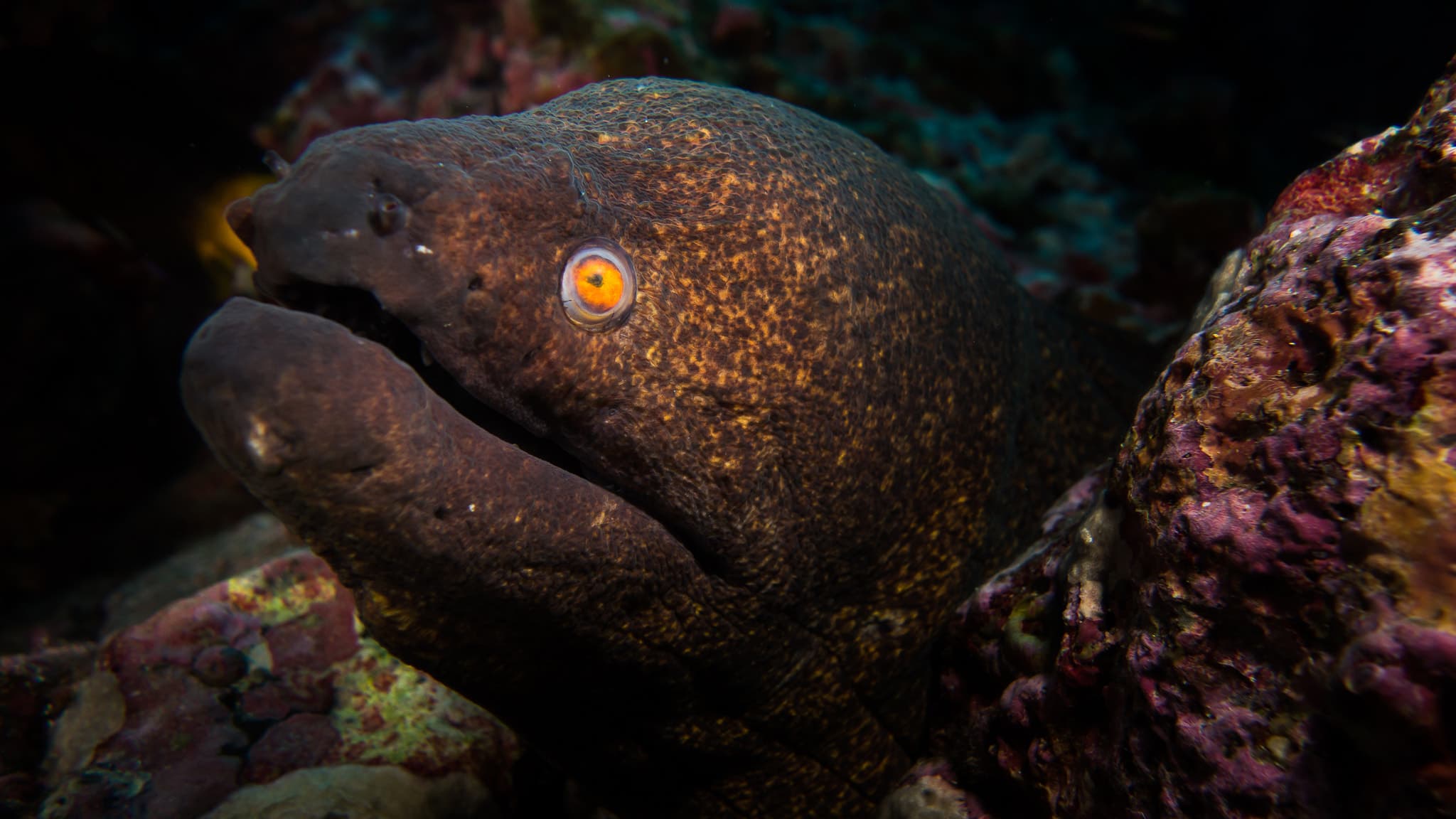
Cocos Island sits 550 kilometers off the Pacific coast of Costa Rica, in open ocean with no dock, no hotel, and no permanent population outside of park rangers. It is a UNESCO World Heritage Site and a Costa Rican national park that has been protected since 1978. There is no resort diving at Cocos Island because there are no resorts — and no civilian accommodation of any kind. Every diver who visits arrives on a liveaboard and sleeps on that same boat for the entire trip.
That fact reframes the usual "liveaboard vs resort" question entirely. The real decision for a diver eyeing Cocos Island is not whether to take a liveaboard or stay at a resort on the island. It is whether the Cocos Island liveaboard experience — the cost, the logistics, the conditions — is worth it compared to resort-based diving at other Costa Rica destinations like Cano Island, Guanacaste, or the Bat Islands. This article runs those numbers and lays out what each option actually delivers in 2026.
Why Cocos Island Is Liveaboard-Only
Cocos Island is one of the most remote protected marine areas in the Eastern Pacific. The crossing from Puntarenas, the main departure port on Costa Rica's central Pacific coast, takes 30 to 36 hours each way (LiveAboard.com, 2026; SDI/TDI, 2025). The island itself is roughly 24 square kilometers of volcanic rock and dense tropical forest. There are no roads, no airstrip, and no commercial infrastructure. The only structures belong to the national park service.
This isolation is precisely what makes the diving extraordinary. Cocos has been a no-take marine reserve for more than 30 years. Fishing pressure is essentially zero. The result is a pelagic ecosystem that behaves the way Pacific reef systems did before industrial fishing — massive schools of sharks, unhabituated animals, and biomass densities that rank among the highest recorded anywhere in the Eastern Tropical Pacific (Costa Rica SINAC, 2024).
No liveaboard operator can offer more than 10 to 12 dives at Cocos itself because of the crossing time. Typical itineraries run 10 to 11 days total, with roughly 3.5 days spent in transit and 6 to 7 days of diving, yielding 18 to 24 dives depending on conditions and route (Okeanos Aggressor schedule, 2026; Sea Hunter schedule, 2026).
What a Cocos Island Liveaboard Actually Costs in 2026
There are currently three main operators running regular Cocos Island itineraries: the Okeanos Aggressor II, the Sea Hunter, and the Undersea Hunter. All depart from Puntarenas. Pricing for 2026:
| Operator | Trip length | Price per diver (USD) | Includes |
|---|---|---|---|
| Okeanos Aggressor II | 10 days | 5,398–6,498 | Cabin, meals, 3–4 dives/day, tanks, weights |
| Sea Hunter | 10 days | 5,595–6,995 | Cabin, meals, 3–4 dives/day, tanks, weights |
| Undersea Hunter | 10 days | 5,195–6,495 | Cabin, meals, 3–4 dives/day, tanks, weights |
Additional costs not included in the base fare:
- Marine park fee: USD 525 per person (Colprensa, 2024; LiveAboard.com, 2026). This is mandatory and collected by the Costa Rican government.
- Nitrox: USD 100–150 per trip if available.
- Equipment rental: USD 200–350 for a full kit.
- Tips: USD 200–400 is customary.
- Emergency evacuation insurance: Required by most operators, typically USD 50–100 for a policy that covers hyperbaric treatment and air evacuation.
Realistic total for a 10-day Cocos liveaboard: USD 6,000–8,500 per diver all-in, excluding international flights to San Jose.
LiveAboard.com lists current 2026 Cocos Island departures from USD 5,398 to USD 8,520 per trip depending on cabin class and operator.
The Alternative: Resort-Based Diving in Costa Rica
Costa Rica's Pacific coast offers genuine resort diving at several destinations that deliver world-class marine life without a 30-hour ocean crossing. The three most relevant for comparison:
Cano Island Biological Reserve
Located 20 kilometers off the Osa Peninsula in southern Costa Rica, Cano Island is accessible by day boat from Drake Bay or Uvita. It offers clear water (15–30 meters visibility), healthy coral reefs, and reliable shark sightings — primarily whitetip reef sharks, occasional hammerheads, and large schools of jacks. Dive resorts in Drake Bay run two-tank morning trips to Cano Island, with house reef or local site diving in the afternoon.
Cost: A 7-night package at a mid-range Drake Bay dive resort runs USD 1,800–3,200 per diver including accommodation, meals, and 10–12 boat dives (DiveZone, 2025). Add USD 150–300 for gear rental if needed.
Marine life: Whitetip reef sharks, eagle rays, moray eels, octopus, large schools of jacks and snappers. Seasonal humpback whale encounters (August–October, December–March). Whale shark sightings are rare but possible.
Guanacaste and Bat Islands (Islas Murcielagos)
The northwest Pacific coast around Playas del Coco, Tamarindo, and the Papagayo Gulf offers year-round diving with easy resort access. The Bat Islands, a 60-minute boat ride from Playas del Coco, are known for bull shark encounters and manta rays during the rainy season (June–November).
Cost: Resort diving in Guanacaste runs USD 100–150 per two-tank boat dive. A 7-night stay with 10 dives totals roughly USD 2,500–4,000 per diver including accommodation at a mid-range hotel, meals, and dive packages (local operator pricing, 2025).
Marine life: Bull sharks (seasonal), manta rays, turtles, moray eels, octopus, frogfish. Visibility ranges from 10–25 meters depending on season and site.
Mainland Resort + Cocos Day-Trip (Does Not Exist)
This is the option many divers hope for and cannot get. There is no day trip, no fast boat, no helicopter transfer that gets you from a mainland resort to Cocos Island and back. The 550-kilometer distance makes it physically impossible as a day trip. If you want Cocos, you take the liveaboard.
Head-to-Head: Cocos Liveaboard vs Costa Rica Resort Diving
| Factor | Cocos Island Liveaboard | Cano Island / Guanacaste Resort |
|---|---|---|
| Total cost (7–10 nights) | USD 6,000–8,500 | USD 1,800–4,000 |
| Dives per trip | 18–24 | 10–14 |
| Cost per dive | USD 250–470 | USD 130–290 |
| Hammerhead sharks | Virtually guaranteed (Bajo Alcyone) | Occasional, not reliable |
| Whale sharks | Seasonal (June–November) | Very rare |
| Schooling sharks (hundreds) | Yes — whitetips, silkys, hammerheads | No — smaller aggregations |
| Manta rays | Common | Seasonal (Guanacaste) |
| Visibility | 15–30 meters | 10–30 meters |
| Water temperature | 24–28°C | 24–29°C |
| Current strength | Moderate to strong | Mild to moderate |
| Transit time | 30–36 hours each way | 0–60 minutes by boat |
| Diver experience required | Advanced Open Water, 30–50 logged dives | Open Water sufficient |
| Non-diver companions | Very limited | Full resort experience |
| Surface interval activities | None (open ocean) | Rainforest, wildlife, beaches, towns |
Who the Cocos Liveaboard Is For
The Cocos Island liveaboard makes sense for divers who meet most of these criteria:
-
Sharks are the priority. If your bucket list starts with "swim through a school of 100 scalloped hammerheads," Cocos is one of maybe three places on Earth where that happens regularly. Bajo Alcyone, a seamount at Cocos, is arguably the single best hammerhead dive site in the world (LiveAboard.com, 2026; SDI/TDI, 2025).
-
You have the budget. USD 6,000–8,500 is a significant trip cost for most divers. If the budget is closer to USD 3,000, Cano Island or Guanacaste delivers outstanding diving for half the price.
-
You can handle the conditions. Cocos diving involves currents, deep dives (20–30 meters is standard), blue-water descents, and occasionally rough surface conditions on the crossing. Operators require Advanced Open Water certification with a minimum of 30–50 logged dives (LiveAboard.com, 2026). If you are newly certified or uncomfortable in current, this is not the trip.
-
You can commit 10 full days. The crossing alone consumes two days in each direction. There is no shortcut. You need to be able to take 10 to 11 days away, plus travel days to and from San Jose.
Who the Resort Option Is For
Costa Rica resort diving at Cano Island, Guanacaste, or the Bat Islands suits divers who:
- Want a mix of diving and non-diving activities (Costa Rica's rainforests, wildlife, and adventure tourism are world-class).
- Are traveling with non-diving partners or families.
- Prefer calmer conditions, shallower dives, and shorter boat rides.
- Have a budget under USD 4,000 per diver for the whole trip.
- Want to dive multiple destinations in one trip (e.g., Cano Island for three days, then Guanacaste for three days).
Seasonal Considerations
Cocos Island diving is possible year-round, but conditions vary:
| Season | Conditions | Marine life highlights | Visibility |
|---|---|---|---|
| Dry (Dec–May) | Calmer seas, better visibility | Hammerheads, mantas, whitetips | 20–30 meters |
| Rainy (Jun–Nov) | Rougher crossings, plankton-rich water | More sharks, whale sharks, larger schools | 15–25 meters |
The rainy season brings more plankton, which attracts filter feeders and the sharks that follow them. Many experienced Cocos divers actually prefer June through November for the sheer density of marine life, even though the crossing can be rougher and visibility drops slightly (Okeanos Aggressor reviews, 2025).
For Guanacaste and Cano Island, the dry season (December–May) generally offers better visibility and calmer conditions. The rainy season at Guanacaste brings the bull sharks and mantas to the Bat Islands.
Practical Logistics
Getting to Puntarenas (Cocos Liveaboard)
Fly into Juan Santamaria International Airport (SJO) in San Jose. Puntarenas is a 90-minute drive from the airport. Most liveaboard operators offer transfers or include a pre-departure hotel night in San Jose. Some itineraries depart from or include stops at Cano Island on the way to or from Cocos, adding value to the trip.
Getting to Drake Bay or Guanacaste (Resort Diving)
- Drake Bay / Cano Island: Fly from San Jose to Drake Bay (35-minute flight on Sansa Airlines) or drive to Sierpe and take a boat (about 90 minutes).
- Guanacaste: Fly into Daniel Oduber International Airport (LIR) in Liberia, with direct international flights from several US and Canadian cities. Many dive resorts are within 30 minutes of the airport.
What to Pack for a Cocos Liveaboard
- Surface marker buoy (SMB) — mandatory at Cocos due to currents.
- Dive computer with Nitrox capability.
- 3mm or 5mm wetsuit (water is 24–28°C but you will do 3–4 dives per day and get cold).
- Seasickness medication for the crossing.
- Reef-safe sunscreen (required in Costa Rican marine parks).
The Bottom Line
The Cocos Island liveaboard vs resort question has a built-in answer: if you want Cocos, the liveaboard is the only option. The real question is whether Cocos is worth the premium over Costa Rica's excellent resort-based diving.
If your goal is world-class pelagic encounters — especially hammerhead sharks in staggering numbers — the Cocos liveaboard delivers something no mainland resort can replicate. The USD 6,000–8,500 price tag buys access to one of the most pristine and heavily protected marine ecosystems on the planet.
If you want outstanding diving at a lower price point, with the flexibility of a resort holiday, Cano Island and Guanacaste offer serious value. You will not see hammerhead schools, but you will see sharks, rays, and healthy Pacific reef systems — and you will have time and money left over for Costa Rica's rainforests and wildlife.
Neither choice is wrong. They serve different divers with different priorities.
Sources
- LiveAboard.com. "Costa Rica Liveaboard Diving." 2026. https://www.liveaboard.com/diving/costa-rica
- SDI/TDI. "Reasons to Take a Live aboard Trip to Cocos Island." 2025. https://www.tdisdi.com/tdi-diver-news/reasons-to-take-a-live-aboard-trip-to-cocos-island/
- ZuBlu. "Cocos Island Liveaboards." 2025. https://www.zubludiving.com/s/liveaboards/costa-rica/puntarenas/cocos-island
- PADI Travel. "Liveaboard Diving in Costa Rica." 2025. https://travel.padi.com/liveaboard-diving/costa-rica/
- Okeanos Aggressor II — diver reviews and schedule. LiveAboard.com, 2025–2026.
- Sea Hunter — diver reviews and schedule. LiveAboard.com, 2025–2026.
- Colprensa. "Costa Rica raises Cocos Island marine park fee." 2024.
- Costa Rica SINAC. "Cocos Island National Park management report." 2024.
- DiveZone. "Costa Rica Diving Guide." 2025.